

We talk about פִּרְסוּמֵי נִיסָּא (publicizing the miracle) as if it’s the defining engine of both Chanukah and Purim. But if you look closely at the בְּרָכוֹת (blessings), the role of a מִנְיָן (quorum), and who can be מוֹצִיא (discharge another’s obligation), you discover something subtler:
פִּרְסוּמֵי נִיסָּא is central, but it isn’t always the only essential component of the mitzvah. Sometimes it’s an ideal that scales upward; sometimes it’s baked into the mitzvah’s form; and sometimes it’s “real” in the heart even when the formal קִיּוּם (halachic fulfillment) never happened.
A lomdish lens helps isolate what’s going on.
The חֲקִירָה (conceptual inquiry): What is the חפצא (object) of “שֶׁעָשָׂה נִסִּים”?
Here’s the chakira:
What kind of bracha is “שֶׁעָשָׂה נִסִּים” (“Who performed miracles”)?
צַד א׳: It’s fundamentally a בִּרְכַּת הַמִּצְוָה (blessing on the mitzvah)—tethered to the מַעֲשֵׂה מִצְוָה (mitzvah-act) and its halachic קיום.
צַד ב׳: It’s fundamentally a בִּרְכַּת הַשֶּׁבַח (blessing of praise)—triggered by encountering the פרסומי ניסא itself, even if you personally didn’t perform the full מעשה.
This becomes vivid when you contrast Chanukah and Purim, because Chanukah has a category Purim doesn’t: הָרוֹאֶה (one who sees). On Chanukah you can make ברכות simply on seeing the candles. Purim doesn’t develop an equivalent “seeing lane”—and that difference is not accidental.
A quick setup: inspiration vs. חֲלוּת (formal halachic effect/instantiation)
I started thinking along these lines because of a familiar situation: someone heard the מְגִילָּה (Megillah), but the megillah was פְּסוּלָה (invalid). You can still hear the story and feel the נס—but in lomdis terms, inspiration isn’t yet a חלות. A kosher קְרִיאָה (halachic reading) is the vehicle that creates the halachic Purim-act of פרסומי ניסא.
That case becomes a perfect נַפְקָא מִינָּה (practical outcome) for the chakira.
נַפְקָא מִינָּה: a פְּסוּלָה מְגִלָּה—can there still be “שֶׁעָשָׂה נִסִּים”?
Suppose a person heard the megillah, but the reading wasn’t from a kosher megillah, so the formal קִיּוּם מִקְרָא מְגִלָּה (fulfillment of Megillah reading) did not occur. Halachically, the פוֹסְקִים (halachic authorities) rule you did not fulfill the mitzvah. But conceptually, this case is gold.
If “שֶׁעָשָׂה נִסִּים” is a ברכת המצוה tethered to the מעשה/קיום, then once the קריאה is פסול there should be no מקום for the ברכה. No קיום, no bracha.
But if “שֶׁעָשָׂה נִסִּים” is fundamentally בכרת השבח, triggered by encountering the miracle-story itself, then you can at least frame a הֲוָא אָמִינָא (conceptual possibility) that the ברכה might still be said: the mitzvah’s technical vehicle failed, but the encounter with the נס did occur.
In lomdis language: perhaps there is שֶׁבַח עַל הַנֵּס (praise on the miracle) even when the חלות קיום המצוה is missing. And the fact that we don’t pasken that way only highlights how halacha ultimately categorizes the bracha.
Chanukah: light + הַלֵּל (Hallel / praise psalms)—a visible miracle and a classic song
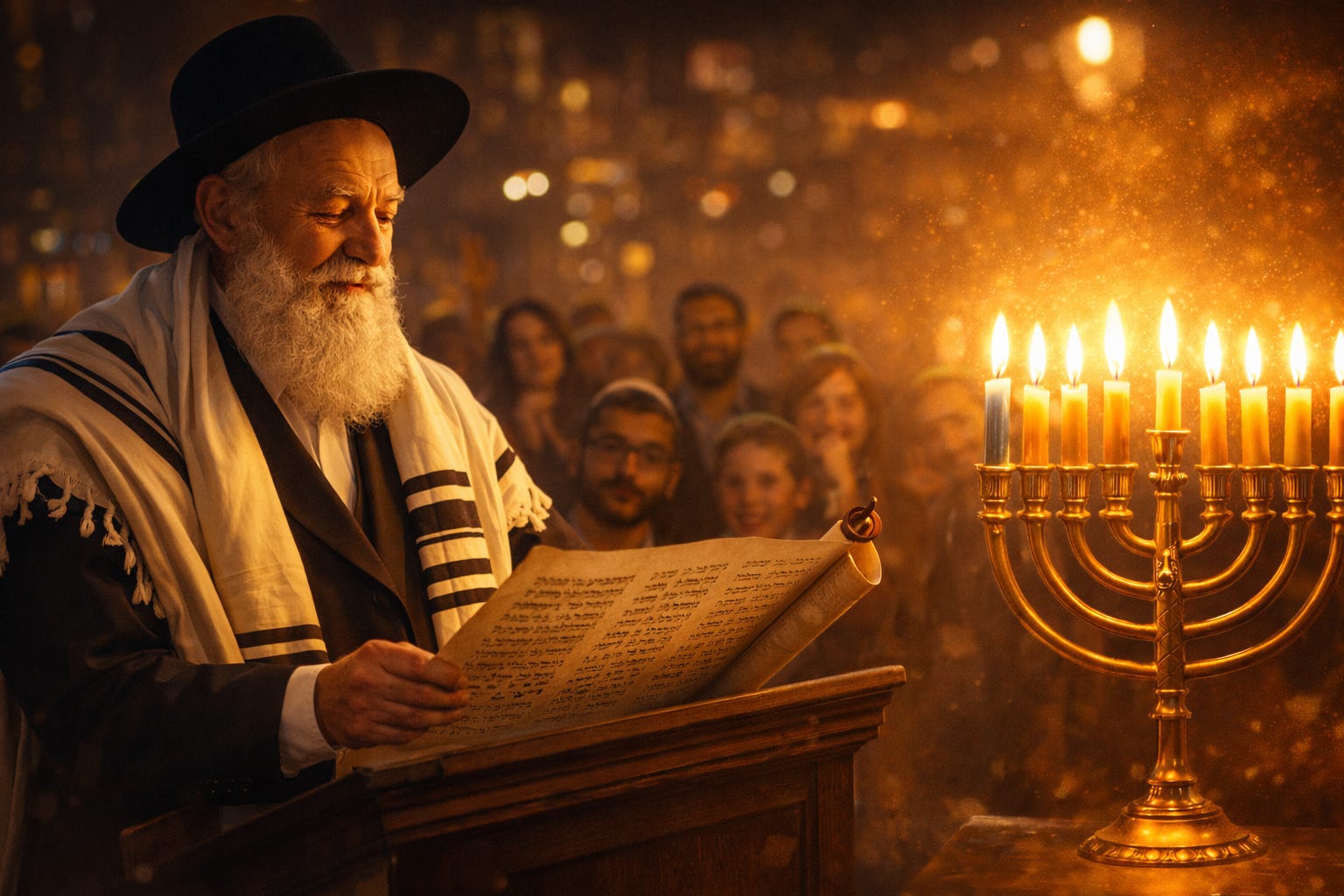
Chanukah is, in many ways, the holiday of seeing. The mitzvah produces a visible sign in the world: הַדְלָקָה (lighting). The miracle is “in front of you” in a way that lends itself to פרסומי ניסא almost automatically—because light begs to be seen.
Chanukah is also deeply identified with Hallel. It’s striking that the Rambam places the laws of Hallel in the Laws of Chanukah, reinforcing the sense that Chanukah is a paradigmatic setting for the classic “song of praise” mode. Yet despite that clarity—light + Hallel—Chanukah doesn’t expand into a whole suite of additional mitzvos the way Purim does.
There’s another irony: Chanukah has no “official” text in תַּנָּ״ךְ (Tanach / Hebrew Bible canon). Chanukah is lived through ritual display and song, not through an embedded scriptural narrative.
That package—visible ritual + classic praise—helps explain why Chanukah has the category of הרואה: the encounter with the public sign itself can be halachically meaningful.
And you see this even inside the halacha of הרואה itself. The מִשְׁנָה בְּרוּרָה (Mishnah Berurah) notes that if a person is concerned the נֵרוֹת (candles) might be פסולים, he should not make the ברכה—because we follow סָפֵק בְּרָכוֹת לְהָקֵל (in doubt about blessings, we are lenient and do not recite them).
That supports the framing: even when Chazal created a “seeing lane,” the bracha still assumes a halachically valid vehicle of the mitzvah. Inspiration alone doesn’t generate ברכה.
Purim: no classic Hallel—the narrative becomes the elevated replacement
Purim feels like the mirror opposite.
Purim “lacks” Hallel in its pure, classic form. Instead, it’s replaced by something more demanding and, in a sense, more elevated: מִקְרָא מְגִלָּה (Megillah reading). Rather than praising Hashem through a fixed liturgy, Purim asks you to sit through a story and let the praise emerge from the narrative itself—קְרִיאָתָהּ זוֹ הַלֵּל (its reading is the Hallel).
And here’s the deeper contrast: Purim’s central theme is often associated with hiddenness—אֶסְתֵּר (Esther / concealment motif)—yet its story is canonized inside Tanach. Chanukah, whose victory feels more overt and “bright,” never received that canonization.
So Purim becomes the holiday where the miracle isn’t placed before your eyes like candles. The נס isn’t a visible object in the street. You have to hear it. You have to follow details, reversals, timing, politics, risk, and providence—until the outline of Hashem’s hand becomes unavoidable.
Purim’s “look”: costumes are real, but they prove the point
To be fair, Purim has a “look”—costumes, noise, and a certain theatricality. But that actually highlights the distinction: those visuals are mostly מִנְהָגִים (customs); they are not the halachic אוֹת (sign) that generates the day’s publicity the way Chanukah’s light is.
Purim’s deepest “sign” isn’t a flame—it’s a pattern: וְנַהֲפוֹךְ הוּא (“and it was turned upside down”). The holiday’s publicity happens when the story flips in your mind—when concealment becomes revelation, coincidence becomes הַשְׁגָּחָה (Divine providence), and what looked ordinary becomes choreography.
That’s why Purim’s actions can look deceptively ordinary: a סְעוּדָה (festive meal), צְדָקָה (charity), מִשְׁלוֹחַ מָנוֹת (food gifts). Nothing screams “Purim” the way a row of flames screams “Chanukah.” Purim’s uniqueness is therefore not mainly in how the actions look, but in what they mean once they’re filled with the Megillah’s story.
One hard anchor: active-sign mitzvah vs. passive-hearing mitzvah
Here’s another lomdish angle: Chanukah’s mitzvah is built as an active act that creates a visible sign in the world. The מעשה of הדלקה produces a public חפצא—light that exists outside of you and demands to be seen.
That may also explain how Chanukah “wants to scale.” On Chanukah, the הידורים don’t only add beauty; they add more acts of lighting. And in practice—especially in Ashkenazi practice—the most common hiddur is that each person lights, multiplying the ma’aseh and multiplying the visible publicity. The הידור מצוה by פורים is obviously construced very differently.
Purim is not structured that way. The central mitzvah is מקרא מגילה, and for most people the primary קיום is not “each person performs a new act,” but listening—a fundamentally more passive fulfillment, rooted in שׁוֹמֵעַ כְּעוֹנֶה (hearing is like responding). Purim’s publicity scales mainly through more listeners and bigger hearing, not through everyone performing an independent action in the same way.
In short: Chanukah publicizes by many acts producing many lights; Purim publicizes by one reading filling many minds.
Granted the other mitzvos of the day are “active” but I think you will agree they are second to מקרא מגילה and they have no aspect of פרסומי ניסא.
Back to the chakira: why Chanukah has הָרוֹאֶה and Purim doesn’t
Now the contrast sharpens.
Chanukah uniquely develops a formal category of הרואה—a halachic “encounter lane.” That makes sense because the mitzvah creates a visible public sign (a ner) that can be met simply by seeing it.
Purim, by contrast, is articulated specifically through מקרא מגילה—a קריאה/שמיעה structure where the קיום is produced by hearing the narrative properly (שומע כעונה). Since Purim’s praise/publicity is defined through the act of reading/hearing, there is no independent “seeing” lane that stands on its own.
Chanukah has הרואה because the miracle is encoded into a sign; Purim has only קריאה because the miracle is encoded into a story.
Another contrast: קְרִיאַת הַתּוֹרָה (Torah reading) needs a minyan; Megillah scales publicness
A related contrast sharpens the picture. קריאת התורה is structurally defined as a ציבור (communal) act: it requires a מנין. Megillah, by contrast, can have a full halachic קיום even when read for an individual; a מנין is not a strict תְּנַאי (condition) in the act itself.
That doesn’t mean Megillah is “private.” On the contrary, בְּרָב עָם הַדְרַת מֶלֶךְ (in a multitude of people is the King’s glory) is an ideal form of the mitzvah. But it does suggest a חקירה: sometimes “public” is baked into the definition of the מעשה; and sometimes “public” is an ideal that intensifies the מעשה without being a condition for basic fulfillment.
Conclusion and מוּסָר (ethical takeaway): learning how to see what isn’t glowing
Chanukah trains a Jew to praise Hashem when the miracle is bright. The mitzvah itself creates light, and the light forces its way into the room—if you’re awake, you will notice it.
Purim trains something harder: how to praise Hashem when the miracle is hidden. The day’s actions can look ordinary—eating, giving, socializing—and the “publicity” happens only if you truly listen, connect dots, and recognize that what looked like a coincidence was really choreography. The נס isn’t a flame in the window; it’s ונהפוך הוא in real time.
And that’s the mussar: most of our lives are more Purim than Chanukah. Hashem’s hand is usually not visible; it’s timing, reversals, doors that close and open, and “regular” days that later turn out to have been carrying us. Purim trains us not to need the miracle to glow in order to believe it’s real—rather, to become the kind of person who can see the יַד ה׳ (the Hand of Hashem) even when nothing is lit up.
What is the end of the ברכה of שעשה נסים? It is בימים ההם בזמן הזה. We are saying in the ברכה that not only does Hashem bestow upon us ברכה then at these tremendous times. But also now. When His will is not as revealed to us. He still does נסים for us day, let’s not forget that!
May we be זוכה (merit) to live with that clarity, to hear the story correctly, and to recognize Hashem’s hand in everything we do.