

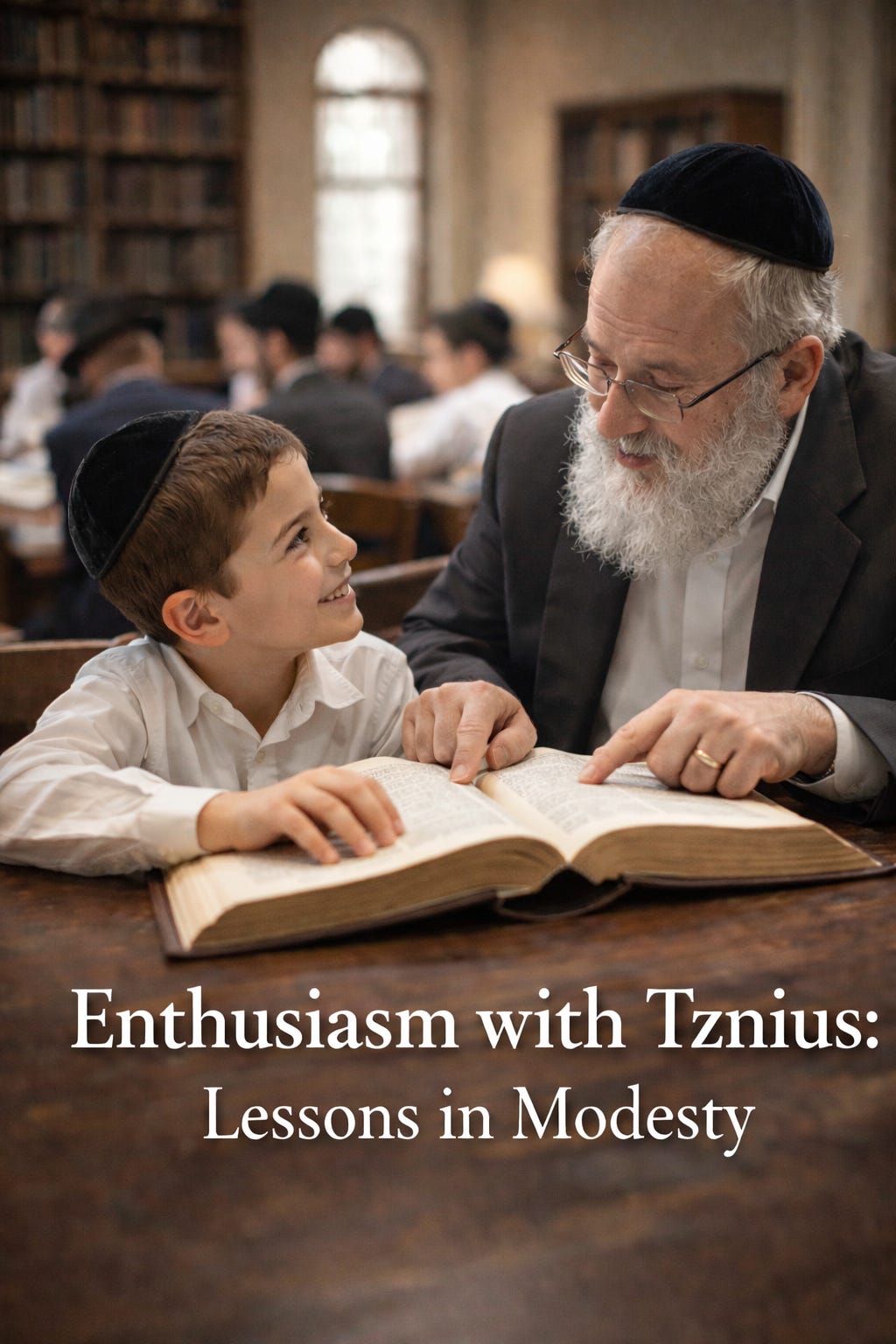
I used to have a habit of going to the front of the בית מדרש (Study Hall) and talking to my רבי, HaRav Nochum Lansky שליט”א while בְּעוֹמֶק הַסּוּגְיָא (deep in the subject matter) בין גברא לגברא (between the Torah portions) during קריאת התורה (the Torah reading).
The משגיח (Spiritual Supervisor), HaRav Beryl Weisbord שליט”א, once pulled me over and said, “Nu Dovidyl, talking during דאווענינג (prayer)?”
I responded, “But משגיח, isn’t it מוּתָּר (permitted) when it is בין גברא לגברא?”
He looked at me in a way I will never forget and said, “Yes Dovidyl, but so loud and enthusiastically?!”
He was putting me in my place. Yes, it is permitted, but you don’t need to make a spectacle of yourself. If you are going to ask your רבי a question, do it with צניעות (modesty) and quiet respect. I will never forget that.
I have a tendency to get a little caught up in the סוגיא (Talmudic topic) at times. While this can be a ברכה (blessing), it can also cause some people to be uncomfortable. דְּרָכֶיהָ דַרְכֵי נֹעַם וְכָל נְתִיבוֹתֶיהָ שָׁלוֹם (Its ways are ways of pleasantness, and all its paths are peace). If you are doing things right, they should be pleasant. We shouldn’t let our enthusiasm in our עבודת השם (service of God) detract from someone else. We must be wary when we דאווען (pray) not to be so loud that others cannot concentrate.
It is so easy to make a חילול השם (desecration of God’s name). Does intention matter when someone is left thinking, “That’s a פרומער ייד (religious Jew)? That’s what someone does who keeps תורה ומצוות (Torah and Commandments)?!” We carry such a responsibility when we walk around this world and people can point and say, “That’s a ייד (Jew)!”
I was once with a few people and they all took off their יראמלכא (yarmulka/kippa). I had never seen such a thing. Why would you take your יראמלכא off? I won’t say what they were doing, but I decided I would have no part of it. I sat down for a few minutes and quickly said, “I need to leave.” I cannot be in a place where I have to hide who I am. I want to be in a place where I can be proud to be a פרומער ייד—where someone sees me and says, “That’s a ייד! That’s a מאמין (believer)! That’s a בן תורה (son of Torah)!”
We need to remember who we are at all times, whether people know from the יראמלכא on our head or the way we walk and talk. We have the responsibility to show the rest of the world the light of השם. A common misconception is that the מצווה (commandment) of קידוש השם (sanctifying God’s name) is primarily for the גוים (nations), but in reality, it is the opposite. The פסוק (verse) we learn that מצווה from is: וְנִקְדַּשְׁתִּי בְּתוֹךְ בְּנֵי יִשְׂרָאֵל (”And I shall be sanctified in the midst of the Children of Israel”). The primary קידוש השם is right in front of your own people. You don’t have to perform great acts of heroism; simply uttering the words of קדיש, קדושה, or ברכו are all forms of being מקדש שם שמים (sanctifying the Name of Heaven).
But don’t think it is limited to that. My משגיח once said that it is relatively “simple” to give up your life for the Torah—the “Big Three” sins. Someone says, “Kill this person or I will kill you,” and you say, “No!” You give up your life. In a moment, you are done.
What’s harder? Getting up for דאווענינג. Learning your סדר (study session). Having proper תפילות (prayers). Showing דרך ארץ (proper character/etiquette) when it is really hard. That is a קידוש השם! It has less grandeur than dying under duress, but you are living a life of קידוש השם.
May we all find a way to be מקדש שם שמים in our lives. May it not be difficult or painful, and may we do it בשימחה (with joy). May we inspire those around us, so that those who see us say, “Wow, that’s a ייד who keeps תורה ומצוות!” May our daily commitment to a life of עבודת השם merit us to hear the blasts of the שופר as משיח צדקינו (our righteous Messiah) comes and reveals to us the true כבוד השם (glory of God)!