

Much of this תורה comes from my great Rebbe, HaRav Nochum Lansky שליט״א. As I was preparing these thoughts, I was reviewing some of his notes, and at a certain point I could no longer clearly distinguish between ideas that were my own and ideas that I had received from him. But that itself feels right. So much of whatever תורה I have comes through him, and so I must credit him, because he is my אב של תורה (father in Torah).
When thinking about ל״ג בעומר, one question keeps bothering me. The Gemara tells us only that the talmidim of רבי עקיבא were decimated during ספירה (the counting of the Omer); חז״ל (our Sages) do not frame ל״ג בעומר as a full, open יום טוב (festival day) with its complete inner meaning spelled out. The day is there, but its deeper significance is not stated explicitly.
Maybe that itself is the deepest clue to what the day is. ל״ג בעומר is the day of פנימיות התורה (the inner dimension of Torah), and פנימיות, by definition, is present before it is revealed. The day appears before its full meaning appears in language.
That already places ל״ג בעומר inside the larger movement from פסח (Passover) to שבועות (Shavuos). יציאת מצרים (the Exodus from Egypt) is not yet the completion of freedom. A Yid leaves מצרים, but he still has to become a כלי (vessel) for תורה. That is the whole עבודה (inner labor) of ספירה: to move from the מ״ט שערי טומאה (49 gates of impurity) toward the world of תורה — toward cleansing, refinement, and readiness for קבלת התורה (receiving the Torah). And maybe even more than that: it is a journey from one מ״ט to another, from מ״ט שערי טומאה to שערי בינה מ״ט (49 gates of understanding). The same number that marks the edge of collapse also marks the edge of human greatness. We begin at one threshold and are meant to rise toward the other. The ladder between them is the מ״ח קניני תורה (48 acquisitions of Torah).
But that climb does not happen automatically. תורה is not just information given to a person. תורה is what rebuilds the person. It shapes the mind, refines the מידות (character traits), gives inner order, and guards a person from himself. And that guarding is not only from bad decisions or from the יצר הרע (evil inclination) in a narrow sense. חז״ל in מנחות indicate that the קשר (bond) to תורה itself has a preserving כוח (power). תורה guards the נשמה (soul), keeping a person inwardly connected to Hashem. That is why, when חז״ל say “משכהו לבית המדרש,” the meaning is deeper than strategy. בית המדרש is not only the place where one learns what is true. It is the place where the נשמה is sheltered, sustained, and remade.
My Rebbe brought a beautiful יסוד (foundation): מסכת ברכות corresponds to בין אדם למקום (between a person and Hashem), מסכת נזיקין to בין אדם לחבירו (between a person and another person), and מסכת אבות to בין אדם לעצמו (between a person and himself). That lines up beautifully with the teaching that העולם עומד על ג׳ דברים (the world stands on three things): תורה, עבודה (service of Hashem), and גמילות חסדים (acts of kindness). In that structure, עבודה belongs to בין אדם למקום, גמילות חסדים to בין אדם לחבירו, and תורה has a special place in בין אדם לעצמו. A person has to be built in all three directions: He has to stand before Hashem properly, stand with another Yid properly, and become the person he is meant to be.
That is why אבות and תורה are not competing categories, but two stages of the same עבודה. First comes אבות, the world of מידות קדמו לתורה (character traits precede Torah). Before a person can truly acquire תורה, he has to become the kind of person fit to receive it. That is the world of humility, patience, דרך ארץ (proper conduct), discipline, and inner refinement. אבות forms the כלי. Then comes תורה . תורה enters that prepared person and raises him higher. It does not merely add knowledge. It gathers the whole person around ׳רצון ה (the will of Hashem) and makes him one. In that sense, אבות is the preparation of the self, and תורה is the perfection of the self. Without מסכת אבות, תורה cannot fully shape the person. Without תורה, the person never becomes fully what he is meant to be.
This is also the point of the רמב״ם’s language about תלמיד שאינו הגון (an unfit student). The point is not that such a person cannot learn תורה at all. It is that the full life of תורה in the בית המדרש is itself an עבודה that requires a certain ישרות (straightness) and readiness. First the person must be guided בדרך ישרה (in a straight path), and only afterward brought fully into the בית המדרש. תורה must dwell in a fitting כלי.
That is also why תורה belongs so deeply to בין אדם לעצמו . תורה is what builds the person himself. Through תורה and מידות, a Yid becomes who he is meant to become. תורה is the ultimate way for a person to understand the will of his Creator, but to understand that will is not only to study it. It is to embody it, to let תורה shape the whole person.
The Rosh Yeshiva Rav Ruderman זצק”ל explained the Gemara’s language in the famous story of Rav Yosef in a penetrating way. In פסחים סח ב, the Gemara says that on שבועות Rav Yosef would say: אי לאו האי יומא דקא גרים, כמה יוסף איכא בשוקא — if not for this day, how many Yosefs would there be in the marketplace? Usually this is understood to mean that he would have been just another Yosef. But Rav Ruderman read it differently. כמה can also mean quantity. Without תורה, a person can be many Yosefs: Yosef the בעל תאוה (man of appetite), Yosef the clever one, Yosef the ambitious one, Yosef the emotional one. A person can be scattered among many drives and many selves. תורה gathers those כוחות (powers) into one אדם (person). That is what it means for תורה to belong to בין אדם לעצמו. It does not only teach a person. It makes him one.
That makes the tragedy of רבי עקיבא’s talmidim even sharper. They were not ordinary people. They were giants, meant to be the future pillars of תורה שבעל פה (the Oral Torah). And yet they were lacking in כבוד זה לזה (honor toward one another). That means the failure was not incidental. It was a crack in the very structure of preparation for Shavuos. They may have towered in תורה, giants in the world of בין אדם לעצמו, but the structure was incomplete, because between one Yid and another something was broken. תורה cannot be whole if it does not flow into גמילות חסדים. It cannot be complete if it does not produce כבוד for another Yid.
So the deaths of רבי עקיבא’s talmidim during ספירה are not merely a tragedy that happened to take place then. They expose the very thing that must be repaired before קבלת התורה. The preparation for תורה is not only learning more. It is learning until תורה מביא לידי מעשה (Torah brings a person to action), until תורה is embodied in life and makes a person whole in all three directions: toward Hashem, toward another Yid, and within himself.
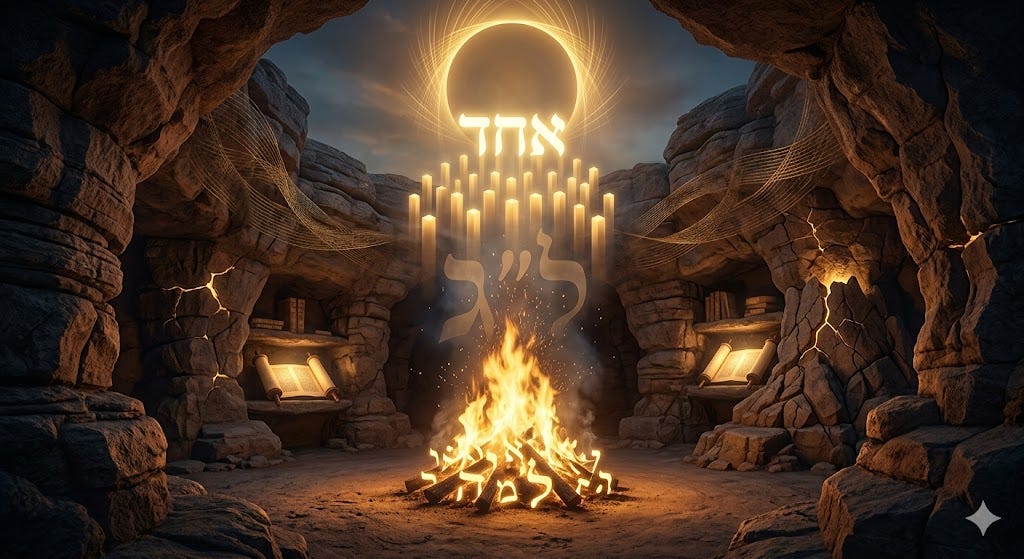
This is where רבי עקיבא himself becomes the center of everything. רבי עקיבא is more than the great root of תורה שבעל פה. He is the great כוח החיבור (power of connection). He is the בחינה (aspect) of אחד (oneness). He is the one who can bind together what seems separate: beginning from nothing, rebuilding from destruction, connecting תורה from above and תורה from below, connecting the revealed and the hidden. Only someone like רבי עקיבא could become רבי עקיבא.
He did not begin life as the classic child of תורה. He began late. He began at forty. That itself feels deeply fitting. משה רבינו ascended for forty days to receive the תורה, and רבי עקיבא begins at forty. True קבלת התורה is not only an event of hearing. It is a process of being remade. Forty is the number of formation, purification, and rebirth — as in the forty סאה of a מקוה (ritual bath). רבי עקיבא had the כוח of someone who had to build himself from the ground up. In that sense he carries the depth of a בעל תשובה (returnee), because the מעלה (advantage) of a בעל תשובה is not only that he returns from sin, but that he knows how to turn distance into closeness, emptiness into fullness, and a broken past into a new future. Only someone who began from nothing could become the man of אחד.
That may also explain why רבי עקיבא rises to such astonishing heights. חז״ל show us that the תורה of רבי עקיבא reaches heights so exalted that even משה רבינו is brought to behold him. משה רבינו is the giver of תורה שבכתב (the Written Torah), the תורה descending from Heaven. רבי עקיבא is the great root of תורה שבעל פה, the תורה that emerges through human toil, מסירות נפש (self-sacrifice), suffering, and total devotion. תורה שבכתב is תורה as given; רבי עקיבא reveals תורה as acquired, drawn out, and embodied in the total remaking of the person.
That is why his מסירות נפש matters so much. רבי עקיבא is שייך (connected and belonging) to the highest levels of תורה precisely because he gave himself over entirely to תורה. He devoted his life to תורה, rebuilt after devastating loss, and in the end even his death became one final act of belonging completely to Hashem. That is why the Gemara says that he left the world on אחד in קריאת שמע (the recitation of Shema). That is so much more than a description of how he died. It is a description of who he was. רבי עקיבא did not only die on אחד. He lived toward אחד.
And perhaps that is part of the depth of קריאת שמע itself. שמע is not only a declaration of אחד. It is the architecture of a life gathered around Hashem. Day and night, mind and arm, home and on the road, speech and teaching — שמע takes the scattered domains of life and binds them into ׳עבודת ה (service of Hashem). In that sense, שמע is itself the עבודה of אחד: not only to proclaim Hashem’s oneness, but to gather the scattered parts of life into His service. That is why the mitzvah of תלמוד תורה itself appears within שמע: וְלִמַּדְתֶּם אֹתָם... לְדַבֵּר בָּם. אחד is not only something a Yid says. It is something a Yid lives toward.
An idea of the Gra’s here is stunning. There are six words in שמע ישראל and six words in ברוך שם כבוד מלכותו לעולם ועד. If the five words of שמע before אחד correspond to the חמשה חומשי תורה (Five Books of the Torah), then ברוך שם is already the quieter, hidden side, the lower voice, the concealed resonance beneath the open declaration. רבי עקיבא dies on אחד because he is the connector between the two. He is not only the אב של תורה שבעל פה. He is the bridge that binds תורה שבכתב and תורה שבעל פה, the outer תורה and the inner תורה, the revealed declaration and the hidden response. He is the man of חיבור (connection).
And from that world comes Rashbi. If משה רבינו is the father of תורה שבכתב, and רבי עקיבא is the great root of תורה שבעל פה, then רבי שמעון בר יוחאי stands as the revealer of פנימיות התורה. Rashbi is not separate from רבי עקיבא’s world. He is the flowering of it. He is one of the surviving talmidim through whom תורה is rebuilt. So ל״ג בעומר, the day associated with Rashbi, becomes the point in ספירה where the hidden light begins to appear. Before the full public קבלת התורה of Shavuos, there is first the awakening of the inner נשמה (soul) of תורה.
That may also explain why ל״ג בעומר’s full significance is not openly laid out in חז״ל. The day is mentioned, but not with its inner content developed. That itself is fitting. Since ל״ג בעומר is rooted in פנימיות התורה, its meaning is first present in concealment and only later disclosed more fully. The hidden appears in the way hidden things always appear: first quietly, then through later גילוי (revelation).
And פנימיות התורה is not just an extra layer added on top. It is the most profoundגילוי רצונו של הקב״ה (revelation of Hashem’s will). נגלה tells us what Hashem wants. פנימיות lets a person begin to touch the innermost light of that רצון. It is the deepest thing, and therefore it belongs to maturity and refinement. That too is part of the significance of forty: Some dimensions of תורה are not merely harder; they require a more ripened כלי. A person does not merely learn deeper תורה. He enters it as a different person.
Now the whole movement of ספירה comes back into view. We begin in the מ״ט שערי טומאה, but the goal is to rise toward the מ״ט שערי בינה. Through the מ״ח קניני תורה, a person climbs from the edge of impurity toward the edge of understanding. And once תורה is really acquired, it is no longer flat. It opens outward into ע׳ פנים לתורה (seventy faces of Torah), into depth, breadth, multiplicity, and radiance. First a person has to become a vessel. Then the many faces of תורה begin to shine. And perhaps the מ״ח קנינים hint beyond the self as well. In גימטריא (numerical value), מ״ח is חיל, suggesting that קנין התורה is bound up not only with personal growth, but with the larger building of מלכות בית דוד (the kingship of the House of David).
There are other beautiful hints here as well. י״ג in גימטריא is אחד, echoing both י״ג מידות הרחמים (thirteen attributes of mercy) and י״ג מידות שהתורה נדרשת בהן (thirteen principles by which Torah is expounded): the way Hashem reveals Himself to the world, and the way His תורה is revealed into the mind and life of man. These too meet in אחד.
There is one more layer worth naming. The ספירה of ל״ג בעומר is הוד שבהוד — the most inward, self-contained dimension of הוד. תהלים says הוד והדר לפניו. The deepest radiance stands before Hashem, not before people. הוד is not outward glory. It is inner presence, yielding, acknowledgment without display. And the great embodiment of הוד is אהרן הכהן. אהרן did not pursue his own greatness. His whole existence was oriented toward others — toward שלום, toward drawing people close to תורה, toward a presence that served rather than asserting itself. הוד שבהוד is that quality taken to its root: a light that does not announce itself but transforms everything around it.
And this is precisely the תיקון (repair) for the failure of רבי עקיבא’s talmidim. They fell because they did not carry כבוד זה לזה — because their greatness had not yet become הוד, because they had not yet learned to yield and honor the other. The repair is illuminated by אהרן’s quality: the person who is great enough to make himself small, who pursues שלום not as a strategy but as his deepest nature. Rashbi, who reveals פנימיות התורה from within concealment, also belongs to that hidden light.
And perhaps this is the heart of our own עבודה in ספירה, and especially on ל״ג בעומר. The עבודה is to unlock our potential, to find our אחד, to discover that תורה is the key to our deepest self. תורה is not only a set of laws. תורה is access. תורה is the way a person reaches his innermost possibility. It is the ultimate way to understand the Creator’s will. And to understand that will is not only to learn תורה, but to embody תורה in one’s life. In that way, תורה takes the scattered parts of a person and makes them one. That is what אחד means. It is what connects between man and Hashem and between one Yid and another. These are not separate worlds. They come from one place, one root, one תורה.
My Rebbe pointed out that ל״ג which equals 33 is in actuality two ג׳s. Perhaps that hints to the two triads that shape the whole map of a Torah life. One is the threefold structure of a person’s עבודה:
בין אדם לחבירו, בין אדם למקום, and בין אדם לעצמו. The other is the threefold structure on which the world stands: עבודה ,תורה, and גמילות חסדים. Maybe ל״ג is the בחינה of their חיבור. Different עבודות are directed toward different recipients, but they are not isolated from one another. What a person does affects others. What he does toward others affects who he becomes. And all of it is meant to be gathered into one life of ׳רצון ה. In that sense, ל״ג is the recognition of oneness, of חיבור, of singularity.
And perhaps there is an even deeper רמז (hint) here in a phrase of חז״ל: כאיש אחד בלב אחד. This is the phrase חז״ל use to describe כלל ישראל (the Jewish people) at הר סיני (Mount Sinai) — their unity was the very condition for קבלת התורה. And that is precisely what the talmidim of רבי עקיבא had broken. They lacked כבוד זה לזה, which means they lacked כאיש אחד בלב אחד, which means they lacked the essential quality that makes קבלת התורה possible. The תיקון is to begin to embody that phrase again.
And perhaps the path toward it is encoded within it. The word איש calls to mind משה רבינו, who is called איש האלקים — the giver of תורה שבכתב. The word אחד calls to mind רבי עקיבא, the man of אחד, whose entire עבודה was to bind what appears separate into oneness. And לב — which is ל״ב, and ל״ג עם הכולל — points toward ל״ג בעומר itself, toward Rashbi, toward the hidden heart of תורה, toward פנימיות. So in three words, חז״ל quietly encoded the three figures who together carry the full continuum of תורה: משה רבינו, רבי עקיבא, and Rashbi. The outer תורה, the connecting תורה, and the inner תורה. And the phrase itself describes exactly what they are together, and what we are meant to become: one.
Maybe that is what ל״ג בעומר really is. Not merely a pause in אבלות (mourning), and not merely a day on the calendar, but the revelation of this עבודה itself: the פנימיות of תורה, the power of אחד, the binding together of what has fallen apart. ל״ג בעומר shows that the goal of תורה is not only to inform us, but to unify us. Not only to elevate part of life, but to gather all of life back to one center. The עבודה of ל״ג בעומר is to let פנימיות התורה begin making us one.