

What is the חק of פרשת חקת?
The obvious answer is פרה אדומה, the red heifer. The parshah opens with the famous words:
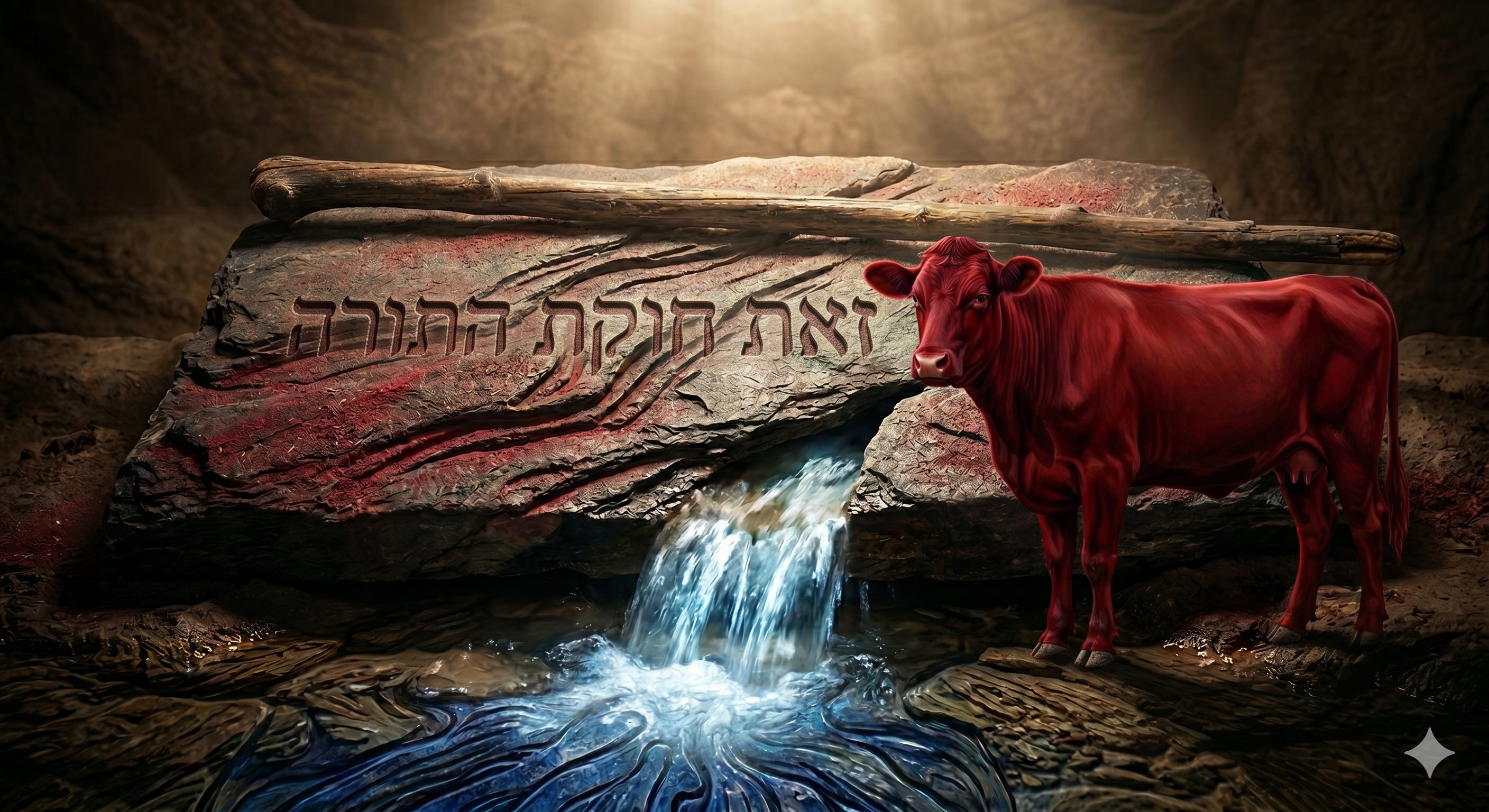
זאת חקת התורה
“This is the decree of the Torah.”
Rashi, quoting Chazal, explains that פרה אדומה is the mitzvah that defies human explanation. The Satan and the nations of the world challenge ישראל: What is this mitzvah, and what reason does it have? The one who is טמא becomes טהור, while those involved in making him טהור become טמא. It is the classic חק.
But the parshah does not remain with פרה אדומה for very long. Almost immediately, the Torah moves into a very different set of stories. מרים dies. The water disappears. משה is told that he will not enter ארץ ישראל. אדום blocks the nation’s path. אהרן dies. And then, as the water arc of the parshah moves toward its climax, ישראל sings to the באר.
For years I assumed these were simply the events of the parshah. But the more one looks at the flow, the harder it becomes to see them as disconnected. Perhaps פרה אדומה is not only the חק in the parshah. Perhaps it is the introduction to the entire parshah.
Many explain that חק is related to חקיקה, engraving. Something written is merely placed upon a surface. חקיקה is different. The letters become part of the thing itself. They are not added from the outside; they are carved into the object.
That image is not foreign to Torah. The first form in which Torah was given to כלל ישראל was not ink on parchment, but:
חרות על הלחת
“Engraved upon the tablets.”
שמות לב:טז
The words were engraved into the stone. Torah was not resting upon the לוחות. The לוחות themselves became the bearer of Torah.
Perhaps a חק is not merely something whose reason we do not understand. Perhaps a חק is something whose roots are engraved more deeply into reality than the surface reveals. And if that is true, then פרשת חקת is not only about mysterious commandments. It is about mysterious realities.
The first of those realities is death.
The Torah tells us:
ותמת שם מרים
“And Miriam died there.”
And immediately afterward:
ולא היה מים לעדה
“And there was no water for the congregation.”
במדבר כ:א–ב
The connection is impossible to miss. מרים dies, and the water disappears. Chazal teach in תענית ט ע״א that the באר accompanied כלל ישראל in the merit of מרים. But before we even get to that explanation, the Torah lets us feel the loss exactly as the nation felt it.
Without מרים, there is no water.
And water is never merely water. Chazal teach on the pasuk that ישראל traveled three days without finding water:
אין מים אלא תורה
“Water means Torah.”
בבא קמא פב ע״א
The question is not only how the nation will drink. The deeper question is how the nation will continue. What happens when the people who cause the water to flow are no longer here? Every generation eventually faces that fear. What happens when the giants leave? What happens when the people who carry Torah, explain Torah, embody Torah, and make Torah feel alive are no longer with us?
Who will bring us water now?
That question sits beneath the entire parshah, and nowhere is it more painful than at מי מריבה. Hashem tells משה:
קח את המטה
“Take the staff.”
במדבר כ:ח
That instruction itself is strange. If the purpose is simply to speak to the rock, why take the staff at all?
The Torah is clearly echoing an earlier water crisis. In שמות יז, the nation also lacked water. There too, Hashem told משה to take the staff. There too, a rock stood before him. But there, Hashem explicitly commanded:
והכית בצור
“You shall strike the rock.”
שמות יז:ו
Here, the command changes:
ודברתם אל הסלע
“You shall speak to the rock.”
במדבר כ:ח
The similarities are obvious, and therefore the difference is impossible to ignore.
משה strikes the rock. Water comes forth. And then comes one of the most difficult decrees in the Torah:
יען לא האמנתם בי להקדישני לעיני בני ישראל לכן לא תביאו את הקהל הזה אל הארץ
“Because you did not believe in Me to sanctify Me before the eyes of בני ישראל, therefore you shall not bring this congregation to the land.”
במדבר כ:יב
The punishment is explicit, but the full explanation remains elusive. The Torah never simply says, “Because משה hit the rock, he cannot enter the land.” Instead, it gives us words that generations of commentators have struggled to fully understand.
The act matters. The sin matters. משה is held accountable. But the full accounting remains hidden. Perhaps that too is part of חקת. Not that there is no explanation, but that the explanation is engraved deeper than we can read.
And what happens next is remarkable. The Torah records no response from משה. We know from later, in ואתחנן, that משה davened and pleaded to enter ארץ ישראל. He wanted it desperately. But here, in the moment of the decree, the Torah gives us silence.
It almost recalls אהרן after the death of נדב and אביהוא:
וידם אהרן
“And Aharon was silent.”
ויקרא י:ג
Not because there was no pain. Not because there was no longing. But because there was acceptance.
משה would still daven. He would still plead. But he would not rebel. He would continue leading, continue serving, continue carrying the mission.
The decree arrives, and the road continues.
Immediately afterward, the Torah says:
המה מי מריבה אשר רבו בני ישראל את ה׳ ויקדש בם
“These are the waters of Merivah, where בני ישראל contended with Hashem, and He was sanctified through them.”
במדבר כ:יג
The simplest reading is that בם refers to the waters. That itself is powerful. The visible vessel has just been judged, yet the water still comes. The nation does not receive an explanation. The nation receives water. The Source is still present, even when the vessel through which the nation has known Hashem is being removed.
Then the Torah makes a striking transition:
וישלח משה מלאכים מקדש אל מלך אדום
“Moshe sent messengers from Kadesh to the king of Edom.”
במדבר כ:יד
From קודש to אדום. From ויקדש בם to the king of Edom. ישראל asks only to pass through. אדום refuses:
פן בחרב אצא לקראתך
“Lest I come out against you with the sword.”
במדבר כ:יח
The road closes, and once again the nation encounters a reality it would not have chosen.
Yet they do not fight.
That is not weakness. It is maturity. Not every obstacle is ours to conquer. Not every blocked road is a battle of destiny. Some roads are simply not ours. We do not wage war for convenience. We fight for what Hashem gives us to fight for; we do not fight merely to make the journey shorter. Part of living with a חק is accepting that the shortest route is not always Hashem’s route.
Then comes one of the most moving scenes in the Torah. Hashem tells משה to take אהרן and אלעזר up הר ההר:
והפשט את אהרן את בגדיו והלבשתם את אלעזר בנו
“Remove Aharon’s garments and dress Elazar his son in them.”
במדבר כ:כו
Three go up: משה, אהרן, and אלעזר.
Two come down.
Before אהרן dies, משה removes the בגדי כהונה from אהרן and places them upon אלעזר. The scene is heartbreaking, but it is also beautiful. The כהונה does not disappear. It is handed forward.
Not because אהרן is replaceable. He is not. But because what he carried was never meant to end with him. It was entrusted to him, and now it is entrusted onward.
The forging was theirs. The drawing from it will be ours.
This too brings us back to פרה אדומה. The parshah opens with טומאת מת, impurity from contact with death, and the rest of the parshah is filled with death. But פרה אדומה does not teach us that death can be ignored, or that טומאה simply disappears.
The halacha states that the טמא becomes טהור, while the one involved in making him טהור becomes טמא. That is the halacha. But perhaps we can suggest that the structure of the halacha reveals a world in which טומאה is not treated as nothing. It is a real state. It must be addressed. It must move through a process.
That process is mysterious. It is not simple erasure. It is movement, transformation, and return. Somehow, through the חק of פרה אדומה, a person who has encountered death is brought back toward קדושה.
And the key is water.
Not just any water.
The Torah says by מי חטאת, the purifying waters of the פרה אדומה:
ונתן עליו מים חיים אל כלי
“He shall place upon it living water into a vessel.”
במדבר יט:יז
The water that enters the purification from טומאת מת must be מים חיים. Living water. Static gathered water cannot answer death. Death is answered only by מים חיים.
Perhaps we can suggest that this is the master image of the entire parshah. The parshah saturated with death opens with the water that answers death. מרים dies. אהרן dies. משה is decreed not to enter. The generation watches the vessels of its life begin to leave. And the Torah’s response is not an explanation.
It is מים חיים.
Here the Gemara in תענית becomes central. Chazal teach:
שלשה פרנסים טובים עמדו לישראל: משה, אהרן, ומרים. ושלש מתנות טובות ניתנו על ידם: באר, ענן, ומן.
“Three good leaders stood for ישראל: Moshe, Aharon, and Miriam. And three good gifts were given through them: the well, the cloud, and the manna.”
תענית ט ע״א
The באר came in the merit of מרים. The ענני כבוד came in the merit of אהרן. The מן came in the merit of משה.
At first glance, this only intensifies the problem. If the gifts came through the leaders, what happens when the leaders leave?
But the Gemara adds a crucial detail. When מרים dies, the באר disappears and then returns in the merit of משה and אהרן. When אהרן dies, the gifts continue through משה. The gifts do not simply float freely without vessels. They are transmitted from vessel to vessel.
That is how Torah lives. Not as water without someone to draw it. Not as abstract inspiration floating through history. Torah survives through מסורה. Through rebbe and talmid. Through father and son. Through one generation carrying what it received and handing it onward.
The great question of the parshah is not whether the leaders will die. They will. מרים dies. אהרן dies. Even משה is told that he will not complete the journey he began. The real question is whether what they built dies with them. What becomes of the water when מרים is gone? What becomes of כהונה when אהרן is gone? What becomes of forty years of revelation when משה does not enter the land?
How do you preserve what you have spent your life building?
The Torah’s answer is not memory. It is חקיקה.
If something is merely written on a surface, it can fade. But if it is engraved, the item itself has been changed. That is the goal of מסורה. Not simply to inform the next generation, but to engrave Torah into them so deeply that they themselves become bearers of the עדות.
The לוחות were called לוחות העדות, the tablets of testimony, because the revelation was engraved into them. They did not merely contain testimony. They became testimony.
That is what משה, אהרן, and מרים were doing for forty years. They were not merely providing services to כלל ישראל — water, clouds, מן, leadership. They were engraving something into the nation itself.
But now we can deepen the image. Until now, we may have been thinking of the באר as hidden water that must be uncovered. That is true, but perhaps it is still not enough. A באר is not a בור. A בור holds gathered water. It is static. It contains what was placed inside it. But the באר of מרים is not merely a reservoir. It is a מעיין. It is מים חיים.
A מעיין is connected to its source. Its waters are always new. The source does not change, but the flow is alive. It is never a different source, and never a dead repetition. It is the same נביעה, flowing fresh.
That is the paradox of Torah itself.
Torah never changes. It is חקוקה, fixed, eternal. And yet Torah is תורת חיים, a Torah of life. It is עץ חיים, a tree of life. It flows from the מקור מים חיים, the Source of living waters. It speaks to new roads, new struggles, new generations.
How can both be true?
How can Torah be unchanging and alive?
Perhaps we can suggest that this is exactly what חיים means. A living thing does not become alive by receiving additions from the outside. Its growth is the unfolding of its own essence. The tree grows new branches, new leaves, new fruit — but all from the life already present within the tree. The מעיין sends forth new water, but only because it remains connected to the same hidden source.
So too, Torah does not become new by bending to the times. That is not תורת חיים. That is abandoning the source. Torah is alive because its eternal essence continues to flow into every generation. A new ביאור is not a new Torah. It is water drawn from the same באר.
שלמה המלך says in קהלת:
אין חדש תחת השמש
“There is nothing new under the sun.”
And yet Torah is תורת חיים. It continues to flow into every generation. Chazal say that כל מה שתלמיד ותיק עתיד לחדש נאמר למשה מסיני — whatever a faithful student will one day be מחדש was already given to Moshe at Sinai. The חידוש is real, but it is not created from outside the Torah. It is drawn from within it, like מים חיים from the same eternal באר.
Here the halacha itself gives us the language. A מקוה purifies with gathered, standing water, and it requires a שיעור of ארבעים סאה. Below that measure, it is not a מקוה at all; the water simply does not purify. Its כח is a function of mass. But a מעיין — living water — is different. The Mishnah teaches that a מעיין is מטהר בכל שהוא ובזוחלין, it purifies in any amount, and even while flowing.
מקוה במ’ סאה, ומעין בכל שהוא
(משנה מקואות א:ז)
Perhaps we can suggest what stands beneath this. Static water works through שיעור, through critical mass: if the full measure is not present, it is below the threshold and powerless. But מים חיים do not work through quantity at all. Their כח is in their living attachment to the מקור. Even a משהו purifies — not because a drop is a large amount, but because a drop of living water is joined to the endless spring. The power was never in the volume. It was in the connection.
That is the balance. The Torah is fixed, eternal, and חקוקה. And yet every generation must draw from it again. The חידוש is real, not because it is invented from outside the Torah, but because the Torah itself is alive. The באר keeps flowing, and each generation must bring its waters to the surface through its own עמל, its own ביאור, and its own faithful connection to the מקור.
This is a remarkable way to think about מסורה. The next generation is not asked to replicate the giants. That would be impossible. No one replaces מרים. No one replaces אהרן. No one replaces משה. We do not produce another forty סאה of the דור דעה. But if there is a living connection to the מקור, then even a משהו of living transmission carries the כח of מים חיים.
That is the answer to the fear at the opening of the parshah.
Without מרים, there is no water.
And yet, perhaps we can suggest that the water was never only about mass. It was never merely the size of the vessel. It was מים חיים all along. The vessel matters. The chain matters. The זכותים matter. But the כח is in the living connection to the Source.
Now פרה אדומה returns with full force. The מי חטאת that purify טומאת מת require מים חיים. The Torah’s response to death is not static water. It is living water. And the parshah that began with מים חיים for the one who encountered death now brings its water arc toward song through the באר, through the מים חיים of מסורה. Only a living מסורה can carry a nation through the encounter with loss and return it toward קדושה.
Only now can ישראל sing.
אז ישיר ישראל את השירה הזאת עלי באר ענו לה
“Then ישראל sang this song: Rise up, O well; answer to it.”
במדבר כא:יז
The arc that began with disappearing water now becomes a song about water. And the language matters. At ים סוף, the Torah says:
אז ישיר משה ובני ישראל
“Then Moshe and בני ישראל sang.”
שמות טו:א
Here, it says simply:
אז ישיר ישראל
“Then ישראל sang.”
Not because משה is absent. Not because משה is unimportant. But because after all the losses, decrees, and closed roads, כלל ישראל does not fall apart. It sings as ישראל, as one nation, one body, moving forward together. The שירה comes from the כלל.
And the song itself says:
באר חפרוה שרים כרוה נדיבי העם במחוקק במשענותם
“A well dug by princes, hollowed out by the nobles of the people, with the scepter, with their staffs.”
במדבר כא:יח
The parshah began with זאת חקת התורה, and the song of the באר speaks of מחוקק. The connection is difficult to ignore. The חק that opened the parshah returns as the water arc reaches its song.
And perhaps there is another hint in the word itself. A באר gives water. A ביאור draws out meaning. Torah itself does not change. The water is the same water. But every generation must draw it again. Every generation must labor in it, explain it, live it, and reveal the part of its depth that belongs to the road it must travel.
A באר requires digging. A ביאור requires עמל. Neither happens by itself.
Perhaps that is why the Torah brings this narrative to song through a well rather than through the מן or the עננים. The מן simply fell. The clouds simply surrounded. But a well must be drawn from. The generation that received everything through its giants must eventually become the generation that draws for itself.
That is not merely continuity.
That is מסורה.
And that is the challenge of every parent, every rebbe, every leader, and every generation. We want to protect our children. We want to guide them. We want to clear the road before them and shield them from every danger. But no generation can walk the entire road for the following one. At some point, our children will have to travel paths that we cannot travel for them. They will face challenges we did not face and roads that may not look exactly like ours.
Our עבודה is not to control their future. It is to engrave within them the tools, values, אמונה, discipline, and love of Torah that will allow them to draw water when they reach their own באר. We push. We teach. We model. We daven. We plead. We try to be a beacon. And ultimately, we will not be here forever.
That is a terrifying thought.
But it is also the foundation of מסורה.
Each generation stands on what was constructed by the generations before it. The growth of כלל ישראל is cumulative. We do not begin again from nothing. We inherit. We receive. We build on the shoulders of those who came before us. But inheritance is not enough. The next generation must also dig. It must draw. It must offer its own ביאור from the same באר.
The path ahead will not always look like the path behind. אדום may block the road. The shortcut may close. New battles will emerge, and not every battle will be ours to fight. But if the engraving is real, then adaptation does not mean abandonment. A new path does not mean a new Torah. This is the whole meaning of תורת חיים. The water is the same water, flowing from the same eternal מקור, but it reaches the place where this generation is standing. The adaptation is in the flowing, never in the water itself.
We are not always privileged to understand why the great vessels are removed. We are not always permitted to see the full engraving beneath the surface. But the Torah they carried does not disappear with them. It remains, and each generation is called upon to uncover it again.
To dig.
To draw.
To hand it forward.
And then, somehow, to hear the next generation sing.
May we be זוכה to learn from those who came before us, to draw from the באר they uncovered, and to usher in the next generation with all the ברכה, strength, Torah, and accomplishments that we have inherited from them — without needing to endure the hardships through which those gifts were forged. May the values engraved into us become engraved into our children, and may they continue to draw even deeper waters from the same eternal באר. And may our endurance, our אמונה, and our unwavering commitment to the מסורה bring us to see משיח צדקינו במהרה בימינו, when the חק will finally be revealed, the hidden song will become clear, and the entire world will stand as עדות to the true כבוד שמים.