

There are two towering songs near the two great boundaries of Moshe’s life with כלל ישראל. The first is אז ישיר, sung when כלל ישראל has just crossed the ים סוף. The water that stood before them as certain death has split, their enemies have drowned, and the presence of Hashem has become so visible that even the simplest person can point and declare, “This is my God.” The nation responds with a song of praise and gratitude. It is immediately evident why this moment must become a שירה.
The song of האזינו is something else entirely. It is hardly recognizable as a song. Moshe calls שמים and ארץ to testify, praises the perfect justice of Hashem, recounts the failures of כלל ישראל, and foretells rebellion, punishment, הסתר פנים (the concealment of Hashem’s face), and near destruction. Only at the end does the שירה turn clearly toward vindication and כפרה (atonement). This is also Moshe’s last public act before וזאת הברכה. He will teach this song, bless the שבטים, ascend the mountain, and die. Before the greatest leader of כלל ישראל leaves the world, the Torah insists that he sing this difficult song. Why is this essential? What does האזינו accomplish that all of Moshe’s previous rebuke did not?
The need for the שירה appears at the end of פרשת וילך. Hashem tells Moshe that after his death the people will stray, the consequences will be terrible, and they will reach a devastating conclusion:
וְחָרָה אַפִּי בוֹ בַיּוֹם הַהוּא וַעֲזַבְתִּים וְהִסְתַּרְתִּי פָנַי מֵהֶם וְהָיָה לֶאֱכֹל וּמְצָאֻהוּ רָעוֹת רַבּוֹת וְצָרוֹת וְאָמַר בַּיּוֹם הַהוּא הֲלֹא עַל כִּי אֵין אֱלֹקי בְּקִרְבִּי מְצָאוּנִי הָרָעוֹת הָאֵלֶּה׃ וְאָנֹכִי הַסְתֵּר אַסְתִּיר פָּנַי בַּיּוֹם הַהוּא עַל כָּל הָרָעָה אֲשֶׁר עָשָׂה כִּי פָנָה אֶל אֱלֹהִים אֲחֵרִים׃
“My anger will flare against it on that day, and I will abandon them and conceal My face from them, and it will be consumed, and many evils and troubles will find it. On that day it will say, ‘Is it not because my God is not within me that these evils have found me?’ But I will surely conceal My face on that day because of all the evil it committed, for it turned toward other gods.”
דברים ל״א:י״ז–י״ח
The greatest danger is not suffering alone. It is the conclusion that suffering proves Hashem has abandoned us. Therefore, before the darkness arrives, Hashem places it inside the Torah. The הסתר פנים is described before כלל ישראל experiences it. Once concealment has been written into the ברית, it can no longer prove that the ברית has ended. Even when Hashem appears absent, the Torah describing that absence, too, demonstrates the expression of His presence.
Hashem therefore commands Moshe:
וְעַתָּה כִּתְבוּ לָכֶם אֶת הַשִּׁירָה הַזֹּאת וְלַמְּדָהּ אֶת בְּנֵי יִשְׂרָאֵל שִׂימָהּ בְּפִיהֶם לְמַעַן תִּהְיֶה לִּי הַשִּׁירָה הַזֹּאת לְעֵד בִּבְנֵי יִשְׂרָאֵל׃
“And now, write this song for yourselves, teach it to the Children of Israel, and place it in their mouths, so that this song will be a witness for Me among the Children of Israel.”
דברים ל״א:י״ט
The שירה is certainly a witness against כלל ישראל. They will never be able to claim that the consequences were not stated. Yet the testimony also runs in the other direction. The same passage promises that no matter how far they fall, the song will remain:
כִּי לֹא תִשָּׁכַח מִפִּי זַרְעוֹ׃
“For it will not be forgotten from the mouth of its descendants.”
דברים ל״א:כ״א
That is an extraordinary promise. כלל ישראל may forget Hashem, but the song will never entirely be forgotten by כלל ישראל. The witnesses testify to our obligation, but they also testify to our eternity. Moshe is not only holding the nation accountable to Hashem. In a daring sense, he is also placing the promise of Jewish continuity before שמים and ארץ. The punishment may be real, the concealment may be terrible, but the relationship cannot disappear. The very song that describes our failures guarantees that there will always be Jewish mouths left to sing it.
The Man Between Heaven and Earth
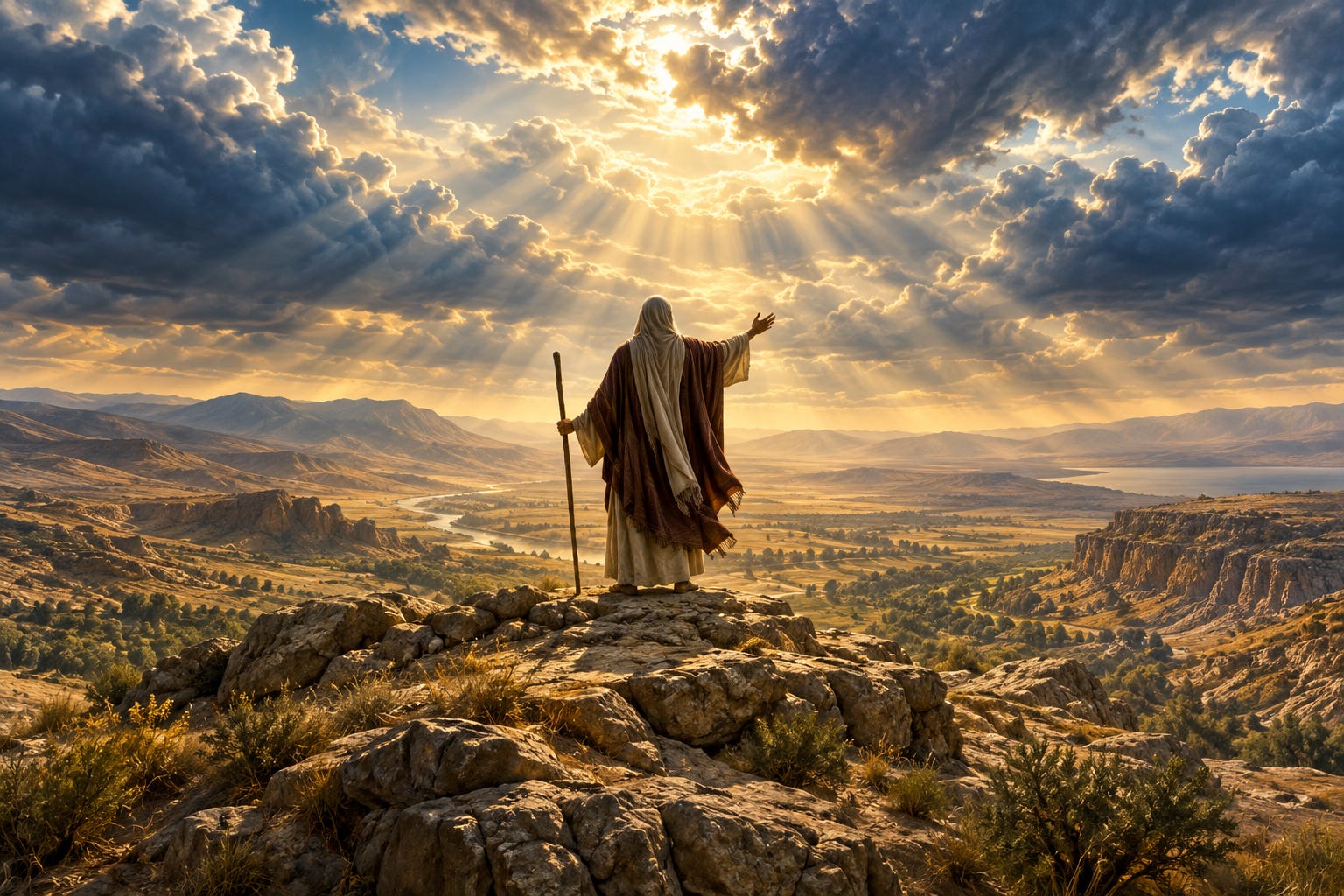
This brings us to the startling opening of Moshe’s song:
הַאֲזִינוּ הַשָּׁמַיִם וַאֲדַבֵּרָה וְתִשְׁמַע הָאָרֶץ אִמְרֵי פִי׃
“Give ear, O heavens, and I will speak; and let the earth hear the words of my mouth.”
דברים ל״ב:א׳
שמים and ארץ form the basic relationship between giver and receiver. שמים gives rain; ארץ receives it and produces life. פנימיות התורה (the inner dimension of Torah) teaches that this structure repeats itself through man and woman, אבא and אמא, then חכמה and בינה, and finally תורה שבכתב and תורה שבעל פה. The upper point gives its essence; the receiver accepts it, develops it, and brings its hidden potential into life. Neither can fulfill its purpose without the other.
האזינו is not passive exposure to sound. It is an active command: incline your ear, weigh what you are hearing, and accept what I am about to say. The heavens themselves are being told to listen to a man standing upon the earth.
The same two witnesses are summoned again centuries later, and the language is turned around:
שִׁמְעוּ שָׁמַיִם וְהַאֲזִינִי אֶרֶץ כִּי ה׳ דִּבֵּר בָּנִים גִּדַּלְתִּי וְרוֹמַמְתִּי וְהֵם פָּשְׁעוּ בִי׃
“Hear, O heavens, and give ear, O earth, for Hashem has spoken: I raised and elevated children, but they rebelled against Me.”
ישעיהו א׳:ב׳
The גר״א answers using the laws of testimony. The summoning of עדים (witnesses) is required twice: once at their designation, when the warning is given, and again when they are brought to stand in judgment, at the court. Moshe designated the witnesses before כלל ישראל entered the land. ישעיהו called those same witnesses, centuries later, at the eventual judgment, to bring the nation to trial for having transgressed the מצות and broken the ברית.
These are not two summonses of two sets of witnesses. They are the two appearances the law requires of one set, and the case is the same case. Moshe is speaking at the warning.
That also explains which side receives the sharper verb. האזנה, the גר״א writes, is a לשון (an idiom) of understanding with great precision. כלל ישראל said נעשה for the מצות belonging to the body, and ונשמע for the Torah of learning, which belongs to the נשמה and the שכל. Moshe is warning first about the Torah from שמים that they must learn in order to do it, and so the precision is demanded above. ישעיהו is prosecuting מצות that were transgressed, one after another, and so he demands that same precision of the ארץ.
The answer sharpens the difficulty rather than dissolving it. Moshe is instructing שמים to weigh his words with exactness. What kind of human being stands upon the earth and tells the heavens to listen closely?
The גר״א notes that האזינו has the same numerical value as דעה. Each equals seventy-nine. This is not merely hearing in the physical sense. The root of האזינו is connected to אוזן, the ear, and it also appears within the word מאזנים, a scale. The ears do not merely collect sound. They distinguish, weigh, and provide the physical sense of balance. There are two ears on opposing sides, but balance emerges only when the two sides are integrated.
That is the function of דעת. The upper point of חכמה is concentrated; בינה receives, develops, and gives it form. אבא and אמא must be joined for knowledge to become settled and real. The גר״א does not leave the רמז at דעה. He writes that in its expansion through the ו׳ קצוות (the six extremities) it becomes the שם of דעת — seventy-nine carried through six — and he closes with אל דעות ה׳. On the two sides stand שמים and ארץ, while Moshe stands between them.
The גר״א finds that standing place in the letters. Each of the three words in the first half of the פסוק carries the letter ה, and the second half opens with a ו. Five and six: the five חומשי תורה and the six סדרי משנה. This is not a new pair. It is the same two sides written as numbers, the written Torah above and the oral Torah below, which is what the two halves of the פסוק have been saying all along.
And the ה at the end of ואדברה is an added letter. The גר״א says that it also carries the ארץ within it, the ה אחרונה (the final letter) of the שם, which is מלכות, and that it is what joins the two halves of the פסוק, pairing with the ו of ותשמע. And it runs only in this direction. The ארץ is included within the שמים, and never the reverse, because that is what it means to be the receiver. The lower world is not standing outside the word Moshe speaks to the upper one. It is already inside it.
Moshe has occupied that position since הר סיני. He ascended from the earth into שמים, received the תורה שבכתב, and descended to place it within the physical life of כלל ישראל. He did not merely travel between two locations. He joined two worlds. The Torah that originated above could now be fulfilled below, while physical human beings could attach themselves to the רצון ה׳.
That explains why Moshe may speak. It does not yet explain why שמים must listen.
The גר״א counts the words. The opening פסוק of the שירה has seven, exactly as the opening פסוק of the Torah has seven. The second has twelve, matching the second פסוק of בראשית once the two words already counted in the first are set aside. He reads the two counts against the seven תיקונים (structured repairs) and the twelve, and identifies Moshe’s opening with בראשית and with והארץ. Moshe is not summoning heaven and earth in general. He is reciting to them the two פסוקים by which they were made.
This is why they must listen. חז״ל teach that Hashem made a condition with מעשה בראשית (the work of creation) at the very beginning: if כלל ישראל accepts the Torah, creation endures, and if not, it returns to תוהו ובוהו. Notice which two פסוקים Moshe has just recited to them. The first is the פסוק that made them. The second is the פסוק of תוהו ובוהו. He names the terms and he names the penalty, in that order, and only then does he begin to speak. The condition was made on קבלה, and קבלה is not a single moment that passed. It is taken up again by every generation that receives the Torah, which is why forgetting would not be some second failure standing beside the condition. It is the failure of the condition itself, arriving eventually instead of immediately.
They are therefore not impartial observers drafted as witnesses because they are permanent and cannot be bribed. They are the original parties to that condition, and their own existence is what hangs upon it. When Moshe opens with the words of the first פסוק of the Torah, he is not decorating his song. He is reciting to שמים and ארץ the terms under which they were created.
Moshe can therefore command שמים not merely because he is close to it, but because he holds the very thing upon which it depends. He is not an ordinary inhabitant of the earth shouting upward. He bears the Torah that came from שמים, the Torah that was created before the world and for whose fulfillment the world was made. At this moment, שמים must listen to the Torah as it emerges through Moshe, because there is no שמים without it. He can also command ארץ because the purpose of that Torah is not to remain above. The earth must hear אמרי פי, accept the yoke of Torah, and allow its words to become action.
This gives new weight to the promise made about the song. If the Torah could ever be entirely forgotten, the condition would fail and creation would have nothing left to stand upon. כי לא תשכח מפי זרעו is therefore not only a promise made to כלל ישראל. It is a promise made to the witnesses themselves. Moshe summons שמים and ארץ to testify, and the testimony he places before them guarantees their own continuance along with ours. They are not only the witnesses to the ברית. They are among those who depend upon it.
The two forms of speech in the פסוק reflect these sides. The difference between דיבור and אמירה is usually described as firmness against softness, but the גר״א draws it along another line entirely. דיבור belongs to שמים because שמים here is תורה שבכתב, and in the written Torah is the aspect of קול and of דיבור. That is why throughout the entire Torah it says וידבר ה’ אל משה.
And it is why almost nothing else does. In all of the נביאים, the גר״א writes, that word appears a single time — in יהושע, at the chapter of ערי מקלט (the cities of refuge), and only because he is there repeating a פרשה of the Torah itself.
So דיבור is not merely the harsher word. It is the higher one. It is the register of תורת משה, and no prophet after Moshe speaks in it except when he is quoting Moshe. When Moshe says ואדברה he is using the one verb that belongs to him alone, and that is itself part of the answer to how he can address שמים. He is not a man raising his voice toward heaven. He is speaking in the register that came down from שמים in the first place.
The earth, however, must receive אמרי פי, the words as they emerge from Moshe’s mouth and enter the life of the nation. ותשמע means more than hearing, just as שמע ישראל means more than detecting sound. It is קבלה, the active acceptance of authority and responsibility.
The receiver is never merely passive. The earth receives one drop and produces an entire plant. A woman receives and develops what was given into new life. תורה שבעל פה receives the written word and reveals the breadth that was always contained within it. Even מלכות depends upon the willing acceptance of the nation. My Rebbe, HaRav Nochum Lansky שליט״א, explained the difference between a מלך and a מושל. A מושל imposes his authority through force. A מלך is accepted by his people. His rule is a relationship, and therefore even his דין must operate through צדק ומשפט.
דוד המלך states the distinction plainly:
כִּי לַה׳ הַמְּלוּכָה וּמֹשֵׁל בַּגּוֹיִם׃
“For kingship belongs to Hashem, and He rules over the nations.”
תהלים כ״ב:כ״ט
Hashem is מושל even over those who do not recognize Him, because no creature can escape His authority. He becomes מלך over those who willingly receive His מלכות. The ultimate future is not that Hashem will acquire a power He presently lacks, but that all creation will accept what has always been true:
וְהָיָה ה׳ לְמֶלֶךְ עַל כָּל הָאָרֶץ בַּיּוֹם הַהוּא יִהְיֶה ה׳ אֶחָד וּשְׁמוֹ אֶחָד׃
“Hashem will be King over the entire earth; on that day Hashem will be One and His Name will be One.”
זכריה י״ד:ט׳
Moshe is not ordering שמים and ארץ to submit to naked force. He is asking both sides to accept their roles within Hashem’s מלכות. The firmness of דיבור and the acceptance of שמיעה belong to one relationship. That is why the King’s throne rests upon balance:
צֶדֶק וּמִשְׁפָּט מְכוֹן כִּסְאֶךָ חֶסֶד וֶאֱמֶת יְקַדְּמוּ פָנֶיךָ׃
“Righteousness and justice are the foundation of Your throne; kindness and truth precede Your presence.”
תהלים פ״ט:ט״ו
Before the Sun Sets
The opening of האזינו is possible because Moshe is the דעת between שמים and ארץ. But this also reveals why the שירה must be delivered now. The point that has joined the two sides for forty years is about to disappear.
חז״ל say in בבא בתרא:
פני משה כפני חמה פני יהושע כפני לבנה
“The face of Moshe was like the face of the sun, while the face of Yehoshua was like the face of the moon.”
Moshe is the sun, the source of revealed Torah. יהושע is the moon, receiving that light and reflecting it into a new generation. Moshe’s sun is setting, and the era of the moon is beginning.
There is a sign of this in the one exception we have already seen. The single time a prophet after Moshe speaks in the language of דיבור, it is יהושע, and it is because he is repeating a פרשה of the Torah. The moon has no light of its own. What it has, it has because it is turned toward the sun.
The תורה שבכתב has been given. It must now be received, preserved, interpreted, and carried through history by the תורה שבעל פה. The opening words of פרקי אבות capture this movement exactly:
משה קיבל תורה מסיני ומסרה ליהושע
“Moshe received the Torah from Sinai and transmitted it to Yehoshua.”
אבות א׳:א׳
Moshe received and then transmitted; יהושע becomes the first receiver in the chain that follows.
This explains the urgency of שימה בפיהם. Moshe cannot remain physically between שמים and ארץ, so he places that connection into the mouths of כלל ישראל. Until now, Moshe himself was the living witness, the teacher who could correct distortion and restore the nation after failure. After his death, the שירה will take his place. It will carry the words of the תורה שבכתב through the living voice of תורה שבעל פה.
Moshe’s disappearance will be so complete that the Torah concludes:
וַיָּמָת שָׁם מֹשֶׁה עֶבֶד ה׳ בְּאֶרֶץ מוֹאָב עַל פִּי ה׳׃ וַיִּקְבֹּר אֹתוֹ בַגַּיְ בְּאֶרֶץ מוֹאָב מוּל בֵּית פְּעוֹר וְלֹא יָדַע אִישׁ אֶת קְבֻרָתוֹ עַד הַיּוֹם הַזֶּה׃
“Moshe, the servant of Hashem, died there in the land of Moav by the word of Hashem. He buried him in the valley in the land of Moav, opposite Beis Peor, and no person knows his burial place to this day.”
דברים ל״ד:ה׳–ו׳
The ספרי teaches that even Moshe himself does not know the place of his burial. Moshe had become so removed from physical attachment that once his נשמה separated from his body, he possessed no continuing relationship even with the location in which that body lay. He had remained upon the mountain without food or water, separated himself from ordinary physical life, and spoken to Hashem פנים אל פנים. He was איש האלקים (a man of God) while alive and could not finally be contained by an earthly מקום (place) after death.
Moshe is more of שמים than he is of ארץ. His identity is so completely nullified to Hashem that no physical place can define him. He will leave behind no grave toward which the nation can point and say, “Moshe is here.” Instead, his place will be inside the Torah he carried and inside the mouths into which he placed it. Until his death, Moshe joins שמים and ארץ. After his death, his שירה will.
There is a deep love within this final act. האזינו speaks of Hashem as אב, and the judgment it describes is the judgment of a מלך rather than of a מושל. Both are languages of love. אבינו expresses the essential bond that can never be dissolved. מלכנו expresses the ordered relationship freely accepted by the nation. Unlike a מושל, a מלך does not govern through force alone. His דין belongs to the צדק ומשפט that establish his throne.
Before Moshe delivers the harshest portions of the תוכחה (rebuke), he establishes the bond:
הֲלַה׳ תִּגְמְלוּ זֹאת עַם נָבָל וְלֹא חָכָם הֲלוֹא הוּא אָבִיךָ קָּנֶךָ הוּא עָשְׂךָ וַיְכֹנְנֶךָ׃
“Is this how you repay Hashem, O foolish and unwise people? Is He not your Father, Who acquired you? He made you and established you.”
דברים ל״ב:ו׳
Everything that follows must be heard inside the declaration הוא אביך. Hashem’s judgment is not evidence that He has ceased to be our Father. It is the judgment of our King precisely because He refuses to surrender the relationship. The שירה later speaks in the language of birth — צור ילדך, “the Rock Who gave birth to you” — and describes Hashem hovering over His young like an eagle awakening its nest. Fatherhood, motherhood, kingship, justice, and compassion meet within one song.
This is the depth of דוד המלך’s words:
כְּרַחֵם אָב עַל בָּנִים רִחַם ה׳ עַל יְרֵאָיו׃
“As a father has compassion upon his children, Hashem has compassion upon those who fear Him.”
תהלים ק״ג:י״ג
The word רחם evokes the womb and the most elemental form of maternal compassion, yet the פסוק attributes that compassion to an אב. The two parental forms of love unite within רחמים. That balance allows the child to know that discipline and tenderness emerge from the same relationship. Moshe, the דעת standing in the middle, refuses to sacrifice either truth.
חכמה is called אבא and בינה is called אמא, and they do not lean the same way. One stands on the side of חסד, and the other heads the side of דין. The bridge between them is דעת, the מיזוג (the blending) of the two, in which they are not chosen between but blended into a single thing. Notice that the crossing runs in both directions. The פסוק gives a mother’s word to a father, and the structure gives the severity to the mother and the tenderness to the father. Neither parent holds only one of them.
That is why the man standing in the middle can sing this song. Moshe is the דעת. He is not softening the דין, and he is not withholding the love. He is the place where the two are not two. The דין is real, but so is the love. Hashem’s face will be concealed, but Hashem will not leave.
Moshe’s Lullaby
We can now understand why this must be a שירה.
How does a mother calm a crying infant? She sings. The child does not understand the words or the reason for his pain. The mother may not be able to remove what hurts, and the tune itself may be simple. Yet the comfort does not depend upon the sweetness of the words or the beauty of the melody. The child recognizes the voice. The song communicates what explanation cannot: I am here. You are not alone. You are still mine.
That is the work of this song. כלל ישראל will pass through times in which the suffering is too great to understand. They will ask whether Hashem is still בקרבי, still present within them. An argument will not always quiet that fear. Therefore, Moshe gives them a song. The שירה does not explain away their pain. It assures them that their pain still exists within a relationship, and that the One Who appears hidden remains beside them.
The song can contain terrifying words because a mother’s song is not comforting only when every word is pleasant. It is comforting because her voice proves that she has not left. The song speaks of sin, punishment, concealment, and destruction, but the continuing voice of Moshe tells כלל ישראל that none of them is the end. The darkness is real, yet it remains a movement within a larger song.
No matter the words and no matter the tune, this is Moshe’s song. It is the song of his love for his nation, despite knowing how far they will stray. It is the song of his love for the Torah whose words he carried down from שמים and placed within the earth. It is the song of his love for the land he spent his life journeying toward but would never enter.
Perhaps that love appears in the first description of his Torah:
יַעֲרֹף כַּמָּטָר לִקְחִי תִּזַּל כַּטַּל אִמְרָתִי כִּשְׂעִירִם עֲלֵי דֶשֶׁא וְכִרְבִיבִים עֲלֵי עֵשֶׂב׃
“May my teaching descend like rain; may my words flow like dew, like storm winds upon vegetation and like raindrops upon grass.”
דברים ל״ב:ב׳
Moshe cannot enter the land, but his Torah will. His words will descend upon it like rain, settle upon it like dew, and continue producing life after he is gone. He commands שמים to listen and then gives its rain to the earth. The giver and receiver remain joined through the Torah he leaves behind.
Before Moshe lays himself down for his final sleep, he sings to his children. The words contain rebuke, but the voice is love. He tells them that they will fall but rise again, that Hashem will conceal His face but never abandon them, and that Jewish history may pass through unbearable darkness but will never end.
אז ישיר is the song כלל ישראל sings to Hashem after He splits the sea and makes salvation visible. האזינו is the song Moshe sings to כלל ישראל before they enter the darkness. One is the gratitude of children who have seen their Father save them. The other is the lullaby given to those children so that when they can no longer see Him, they will still recognize His voice.
Moshe leaves behind no grave to visit and no earthly place that can contain him. Instead, he leaves his voice. Every generation that learns האזינו hears Moshe singing once more. His sun sets, but the moon receives its light. Moshe leaves, but the Torah remains. The nation wanders, but Hashem remains beside them. The child may cry, but somewhere within the darkness he can still hear the song.
The שבת of Return
This may explain why האזינו belongs so naturally to this period of the year. It falls more often than not on שבת שובה, as it does this coming year, and otherwise it is read between יום כיפור and סוכות. It always stands within the season of return.
My Rebbe, HaRav Nochum Lansky שליט״א, expressed a remarkable sentiment. What is the pinnacle of the עשרת ימי תשובה? During these days we fast, recite סליחות, confess, and plead אבינו מלכנו. Yet within those days stands שבת שובה, a day upon which we do none of those things. We do not fast, we do not recite סליחות, and according to our מנהג we do not say אבינו מלכנו. What, then, makes it the great day of return?
מִזְמוֹר שִׁיר לְיוֹם הַשַּׁבָּת׃ טוֹב לְהֹדוֹת לַה׳ וּלְזַמֵּר לְשִׁמְךָ עֶלְיוֹן׃
“A psalm, a song for the day of Shabbos. It is good to thank Hashem and to sing praise to Your Name, O Most High.”
תהלים צ״ב:א׳–ב׳
The ultimate תשובה is to stop and recognize that everything comes from Hashem and that everything He gives us deserves our gratitude. The day of שבת is the נוקבא (the receiving side), the receiver of the goodness flowing from above. During the week we act, produce, and attempt to repair. On שבת we stop. We allow ourselves to receive, to recognize, and to acknowledge that even what we do not understand comes from אבינו מלכנו.
There is a reason the שירה belongs to these particular days and not merely to this stretch of the calendar. On ראש השנה we accept the King before understanding anything of what the year will hold. What follows is not a second acceptance. It is the unfolding of the first, and it is not handed over until the sealing. These are the days of understanding.
The שירה is read inside them, and its first word is a command to understand. האזינו is not a request for attention. It is an instruction to weigh with precision, which is what these days are for. Moshe opens in the register the days are already standing in. And then the פסוק turns downward and asks the earth to accept, which is where the season is going. The understanding does not remain understanding. It is placed in a mouth, and it is carried into a year.
There is something further in the second summoning of those same witnesses. ישעיהו calls them when כלל ישראל has already strayed, and the charge he brings is a failure of understanding:
יָדַע שׁוֹר קֹנֵהוּ וַחֲמוֹר אֵבוּס בְּעָלָיו יִשְׂרָאֵל לֹא יָדַע עַמִּי לֹא הִתְבּוֹנָן׃
“An ox knows its owner, and a donkey the trough of its master; Israel does not know, My people does not discern.”
ישעיהו א׳:ג׳
That is why the precision is demanded of the ארץ there, that they should discern well, one מצוה and another. And these are the days in which we conduct exactly that examination upon ourselves.
Yet look at the word he opens with:
בָּנִים גִּדַּלְתִּי וְרוֹמַמְתִּי וְהֵם פָּשְׁעוּ בִי׃
“I raised and elevated children, but they rebelled against Me.”
ישעיהו א׳:ב׳
Standing at the trial, at the harsher of the two summonings, the first thing said about the accused is בנים. Moshe does the same at the warning, placing הלוא הוא אביך קנך before the harshest words of the תוכחה. Both summonings of these witnesses open with fatherhood, at opposite ends of the same case. And we, standing inside that דין and examining what we have failed to understand, call Him אבינו מלכנו in a single breath.
Look closely at what was lost. The two clauses are not two ways of saying one thing. התבוננות (discerning contemplation) is the work of בינה, the side that receives what is given and develops it until it becomes something real. Knowledge is what forms when that work has been done. The second clause explains the first. The receiving side stopped receiving, and so nothing became settled.
That failure is the oldest one we have. At the עץ הדעת (the Tree of Knowledge) it was the receiver who received wrongly. She saw, and she took, and she ate, and what followed was בושה (shame). The break did not descend from above. It came from the side whose entire purpose is to take what is given and bring it into life. And the Torah names that side in the verb of her own making:
וַיִּבֶן ה׳ אֱלֹקים אֶת הַצֵּלָע אֲשֶׁר לָקַח מִן הָאָדָם לְאִשָּׁה וַיְבִאֶהָ אֶל הָאָדָם׃
“And Hashem, God, built the side that He had taken from the man into a woman, and He brought her to the man.”
בראשית ב׳:כ״ב
The word chosen for the forming of אשה is the word of בינה. She is built as the one who builds.
Which is why the repair cannot descend from above either. It must come from the same side, receiving rightly this time, and that is what התבוננות is. These days do not ask that more be given. They ask that what was already given finally be received. That is the road we are on, and it ends on יום כיפור. The day of שבת שובה stands in the middle of it, and that is where the שירה is read.
This does not mean that suffering ceases to hurt or that דין becomes something other than דין. The song never denies the pain. It teaches us that the true דין of a מלך is always governed by צדק ומשפט, and that even within judgment there is רחמים. The day of שבת שובה asks us to hear the whole song rather than isolate its most painful notes. טוב להודות לה׳ means recognizing that the One Who gives and the One Who judges are the same loving Hashem.
Perhaps that is the highest תשובה. We are not merely surrendering to an authority we cannot escape. We are returning to the Father Who never stopped holding us and accepting the King Whose מלכות is itself a relationship of love. We reach toward שמים with our hearts and bring the Torah into the ארץ through our hands. The upper and lower worlds meet within a life fully devoted to עבודת ה׳.
May we be זוכה to hear Moshe’s song, his final lullaby to the nation he loved, the Torah he carried, and the land he could not enter. May his song endure within us, fulfilling the promise that it will never be forgotten from the mouths of our children. May we recognize the רחמים within דין and Hashem’s presence within הסתר פנים. May we look upward with gratitude, smile at our Tatty, accept our King, and continue singing Moshe’s song — a song of Torah, a song of love, and a song that will endure forever.