


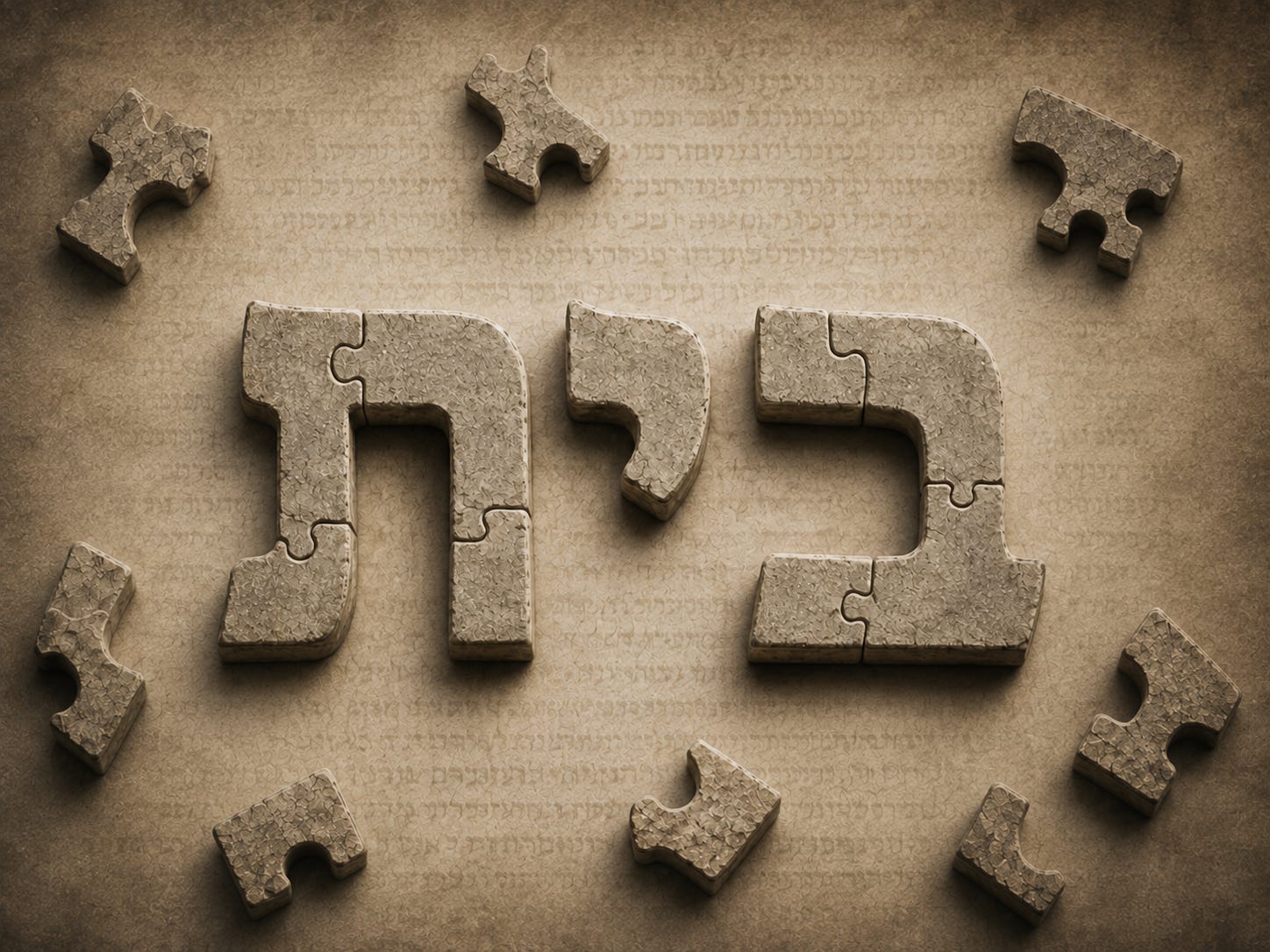
Parshas כי תצא contains more מצוות than any other single פרשה in the תורה. Yet what is most striking is not merely their number, but their extraordinary variety. The פרשה moves from the battlefield into the home; from marriage and divorce to agriculture, clothing, labor, money, brotherhood, and war. It speaks of the אשת יפת תואר (the beautiful woman taken captive in war), the אהובה and שנואה (the beloved wife and the less-loved wife), the נערה המאורסה (the betrothed maiden), forbidden relationships, יבום (levirate marriage) and חליצה (the ceremony that releases the widow from it). It prohibits planting כלאים (forbidden mixtures), plowing with two different animals, and wearing שעטנז (wool and linen woven together). It distinguishes the clothing of a man from that of a woman, determines who may enter קהל ה׳ (the congregation of Hashem), requires honest weights and measures, and concludes with the obligation to erase עמלק.
At first glance, these מצוות appear almost impossible to unite. But perhaps that variety is itself the subject. כי תצא is the פרשה of צירוף — of the way distinct people, forces, and forms are joined. It asks which differences can coexist, which opposites complete one another, which bonds must be preserved, which must be severed, and which forces can never be reconciled.
The תורה does not teach that everything should become one. It teaches how the many can reveal the One.
✦
The מחשבה Within Every אות
My Rebbe, HaRav Nochum Lansky שליט״א, taught me that every אות (letter) is its own distinct מחשבה (thought). Each letter possesses an essential צורה (form), a unique physical shape expressing that מחשבה, even before ink gives it visible existence upon parchment. The אות itself is silent; the נקודה (vowel point) gives that מחשבה a voice. The תגין (the crownlets written above certain letters) and טעמים (the cantillation notes) add further dimensions to its expression. These are the four elements known in פנימיות התורה (the inner dimension of תורה) as טנת״א — an acronym for טעמים, then נקודות, then תגין, and finally אותיות.
A word is therefore not a blur in which the individual letters disappear. Each אות remains entirely itself. An א does not cease being an א because it stands beside a ב. Yet when distinct letters are placed into their proper order and given their proper voice, they express a מחשבה that none of them could reveal alone.
The same letters, arranged differently, can produce entirely different realities. The אותיות of עֹנג — delight — can become נֶגע — affliction. Nothing has changed in the individual letters. The difference lies in their סדר (order), in the relationship established among them. This is also reflected in the twelve צירופי שם הוי״ה (the twelve permutations of the letters of the divine Name). The sacred letters remain unchanged, but their order expresses different forms through which the same divine אחדות (oneness) is revealed.
חז״ל say that בצלאל knew:
לצרף אותיות שנבראו בהן שמים וארץ
He knew how to combine the letters through which שמים and ארץ were created.
ברכות נה ע״א
Creation was not formed merely through letters, but through their proper צירופים. This may be the deepest meaning of a זיווג (a true pairing, a marital union). Two distinct beings are joined without either losing its individual צורה, and their relationship produces a new meaning that neither could express alone. But not every collection of letters forms a word, and not every pair forms a זיווג.
✦
The First זיווג and the First Marriage
The first זוג (pair) in the תורה is אדם and חוה, yet the תורה does not describe them entering a formal marriage in the manner of later human beings. They did not begin as two unrelated individuals who chose to establish a bond. They were one אדם in essence:
זָכָר וּנְקֵבָה בְּרָאָם וַיְבָרֶךְ אֹתָם וַיִּקְרָא אֶת שְׁמָם אָדָם
Male and female He created them, He blessed them, and He called their name אדם.
בראשית ה:ב
חז״ל explain that אדם was originally created דו פרצופין, one being with two faces, and that Hashem subsequently separated the two sides. (See ברכות סא ע״א, also עירובין יח ע״א, and בראשית רבה ח:א.) The woman was not a stranger introduced to אדם; she was the side of the original אדם that had been separated from him. That is why he declares:
זֹאת הַפַּעַם עֶצֶם מֵעֲצָמַי וּבָשָׂר מִבְּשָׂרִי
This time, she is bone of my bones and flesh of my flesh.
בראשית ב:כג
Their relationship preceded their separation. They were not married in order to become one; they were separated so that their underlying אחדות could become a conscious relationship. Hashem says, אעשה לו עזר כנגדו—”I will make for him a helper opposite him” (בראשית ב:יח). She must be כנגדו, opposite אדם. Without distinction, there can be no relationship. The other person must possess an independent face, voice, רצון (will), and צורה. But when that opposition is properly ordered, the כנגדו becomes an עזר.
Their underlying unity does not make the distinction between man and woman incidental. Hashem separated the original אדם into two forms so that each could stand opposite the other. A זיווג requires both unity and distinction. If there is no underlying אחדות, there is nothing deeper to reveal; but if there is no distinction, there can be no כנגדו.
This may be reflected in another מצוה of כי תצא:
לֹא יִהְיֶה כְלִי גֶבֶר עַל אִשָּׁה וְלֹא יִלְבַּשׁ גֶּבֶר שִׂמְלַת אִשָּׁה
The implements of a man shall not be upon a woman, and a man shall not wear the garment of a woman.
דברים כב:ה
Within the larger structure of the פרשה, this מצוה teaches that unity does not require interchangeability. Part of a proper זיווג is that each side assumes and preserves its own צורה and role. The same תורה that declares והיו לבשר אחד—”they shall become one flesh” (בראשית ב:כד)—also preserves the distinction between male and female. An א does not become a ב in order to form a word with it. Each אות must remain faithful to its own מחשבה and צורה; only then can the צירוף produce meaning.
The first time the תורה explicitly describes a man taking wives is not אדם, but למך:
וַיִּקַּח לוֹ לֶמֶךְ שְׁתֵּי נָשִׁים שֵׁם הָאַחַת עָדָה וְשֵׁם הַשֵּׁנִית צִלָּה
למך took for himself two wives; the name of one was עדה and the name of the second was צלה.
בראשית ד:יט
The first human act of taking wives that the תורה chooses to narrate is already an act of division. רש״י, citing בראשית רבה, explains that למך divided the functions of marriage between the two women. One was maintained for children, while the other was kept for beauty and physical pleasure (רש״י on בראשית ד:יט, citing בראשית רבה כג:ב). He separated intimacy from continuity, desire from responsibility, and pleasure from building a family. Instead of one whole relationship, he created two partial ones.
That is precisely the structure appearing near the beginning of כי תצא:
כִּי תִהְיֶיןָ לְאִישׁ שְׁתֵּי נָשִׁים הָאַחַת אֲהוּבָה וְהָאַחַת שְׂנוּאָה
If a man will have two wives, one beloved and the other less loved.
דברים כא:טו
Once the relationship has been divided, one attachment becomes primary and the other secondary. אדם and חוה began as one, became two, and were returned to one another. למך takes two and does not create one. The first divine זיווג creates distinction within unity; the first human taking of wives divides what should have existed within one complete relationship.
✦
Desire, Division, and the Protection of Form
כי תצא begins with a possible relationship arising in the most unstable imaginable setting. The soldier did not enter battle searching for a woman. He encounters her unexpectedly among the captives:
וְרָאִיתָ בַּשִּׁבְיָה אֵשֶׁת יְפַת תֹּאַר וְחָשַׁקְתָּ בָהּ
You will see among the captives a woman of beautiful appearance, and you will desire her.
דברים כא:יא
רש״י notes that the פרשה opens with a מלחמת הרשות, an optional war, one that ישראל was never commanded to fight (רש״י on דברים כא:י). And of the יפת תואר חז״ל say that לא דיבר הכתוב אלא כנגד יצר הרע — the תורה spoke here only against the יצר הרע (see קידושין כא ע״ב, and רש״י on דברים כא:יא). Both halves matter. He need not have been standing there at all, but once he is standing there, the תורה legislates to prevent the man from transgressing. The היתר (permission) is a concession to where he is, not an endorsement of how he came to be there.
The desire is real, but desire does not prove that two people belong together. On the battlefield, she appears within the שבי (the captured spoils of war), among the captives. Everything around the soldier suggests that victory has made her available to him. The תורה refuses to allow the relationship to remain in that form.
The רמב״ם states that if his inclination overwhelms him, he may have a first ביאה (marital relations) with her while she is still a גויה (a non-Jewess), but not upon the battlefield and not as an encounter from which he simply walks away. He must first bring her into his house or another private place. Only afterward does the full process unfold; a second ביאה is forbidden until she has converted and he has married her, following the required waiting period (רמב״ם in הל׳ מלכים ח:ב).
The תורה does not ignore the desire. It concedes it—and still refuses the form in which the battlefield would have allowed it. Even the conceded encounter may not occur as an act of possession among the spoils; it must be removed from the שבי into a private place, and this act binds him to everything that follows. The concession is not what she is reduced to; it is the point at which צורה is imposed upon מקרה (chance, the accidental).
She must be brought into his home. She removes the garments of captivity and sits in mourning:
וּבָכְתָה אֶת אָבִיהָ וְאֶת אִמָּהּ יֶרַח יָמִים
She shall weep for her father and her mother for a full month.
דברים כא:יג
The soldier sees a beautiful captive; the תורה forces him to see a grieving daughter. Until this point, the account has been about what he sees and what he wants. The month forces him to encounter what she feels and what she has lost. The question is not merely whether he desires her, but whether this moment of desire can become a true זיווג—one that recognizes her independent צורה, dignity, grief, and humanity.
If it cannot, then ושלחתה לנפשה—”you shall send her away to herself” (דברים כא:יד). She must be returned לנפשה, to her own self. He may not reduce her to an incomplete extension of his desire. The תורה does not deny desire; it requires desire to discover whether it can accept responsibility for another person.
Immediately afterward, the תורה presents the divided בית (household) of the אהובה and שנואה. Here רש״י explains that one who takes the יפת תואר will ultimately come to hate her, and that the disordered בית may then produce the בן סורר ומורה (the wayward and rebellious son) (רש״י on דברים כא:יא). Desire can initiate a relationship, but it cannot sustain one by itself. If a bond was built only upon what one person saw and wanted, the attraction may pass away, while the consequences remain.
The father may then allow his preference to distort the order of the family. The תורה therefore warns:
לֹא יוּכַל לְבַכֵּר אֶת בֶּן הָאֲהוּבָה עַל פְּנֵי בֶן הַשְּׂנוּאָה הַבְּכֹר
He may not give the birthright to the son of the beloved wife in place of the firstborn son of the less-loved wife.
דברים כא:טז
A false relationship never remains confined to the two people involved. It reshapes the entire בית and enters the next generation.
✦
כלאים and the Failure of קין and הבל
The תורה then presents three forms of כלאים:
לֹא תִזְרַע כַּרְמְךָ כִּלְאָיִם… לֹא תַחֲרֹשׁ בְּשׁוֹר וּבַחֲמֹר יַחְדָּו… לֹא תִלְבַּשׁ שַׁעַטְנֵז צֶמֶר וּפִשְׁתִּים יַחְדָּו
Do not plant your vineyard with mixed species… Do not plow with an ox and a donkey together… Do not wear שעטנז, wool and linen together.
דברים כב:ט–יא
False joining appears in growth, labor, and clothing. Two seeds may each grow properly, yet their mixture is forbidden. A שור and a חמור may each perform valuable labor, yet they may not be forced beneath the same yoke. Wool and linen may each clothe a person, yet their ordinary fusion is prohibited.
כלאים is not necessarily the joining of something good with something evil. It is the joining of two valid things in a relationship that does not express the רצון ה׳. This is why the exception is so revealing. Immediately after the prohibition of שעטנז, the תורה commands גדילים תעשה לך—”you shall make twisted threads for yourself” (דברים כב:יב). The same materials that may not ordinarily be combined can form a holy צירוף when Hashem commands their union. The problem is not the combination itself. The question is whether the צירוף is aligned.
The roots of שעטנז return us to the first pair of brothers. קין works the land, and הבל tends the flock. קין brings from the fruit of the earth, while הבל brings from the firstborn of his sheep. Their differences could have created a complete human world. Agriculture and shepherding, earth and animal life, could have complemented one another. Instead, difference becomes rivalry.
קין kills his brother and then asks:
הֲשֹׁמֵר אָחִי אָנֹכִי
Am I my brother’s keeper?
בראשית ד:ט
קין denies that relationship creates responsibility. The מדרש connects their offerings to שעטנז. The brother who worked the ground, קין, brought פשתן (flax), and the brother who tended the flock, הבל, brought צמר (wool). Each brought from precisely the labor that defined him, and the two materials that emerged are the two the תורה later forbids to be joined (תנחומא on בראשית ט). Neither wool nor linen is inherently corrupt. The tragedy lies in the failed relationship between the forces they represent. Two forms that could have contributed to one world became locked in competition until one destroyed the other.
This may be why the one joining of צמר and פשתים that the תורה commands is ציצית. Halachically, חז״ל derive from this סמיכות (the juxtaposition of adjacent psukim) that an עשה (a positive command) may override a לא תעשה (a prohibition) (יבמות ד ע״א). Yet at the level of the written פרשה, the סמיכות does more than supply an abstract rule. The תורה deliberately places גדילים beside שעטנז and identifies this particular union of צמר and פשתים as capable of becoming a מצוה when it is formed by the רצון ה׳. The same two materials that could not coexist between brothers are bound into a single בגד, each thread remaining exactly what it is, joined into a garment a Yid wears upon himself. What failed as rivalry becomes a מצוה. Not only that but perhaps a mitzvah that is supposed to surround us and one so deeply rooted in vision (see פרשת שלח). It is clear that the mitzvah of ציצית provides a needed תיקון for the strife and displacement caused by the heinous act of קין that reverberates in our world even to this day.
✦
Continuity: עמון and מואב, and the Law of יבום
The laws determining who may enter קהל ה׳ also belong within this structure. עמון and מואב emerged from one of the most distorted unions in the תורה. After the destruction of סדום, the daughters of לוט believed that no men remained through whom humanity could continue:
אָבִינוּ זָקֵן וְאִישׁ אֵין בָּאָרֶץ לָבוֹא עָלֵינוּ כְּדֶרֶךְ כָּל הָאָרֶץ… וּנְחַיֶּה מֵאָבִינוּ זָרַע
Our father is old, and there is no man in the land to come to us in the manner of all the world…and we will preserve offspring through our father.
בראשית יט:לא–לב
Their goal was not merely physical pleasure. They believed they were preserving the future of humanity. But they pursued continuity by collapsing one of the most fundamental boundaries of family. Instead of one generation joining another family to build the future, father and daughter were joined to one another. The distinction between source and offspring was erased.
A desired result does not transform an improper צירוף into a true זיווג. The names of the children preserve the distortion. The elder daughter called her son מואב, which is מאב, from the father. The younger called her son בן עמי, expressing the same origin less openly. (רש״י on בראשית יט:לז–לח)
Later, כי תצא says:
לֹא יָבֹא עַמּוֹנִי וּמוֹאָבִי בִּקְהַל ה׳
An עמוני or מואבי shall not enter the congregation of Hashem.
דברים כג:ד
The תורה gives their later conduct as the direct reason: they did not greet ישראל with bread and water, and מואב hired בלעם to curse them. Their origin is not stated as the legal cause of the prohibition. Yet within the larger structure of the פרשה, the resonance is powerful. Nations whose beginning came through continuity pursued without proper boundaries later failed to recognize their obligation toward the descendants of אברהם, through whose merit לוט himself had been saved.
חז״ל limit the prohibition: עמוני ולא עמונית, and likewise מואבי ולא מואבית — an עמוני, but not an עמונית; a מואבי, but not a מואבית. The גמרא grounds that limitation in the stated reason itself. The exclusion rests upon the failure to greet ישראל with bread and water, and דרכו של איש לקדם ולא דרכה של אשה—it is the way of a man to go out and greet, not the way of a woman. The women were never party to that failure (יבמות עו ע״ב–עז ע״א).
The reason that narrows the prohibition is the reason that opens it. מואב was excluded for a failure of חסד (kindness extended beyond what is owed), and the exclusion reaches only those upon whom that חסד was incumbent. It is therefore precisely a מואבית who enters כלל ישראל (the community of Yidden), and precisely through חסד that she does.
רות is not admitted despite her origin; she answers it. מואב withheld bread and water from a people passing by. רות attaches herself to a widowed mother-in-law who has nothing whatsoever to offer her:
כִּי אֶל אֲשֶׁר תֵּלְכִי אֵלֵךְ וּבַאֲשֶׁר תָּלִינִי אָלִין עַמֵּךְ עַמִּי וֵאלֹקַיִךְ אֱלֹקָי
For wherever you go, I will go; and wherever you lodge, I will lodge; your people is my people, and your G-d is my G-d.
רות א:טז
בעז names precisely this when he blesses her:
בְּרוּכָה אַתְּ לַה׳ בִּתִּי הֵיטַבְתְּ חַסְדֵּךְ הָאַחֲרוֹן מִן הָרִאשׁוֹן
Blessed are you to Hashem, my daughter; you have made your latter חסד greater than the first.
רות ג:י
Her חסד extends even to the dead. She acts so that the name of מחלון should not be erased, and בעז states the purpose of their union in exactly those terms:
לְהָקִים שֵׁם הַמֵּת עַל נַחֲלָתוֹ
To establish the name of the deceased upon his inheritance.
רות ד:י
This is not יבום. In fact בעז was not the brother of the deceased, and the תורה does not use the word; he acts as a גואל (a redeeming kinsman). What the פסוקים do preserve is one aspect of it, the refusal to let a name be erased, and that phrase is the language of כי תצא. The nation born through a distorted attempt to preserve זרע (offspring, the continuation of a line) is ultimately repaired through a woman who builds continuity within the order the תורה established. From that corrected זיווג emerges מלכות בית דוד (the kingship of the house of דוד).
This leads directly to יבום. A man dies without children, and his brother is called upon to marry the widow:
יְבָמָהּ יָבֹא עָלֶיהָ… וְיִבְּמָהּ. וְהָיָה הַבְּכוֹר אֲשֶׁר תֵּלֵד יָקוּם עַל שֵׁם אָחִיו הַמֵּת וְלֹא יִמָּחֶה שְׁמוֹ מִיִּשְׂרָאֵל
Her brother-in-law shall come to her…and perform יבום with her. The firstborn whom she bears shall arise in the name of his dead brother, and his name shall not be erased from ישראל.
דברים כה:ה–ו
It is taught in the name of the אריז״ל that שת was the return of הבל, and that this restoration should properly have come through קין, his surviving brother, by the principle later expressed in יבום. Instead, קין himself murdered הבל, and Hashem restored הבל through אדם and חוה as שת. (See שער הגלגולים at הקדמה לו; and see also אלשיך on בראשית ד:כה.)
קין asks, השומר אחי אנכי. The law of יבום answers that a brother is indeed responsible for whether his brother’s בית, name, and continuation remain within ישראל. Where קין erased his brother, the יבם acts so that ולא ימחה שמו מישראל.
Remarkably, the תורה repairs brotherhood through a זיווג. The relationship between the surviving brother and the widow becomes the means through which the bond between the brothers is preserved. The daughters of לוט and the יבם both confront the apparent end of continuity. The daughters say, ונחיה מאבינו זרע; the תורה says of יבום that יקום על שם אחיו המת. The goal appears similar: life and continuation where the future has been cut off. But the צירוף is entirely different. The daughters of לוט seek continuity by erasing the proper boundary between father and daughter. יבום creates continuity through the precise relationship established by the תורה.
If the surviving brother will not enter that relationship, there is חליצה:
כָּכָה יֵעָשֶׂה לָאִישׁ אֲשֶׁר לֹא יִבְנֶה אֶת בֵּית אָחִיו
So shall be done to the man who will not build his brother’s house.
דברים כה:ט
Either union or separation must receive a true form. If the בית will be rebuilt, there is יבום. If the relationship will not be formed, there is חליצה. The תורה does not leave the two suspended indefinitely between connection and separation.
✦
The אותיות of Connection and Separation
This may be the center of the entire פרשה. The same תורה that teaches how bonds are formed also recognizes that some bonds cannot remain. But a relationship may not simply collapse into formlessness. Separation itself must receive a צורה:
וְכָתַב לָהּ סֵפֶר כְּרִיתֻת וְנָתַן בְּיָדָהּ
He shall write for her a document of severance and place it into her hand.
דברים כד:א
The marriage is severed through a ספר. The אותיות themselves create the separation.
There may be another layer within the very language חז״ל use for marriage. The גמרא calls the formation of קידושין (the act that creates the marriage bond) הויה, derived from the words והיתה לאיש אחר. It then places connection and separation beside one another:
וְיָצְאָה וְהָיְתָה — מַקִּישׁ הֲוָיָה לִיצִיאָה; מַה יְצִיאָה בִּשְׁטָר, אַף הֲוָיָה נַמִּי בִּשְׁטָר
The תורה compares formation to departure: just as departure is accomplished through a document, so too formation may be accomplished through a document.
קידושין ה ע״א
The שטר that creates the הויה is learned from the ספר that creates the יציאה. Both חיבור (union) and פירוד (separation) are not left as unstructured human experiences. Both receive their proper form through אותיות.
חז״ל do not explicitly identify the word הויה with שם הוי״ה. Yet within a פרשה built upon the power of צירוף, it is difficult to overlook that הויה contains the same four אותיות as שם הוי״ה, arranged in a different order, and possesses the same numerical value of twenty-six.
The ultimate human חיבור is described through a צירוף of the אותיות of the great שם.
Perhaps this is not accidental. Hashem is אחד, while His world appears divided into separate people, forces, and forms. The role of זיווג is to join two distinct נשמות (souls) in a manner that reveals within the world something of the אחדות of Hashem. The two do not lose their individual forms. Just as the אותיות of the שם remain distinct while together revealing one divine Name, איש and אשה remain distinct while together building one בית.
רבי עקיבא teaches:
איש ואשה זכו — שכינה ביניהן; לא זכו — אש אוכלתן
If man and woman merit, the שכינה rests between them; if they do not merit, fire consumes them.
סוטה יז ע״א
רש״י there explains that the י׳ of איש and the ה׳ of אשה together form the שם י־ה (see רש״י on סוטה יז ע״א). When each retains the אות entrusted to it and the two join properly, the שם rests between them. When the שם is removed, each remains אש, and the attempted חיבור becomes destructive.
This may be the essential role of זיווג within creation. אדם and חוה began as one אדם and were divided into two. Every proper זיווג seeks to reveal consciously that same underlying אחדות. The two נשמות are brought together not so that either one disappears, but so that their distinct forms can become a בית in which the שם is revealed.
The same אותיות can form הויה or become the means of יציאה. They can build a בית for the שכינה, or they can give truthful form to the ending of a bond that can no longer remain. The power of the אותיות is not limited to connection. They reveal the proper divine order of both connection and separation.
This is precisely the meaning revealed by רבינו בחיי. He explains that a גט (bill of divorce) contains twelve lines, corresponding to the lines separating the earlier ספרים of the ספר תורה. He then writes that Hashem created the world through the twenty-two אותיות. He joined them, weighed them, exchanged them, and combined them. Through the אותיות, Hashem determined which creations were ראוי להיותו בן זוגו של זה—suited to be paired with one another. Since the joining and pairing of creation occurred through אותיות, the תורה requires that separation also take place through אותיות. (See רבינו בחיי on דברים כד:א)
The ספר כריתות is therefore not merely a legal instrument. It reveals the deepest truth of זיווג. A human bond does not exist simply because two people happen to stand beside one another. Their relationship is part of the divine צירוף through which Hashem orders creation. When that צירוף must end, it cannot merely dissolve into chaos. It must be separated through the same יסוד (foundational principle) that created order: the written אותיות.
The תורה teaches not only how to join, but how to separate truthfully. A holy world is not one in which every bond must remain regardless of what it has become. Sometimes remaining joined is itself a false צירוף. But even then, פירוד cannot become destruction. The גט must be written, must identify the people involved, must clearly express the severance, and must be delivered into her hand. Each person emerges with a defined status and an independent future. It is כריתות through ספר.
The same אותיות that create a word also determine where one word ends and another begins.
✦
The False Pair and the Ultimate כנגדו
Immediately before עמלק, the תורה prohibits another corrupted זוג:
לֹא יִהְיֶה לְךָ בְּכִיסְךָ אֶבֶן וָאָבֶן גְּדוֹלָה וּקְטַנָּה. לֹא יִהְיֶה לְךָ בְּבֵיתְךָ אֵיפָה וְאֵיפָה גְּדוֹלָה וּקְטַנָּה
You shall not have in your pocket two stones, one large and one small. You shall not have in your house two measures, one large and one small.
דברים כה:יג–יד
The two stones pretend to be equivalent measures, but they are not. They share a name while secretly serving opposite interests. This is a false זוג. A proper pair requires truth. It is not enough for two things to stand beside one another or carry the same title; they must correspond honestly.
רש״י explains the juxtaposition between dishonest measures and עמלק. If you falsify measures and weights — אם שקרת במדות ובמשקלות — then הוי דואג מגרוי האויב, fear the provocation of the enemy (רש״י on דברים כה:יז). When the balance within ישראל becomes false, the ultimate opposing force appears from outside.
The פרשה therefore concludes with עמלק:
זָכוֹר אֵת אֲשֶׁר עָשָׂה לְךָ עֲמָלֵק
Remember what עמלק did to you.
דברים כה:יז
Many nations were physically powerful. מצרים enslaved us. מואב sought to corrupt us. Concerning the seven nations, the תורה commands לא תחיה כל נשמה, as stated in דברים כ:טז, and the רמב״ם counts that as its own מצוה alongside the מצוה concerning עמלק. But the command regarding עמלק is not spoken in the language of נשמות at all. It is spoken in the language of זכר, in the command תמחה את זכר עמלק, and it is bounded by neither land nor generation:
מִלְחָמָה לַה׳ בַּעֲמָלֵק מִדֹּר דֹּר
Hashem maintains war against עמלק from generation to generation.
שמות יז:טז
Other nations were to be removed from a place. עמלק is to be removed from memory.
עמלק is the ultimate כנגדו. The first כנגדו was חוה, described as עזר כנגדו. She stands opposite אדם, but her opposition can become assistance. Their differences allow them to face one another, challenge one another, and form a higher unity. עמלק stands opposite ישראל in an entirely different manner. His opposition does not complete ישראל; he seeks to negate it.
חוה is a כנגדו that can become עזר. But עמלק is a כנגדו that cannot become a זיווג.
This opposition begins with יעקב and עשו, twin brothers who struggle even before birth:
שְׁנֵי גוֹיִם בְּבִטְנֵךְ וּשְׁנֵי לְאֻמִּים מִמֵּעַיִךְ יִפָּרֵדוּ וּלְאֹם מִלְאֹם יֶאֱמָץ
Two nations are in your womb, and two peoples shall separate from within you; one nation shall strengthen itself over the other.
בראשית כה:כג
They are the closest possible biological pair, yet their spiritual forces move toward separation. עמלק, the descendant of עשו, becomes the final expression of that opposition. Not every opposite can become harmony, and not every pair can coexist.
The contrast between יבום and עמלק brings the entire פרשה to its conclusion. Concerning the dead brother, the תורה says, ולא ימחה שמו מישראל—his name shall not be erased from ישראל. Concerning עמלק, the תורה says:
תִּמְחֶה אֶת זֵכֶר עֲמָלֵק מִתַּחַת הַשָּׁמָיִם
You shall erase the memory of עמלק from beneath the שמים.
דברים כה:יט
The same פרשה commands both preservation and erasure. The dead brother’s name must be maintained; עמלק’s name must be removed. קדושה (holiness) is not the preservation of every bond or force. It is the wisdom to recognize what belongs within the divine סדר.
The יבם encounters the vulnerable remnant of his brother’s בית and is commanded to build. עמלק encounters כל הנחשלים אחריך — all those weakened at the rear of the camp — and attacks. The יבם responds to weakness with responsibility; עמלק responds to weakness with exploitation. קין denied that he was his brother’s keeper. The יבם accepts that responsibility. עמלק represents its ultimate rejection.
עמלק’s attack is described as אשר קרך בדרך—”who happened upon you on the way” (דברים כה:יח). As רש״י explains, קרך is the language of מקרה, chance. ישראל represents a world of אותיות and צירופים. Reality has an Author. Events, people, forces, and generations form a meaningful sentence. Each possesses its own unique צורה, yet each has a place within the רצון ה׳.
עמלק denies the sentence. He claims that nothing is truly joined, that there is no divine order—only accident, כוח (raw force), desire, and opportunity. עמלק is therefore not merely one more improper צירוף. He is the denial that there is such a thing as a proper צירוף.
That returns us to the beginning of the פרשה. The battlefield appears to be a place without boundaries. The soldier has won, the woman is among the captives, and power seems to have made her available. The תורה answers that even there, nothing is הפקר (ownerless, free to be taken). Desire does not erase the צורה of another human being. Victory does not erase responsibility. A woman does not become an object merely because she has been captured.
The world is not מקרה. The world is a ספר.
✦
What Belongs Together
כי תצא contains more מצוות than any other פרשה because it enters the complexity of a world filled with distinct people, forces, desires, and forms. It teaches that a proper זיווג requires each side to retain its own identity. It teaches how desire may become responsibility, and how desire without responsibility divides a בית into אהובה and שנואה. It teaches that worthy creations can nevertheless form forbidden combinations, and that even the preservation of life becomes corruption when it erases the boundaries Hashem established.
It teaches how a broken בית may be rebuilt through יבום and how a bond that will not be formed must be released through חליצה. It teaches that the ultimate human חיבור is called הויה, a word composed of the אותיות of שם הוי״ה, because a proper זיווג creates a place in which the שם may be revealed. It also teaches that a marriage may be severed through a ספר כריתות, because the same אותיות that give form to connection must give proper form to separation.
The פרשה gives three distinct forms of false pairing. כלאים is two true things joined in a form that is not the רצון ה׳. The pair of אבן ואבן is a counterfeit pair—two things that claim correspondence and lie. עמלק is opposition that cannot in principle become pairing at all.
The תורה does not teach that holiness requires everything to merge. It teaches that every אות must retain its unique צורה and be joined only within the word Hashem intended. Some opposites become עזר כנגדו. Some combinations become כלאים. Some bonds become a dwelling place for the שכינה. Some require כריתות. Some names must not be erased, and one name must ultimately be erased entirely.
May we be זוכה (privileged) to recognize the unique צורה Hashem has placed within every person and every part of creation; to assume faithfully the role He has given us; to build bonds that reveal His שם and express His רצון; to preserve the distinctions that protect קדושה; and to join the many אותיות of our lives into one true ספר, revealing the אחדות of Hashem within the world.