

This is the first פסוק (verse) we want to focus on from this weeks parsha:
וְהִגִּישׁ֤וֹ אֲדֹנָיו֙ אֶל־הָ֣אֱלֹהִ֔ים וְהִגִּישׁוֹ֙ אֶל־הַדֶּ֔לֶת א֖וֹ אֶל־הַמְּזוּזָ֑ה וְרָצַ֨ע אֲדֹנָ֤יו אֶת־אׇזְנוֹ֙ בַּמַּרְצֵ֔עַ וַעֲבָד֖וֹ לְעֹלָֽם
(שמות כא:ו)
The first of the משפטים (civil laws) in this week’s parsha is the עבד עברי (a Jewish indentured servant): six years he remains in service, and in the seventh he goes free. Seven is connected to מלכות ה׳ (Hashem’s Kingship), the completion of creation, and the idea of a cycle that returns everything to its Source.
The simple message is that no Yid is meant to be a slave to anyone other than Hashem. And it’s striking that this is the first mitzvah taught right after receiving the Torah, because Torah begins by insisting that human power is limited. We belong to Hashem.
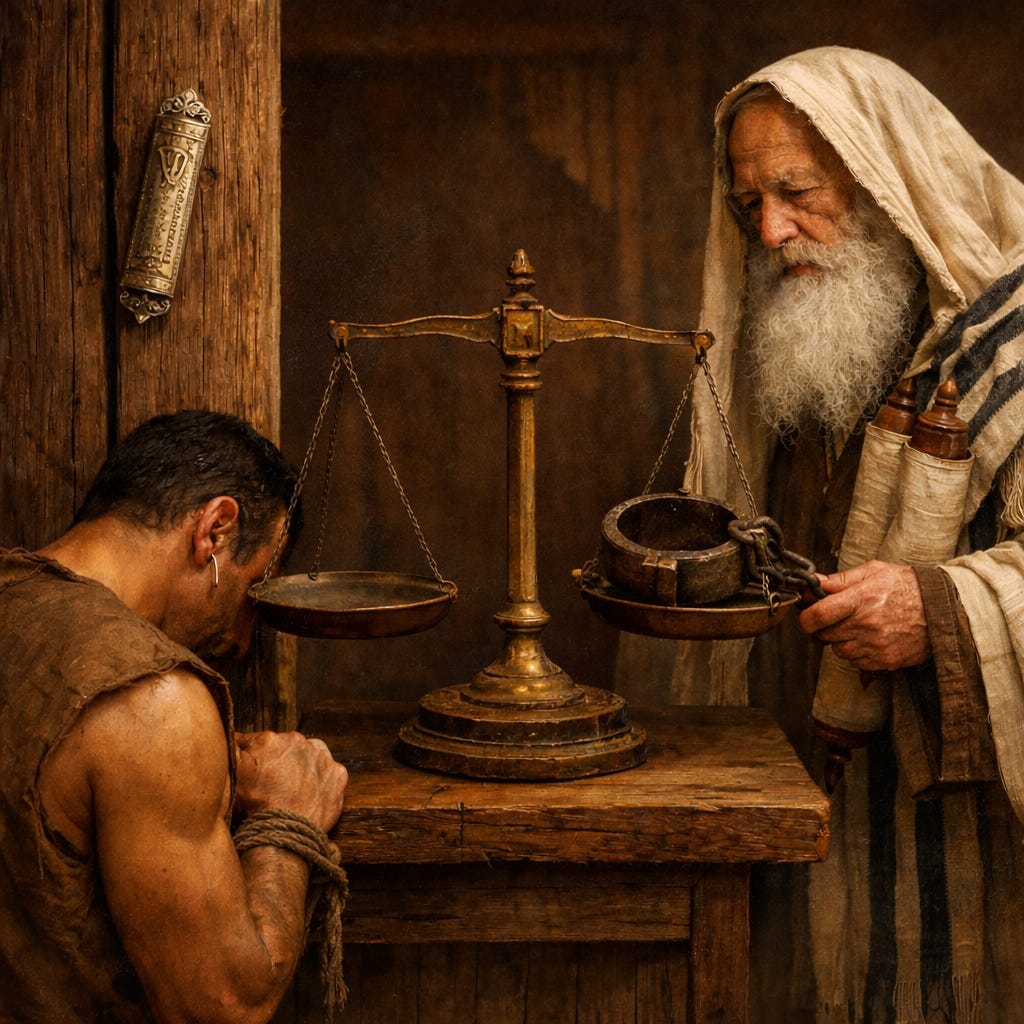
חז״ל (the Sages) sharpen this through the law of the pierced ear. If the servant says, “I love my master… I don’t want to go free,” the Torah pierces his ear. חז״ל explain that this ear heard at Sinai “כי לי בני ישראל עבדים” (for the Children of Israel are servants to Me), and yet he chooses a human master. The ear here is not only physical hearing. It represents inner listening and acceptance, קבלת עול (accepting the yoke), like by קריאת שמע (the recitation of Shema). There is something deeply degrading about a person who loses the ability to truly listen, to hear truth and accept the will of Hashem.
There is also a simple רמז (hint) in the words: מֹאזְנַיִם (scales) and אֹזְנַיִם (ears) resonate with each other. The ear symbolizes balance. It is literally how the body keeps physical balance, and spiritually it is the כלי (vessel) that keeps a person balanced, hearing correctly, weighing life correctly, and not being pulled by every outside voice. When the ear is pierced, it signals that his inner scales are off. He has lost the capacity to weigh what matters most.
Now we can build in “אין בן חורין אלא מי שעוסק בתורה” (there is no truly free person except one who is involved in Torah). Freedom isn’t only that no one owns you externally. A person can be “free” and still be enslaved to his job, his phone, his desires, his need for other’s approval. Torah is what makes a person a בן חורין (a free person), because Torah gives a person an inner center, Hashem’s רצון (will), so nothing else becomes his master.
This connects beautifully to something I’ve heard from my Rebbe, HaRav Nochum Lansky שליט״א (may he live a long and good life), about שבת שובה (Shabbos Shuva). שבת שובה, between Rosh Hashanah and Yom Kippur, is spoken about as a peak moment of the Aseres Yemei Teshuva. But it’s a day we cannot fast, and many do not say Selichos, so how can it be a peak? Because Shabbos is the day of הודאה (acknowledgment): “מזמור שיר ליום השבת—טוב להודות לה׳” (a song for Shabbos; it is good to thank and acknowledge Hashem). Shabbos is the day of reflection, when we stop running and ask honestly: what is my life about, and what owns me?
That’s the depth of the seventh year for the עבד עברי. It isn’t only “release.” It becomes his time for reflection. What am I doing with my life? Who is my Master באמת (in truth)? It’s a שבת שובה kind of moment, honest הודאה and חשבון הנפש (inner accounting), returning the person to the truth of מלכות ה׳.
And balance here also means balance in מדות (character traits). The Rambam teaches דרך הממוצע (the balanced path). When a person loses that inner balance, he falls into extremes, and extremes become a kind of slavery. Torah restores the inner scales. It trains the מדות, steadies the person, and puts everything in its proper measure. Parnassah has a place, rest has a place, even enjoyment has a place, but nothing becomes the master.
So the parsha teaches that no Yid is meant to be a slave to a person. חז״ל add that if you refuse freedom, it shows a failure of inner listening, so the ear is pierced. And our עבודה (life-work) today is to identify what we’ve become enslaved to, regain that inner balance, and return to our true service of Hashem. Because our involvement in Torah and mitzvos is our only true safe haven, and that is the meaning of “אין בן חורין אלא מי שעוסק בתורה”.
At the doorway, where the mezuzah declares Shema, a public statement of קבלת עול מלכות שמים (acceptance of the yoke of Heaven), the עבד says the opposite: “I love my master… I don’t want to go free.” The Torah places his choice right next to the public symbol that a Yid belongs to Hashem. And then the Torah marks the ear, the ear that “heard” at Sinai, because the issue isn’t technical slavery. It’s a rejection of the Sinai identity of being Hashem’s servant.
It is also noteworthy that the מזוזה is first established in מצרים (Egypt), the place where we were actually slaves. The first time a Yid marks his doorway with a mitzvah is at the moment of יציאת מצרים (the Exodus), when Hashem takes us from human ownership into His ownership. We went from עבדי פרעה (servants of Pharaoh) to עבדי ה׳ (servants of Hashem). So the doorway becomes a living reminder of what freedom really is: not the absence of all responsibility, but the right kind of responsibility, to belong to Hashem and to live for His רצון.
True freedom isn’t living on an island drinking martinis all day. That’s not freedom, that’s just another kind of slavery, being dragged around by whatever feels good in the moment. Freedom is being able to say no to תאות הנפש (the soul’s cravings), and yes to a higher purpose. It’s choosing עבודת ה׳ (service of Hashem) not because you are forced, but because you finally know who you are.
In other words, Torah creates inner freedom, and that isn’t only an inspiring idea. It is built into the very way Torah is meant to exist in the world, not as something that stays on parchment, but as something that enters a person’s choices, judgment, and action.
There is a beautiful, deep and complex idea from the גר”א ז”ל regarding עבד עברי that would take a long time to properly explain. I want to take one point and share it here. One point that he says is that the strength of חז”ל with תורה שבעל פה (Oral Torah) is to interpret the words of תורה שבכתב (Written Torah) and truly override the simple explaining of the verse in the Torah. In this case the verse says או אל דלת או אל מזוזה with respect to piercing the ear of the slave. The actual understanding is that we use the door not the מזוזה itself. We uprooted and interpreted the simple understanding. The גר”א compares this to a seal (like for a letter). When you have a seal and look at it, it is reversed until you press it on something. It is the job of חז”ל to take the “raw” unvarnished Torah and interpret it and give it their “seal”, that is the הלכה (Jewish law). My question is why the גר”א chooses to focus on this point here. There are many opportunities that חז”ל interpret the simple understanding of a verse for something other than the simple understanding, so why here?
Now the contrast becomes sharp. Chazal take the Written Torah and faithfully govern its פשט (simple meaning) into lived הלכה, expanding Torah’s presence on earth. The עבד takes his own life and does the reverse. He places himself under a human master in a way that limits his freedom to be a full participant in a Torah life of learning, decision, and growth. Torah is meant to be realized through free people who can carry Torah into the world. The עבד is choosing a path of diminished agency right at the מזוזה that proclaims Hashem’s Kingship. The עבד rejects his rightful place in this world. In many ways, the עבד rejects the seal; he is living in reverse!
We must take this opportunity to recognize the beauty and intricacy of the Torah. The amazing opportunities we have to elevate ourselves on a daily basis. Let us reclaim our true nature as עבדי השם, not to anyone or anything else. May we embrace the wisdom of חז”ל who guide us in our עבודת השם. This is not limited to the gemara and giants of the past. We rely on the direction and wisdom of the giants of today. May we be inspired by them, use their wisdom and words in our daily lives!