

The Torah places the פרשה (section) of נזיר (Nazirite) immediately before ברכת כהנים (the priestly blessing). At first, they seem to be moving in opposite directions.
נזיר is a world of דין (restraint/judgment). A person pulls back. He separates from wine, from cutting his hair, from טומאת מת (impurity from contact with the dead). He creates boundaries around himself. He narrows certain parts of ordinary life in order to create a space of קדושה (holiness).
ברכת כהנים seems to be the opposite. It is all חסד (kindness/overflow), ברכה (blessing), שמירה (protection), פנים מאירות (a shining face), חן (grace/favor), שלום (peace/wholeness). It is Hashem’s ברכה flowing to כלל ישראל.
But perhaps that is exactly why they are placed together.
חסד can only rest when there is a כלי (vessel). A flow of ברכה that has no shape cannot remain in the world. The נזיר teaches how a person creates a כלי through גבול (boundary), restraint, and self-limitation. Then ברכת כהנים teaches what Hashem pours into that כלי when it is properly formed.
What is ברכת כהנים?
It is easy to say that the כהנים (priests) bless כלל ישראל. True, but not precise enough. The Torah itself says (במדבר ו:כז):
ושמו את שמי על בני ישראל ואני אברכם
The כהנים place Hashem’s Name upon בני ישראל, and Hashem says: I will bless them.
There are two parts. The מעשה המצוה (act of the mitzvah) is done by the כהנים:
ושמו את שמי
They place Hashem’s Name upon כלל ישראל. But the חלות הברכה (actual halachic effect of the blessing) is from Hashem alone: ואני אברכם.
In ברכת כהנים, it is not that the כהן creates ברכה and Hashem then agrees to fulfill it. The כהן is not the מקור הברכה (source of blessing). He is the כלי through which the Torah commands this act of placing the שם ה׳ (Name of Hashem) upon ישראל.
This helps explain a striking Rambam.
The Rambam says that a כהן who is not a חכם (wise scholar) or is not מדקדק במצוות (careful in mitzvah observance) still goes up for ברכת כהנים, as long as he does not have one of the specific פסולים (disqualifications) (Rambam, Hilchos Tefillah uBirchas Kohanim 15:6).
This is remarkable. If ברכת כהנים came from the personal spiritual level of the כהן, we would expect the opposite. We would want only the greatest and purest כהנים to bless the people.
But a weak כהן can still go up because the ברכה does not come from his personal greatness. The Rambam says this explicitly:
שאין קבול הברכה תלוי בכהנים אלא בהקדוש ברוך הוא
שנאמר ושמו את שמי על בני ישראל ואני אברכם
הכהנים עושים מצותן שנצטוו בה והקב״ה ברחמיו מברך את ישראל כחפצו
The כהנים do their mitzvah. Hashem, in His mercy, blesses ישראל as He desires.
At the same time, the Rambam lists things that do prevent נשיאת כפים (lifting of the palms). Personal perfection is not required, but the כלי must still be fit. The כהן does not need to be the source of ברכה, but he does need to be capable of performing the Torah’s מעשה of ושמו את שמי.
This may also explain the Rambam’s architecture. פרק יד gives the positive צורה (form) of ברכת כהנים (the six laws learned from כה תברכו), and פרק טו gives the negative side (the six things that prevent נשיאת כפים). These are not two unrelated lists. פרק יד builds the כלי; פרק טוshows what breaks it. ברכה requires גבולות. Some גבולות create the כלי, and when those גבולות are violated, the כלי can no longer carry the ברכה.
That is why the פסול of עבודה זרה (idol worship) stands out so sharply. The Rambam says that a כהן who served עבודה זרה, even בשוגג (accidentally), is פסול from נשיאת כפים (15:3). This is not merely because he did an עבירה (sin). The Rambam already told us that ordinary spiritual weakness does not remove a כהן from ברכת כהנים.
עבודה זרה is different because it strikes at the very role of the כהן in this mitzvah. How can one who turned toward another power stand as the one who places the שם ה׳ upon ישראל?
The פסול is not in his personal standing. It is in his ability to be a כלי for ושמו את שמי.
Now the צורה of the mitzvah.
The Rambam says in 14:11 that from כה תברכו, as learned מפי השמועה (through the received oral tradition) from משה רבינו, ברכת כהנים has a precise form. It must be said בעמידה (standing), בנשיאת כפים, בלשון הקודש (in the Holy Tongue), פנים כנגד פנים (face to face), בקול רם (aloud), and in the מקדש (Temple), בשם המפורש (with the explicit Divine Name).
These are not side details. They define the כלי.
It is striking, at least as a רמז (hint), that the Rambam begins these halachos in פרק יד. The whole mitzvah turns on what happens to the יד (hand). The יד is usually the symbol of human action. It takes, builds, controls, does. But in ברכת כהנים, the יד becomes a כף (palm/receptacle). The hand of action is opened into a כלי קיבול (receptacle). The limb most associated with doing is transformed into receiving.
That is נשיאת כפים. The כהן raises not the hand of control, but the open palm. The צורה itself says: the ברכה is not coming from me. I am a כלי for what Hashem gives.
The Rambam’s reason for not staring at the כהנים is also important (14:7). He does not frame it mystically. He says it is because of היסח הדעת (distraction). If people stare at the כהנים, the focus shifts. Instead of receiving the ברכה from Hashem, they begin looking at the כלי. The כהן becomes the center. That itself distorts the act.
The same is true of the visible מומין (blemishes) that the Rambam discusses (15:2). They are not the regular מומין of עבודה (Temple service). They are things that make people stare. For ברכת כהנים, that is already a problem. The כלי has become too visible.
A further lomdish question follows. If several כהנים go up, and one is פסול, what happens? Does one כשר (valid) כהן create the חלות ברכה, and the פסול כהן is simply ignored? Or do we say that ברכת כהנים requires a complete קול כהונה (voice of priesthood), and the voice of a פסול כהן damages the צורה?
A parallel may come from שופר (ram’s horn). The Gemara in ראש השנה כז ע״ב discusses שופר בתוך שופר. If he heard the sound of the inner שופר, he is יוצא; if he heard the sound of the outer one, he is not יוצא. The point is that it is not enough for a כשר קול (valid sound) to be somewhere in the mixture. The mitzvah needs the correct קול.
Perhaps ברכת כהנים has a similar צד (side of the argument), since בקול רם is part of the צורה learned from כה תברכו. Maybe we need not only a valid כהן somewhere on the דוכן (platform), but a valid קול ברכת כהנים.
But there is another צד. Perhaps the פסול כהן is not creating a bad ברכה. He is simply saying פסוקים (verses). Since the ברכה never comes from the כהן, he cannot create a פסול ברכה. He just fails to create a חלות of ברכת כהנים. The כשר כהנים, however, do perform the מעשה of
ושמו את שמי, and through that Hashem gives ואני אברכם.
Either way, the question brings out the yesod. The כהן is not the source. A פסול כהן is not a bad source of ברכה; he is a non-כלי. The only question is whether his voice distorts the public צורה or whether the valid כלי of the כשר כהנים stands on its own.
Now to the content of the ברכה.
The sixfold structure itself has a source in the רוקח. In his פירוש on שיר השירים, on the words הנה זה עומד אחר כתלנו, he writes that מלא בו׳ refers to the six ברכות of ברכת כהנים:
יברכך א׳, וישמרך ב׳, יאר ג׳, ויחנך ד׳, ישא ה׳, וישם ו׳
In other words, even before explaining what each ברכה means, the רוקח already sees ברכת כהנים as six ברכות. That gives us a firmer basis for the sixfold structure.
I also saw the following quoted in the name of the גר״א, attributed to אדרת אליהו on במדבר ו, though I have not yet been able to find the passage inside. This quote gives one way to understand the content of those six streams of ברכה:
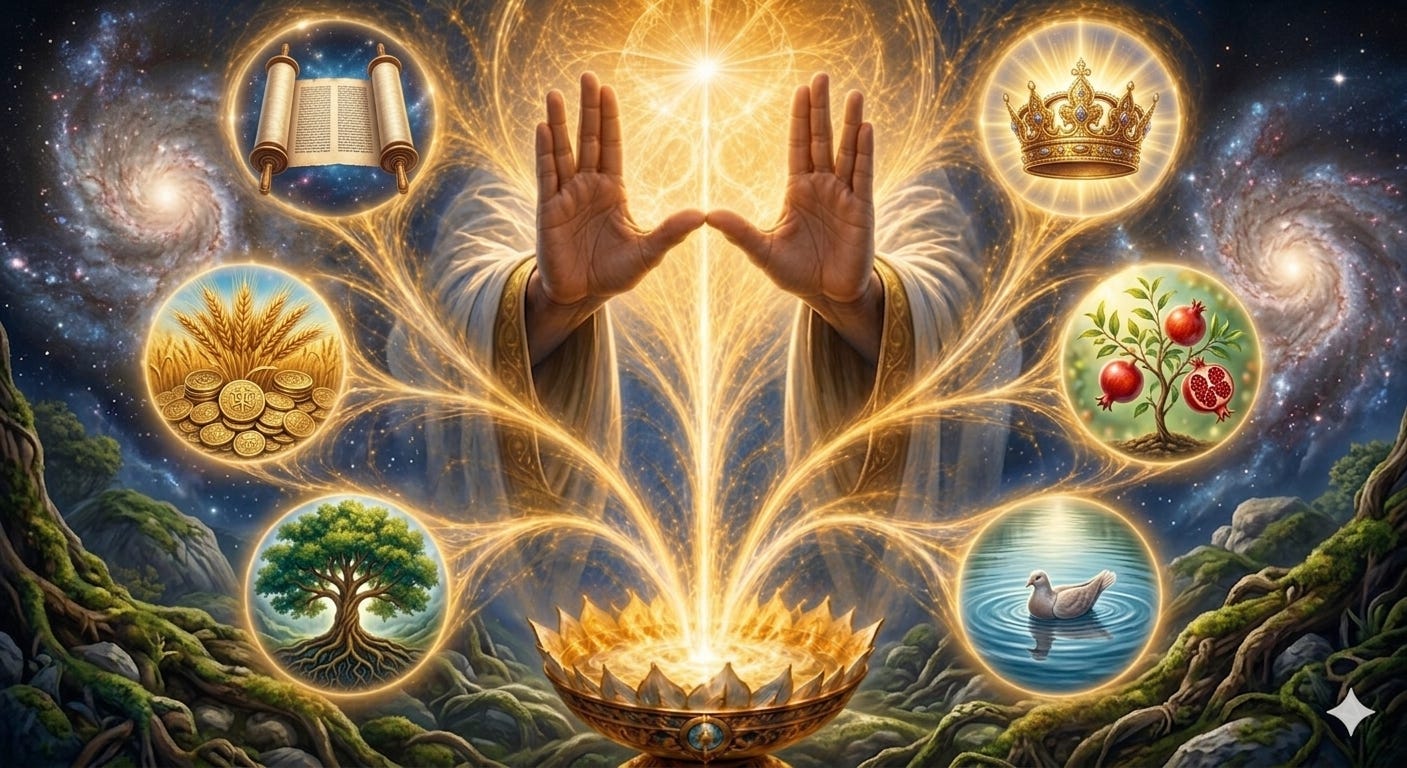
יברכך — חכמה (wisdom)
וישמרך — עושר (wealth)
יאר ה׳ פניו אליך — חיים (life)
ויחנך — חן וכבוד (grace and honor)
ישא ה׳ פניו אליך — בנים (children/continuity)
וישם לך שלום — שלום
This is not just a list of nice things. It is a picture of a complete blessed life.
The first ברכה is חכמה. A person first needs direction. Without חכמה, every other ברכה can be wasted. Wealth without חכמה becomes distraction. Life without חכמה becomes drifting. Honor without חכמה becomes ego.
Then comes עושר. But עושר is not an end. Wealth is a means. It gives a person stability,
יישוב הדעת (settledness of mind), and the ability to serve Hashem without being swallowed by survival. A person can have חכמה, but if he is constantly running after work, concerned with debt and pressure, the חכמה cannot fully live. So וישמרך is עושר because wealth protects the חכמה. It allows the person to live for תורה and mitzvos instead of being consumed by chasing existence.
After that comes חיים. Not meaning merely long life, but a complete life, a life illuminated by Hashem’s פנים (face/presence). יאר ה׳ פניו אליך means that a person’s days should feel alive. He should wake up with purpose. His life should not merely continue; it should be filled with meaning.
Next is חן וכבוד. Once life is illuminated from within, it shines outward. Other people can receive it. This is not shallow popularity. חן means that the person’s life is perceived properly in the eyes of others. כבוד means that his life has weight and dignity.
Then comes בנים. More than simply having children, it means continuity. A life that has חכמה, stability, purpose, and חן should not end inside the person himself. It should bear fruit beyond him. His values, Torah, and way of living should continue.
Then comes שלום.
שלום is the final כלי that holds all the previous ברכות. A person can have חכמה and still be torn apart by his יצר הרע (evil inclination). He can have עושר and still be anxious. He can have חיים and still feel inner contradiction. He can have חן וכבוד and become dependent on approval. He can have בנים and still have conflict and pain. So Hashem gives שלום: inner peace, harmony among one’s own כוחות (strengths/forces), peace with others, and the tranquility that allows all the ברכה to rest.
The quoted piece then adds:
ואני אברכם — חן.
There is already חן in ויחנך. But this final חן is different. The first חן is one פרט (detail) within the six ברכות. The final חן is the crown over the whole structure. It is the way all the ברכות are received as one complete reality.
Here a six-and-seven structure begins to emerge. The spoken ברכה itself has six parts, the six streams of ברכה that the כהנים say. Then comes a seventh phrase: ואני אברכם. That seventh is not spoken by the כהן at all. It is Hashem’s own ברכה, in a way that is clearly separate from the words placed in the mouths of the כהנים. We cannot know exactly what it means or how the ברכה takes effect, but the distinction itself is powerful. The כהנים can create the sixfold צורה of ברכה, but the final manifestation of the ברכה, the חן that allows it to rest, belongs only to Hashem.
This may be similar to the concept of the כתר שם טוב (crown of a good name). A שם טוב (good name) is not merely one good action. It is the crown that emerges from the totality of a person — his חכמה, his choices, his middos, his consistency, his way of being. So too, the final חן of ואני אברכם is not one more gift. It is the culmination, the way the whole life becomes accepted and beloved בעיני ה׳ (in the eyes of Hashem) and בעיני אדם (in the eyes of people).
Now the placement after נזיר becomes powerful.
The נזיר is trying to reach קדושה through דין. He steps aside from normal life and creates a כלי quickly. There is greatness in that. The Torah calls him קדוש לה׳. But it is also a dangerous path, because it can become a shortcut. It can narrow life.
So immediately afterward, the Torah gives ברכת כהנים. The goal is not to remain narrow. The goal is to become a כלי that can hold the full ברכה of life.
This six-and-seven pattern is not only in the content of the ברכה. Once we notice it, the Rambam’s structure becomes even sharper. The רוקח already counts six ברכות in the פסוקים. The quoted גר״א gives one way to explain the content of those six streams. The Rambam gives six laws that form the צורת הברכה and six categories that prevent נשיאת כפים. The six belongs to the world of צורה, גבול, and כלי. The seventh is where the ברכה lands, where the חן that allows the whole structure to rest comes from Hashem in a way beyond the spoken ברכה of the כהנים.
Six is the shape of the world of גבול — the ו׳ קצוות (six directions), the spread of reality outward into form and structure. ברכה cannot enter the world as an undefined feeling. It needs shape. It needs a כלי. The sixfold ברכה needs a sixfold צורה, and the כלי has to be protected from the things that would ruin it.
But after the six comes the seventh. After the ו׳ קצוות comes מלכות (kingship/receptive manifestation), the place where everything is received and allowed to rest. That is why ואני אברכם — חן is so powerful. After all six streams of ברכה, there is still a final חן that belongs to ואני אברכם. Not another פרט, but the ability for the whole ברכה to land, to be received, to become one complete life.
That brings us back to the simplest meaning of ברכת כהנים. When a person either gives or receives a ברכה, he has to remember what ברכה is. The human being is not the source. The כהן is not the source. Even the greatest person giving a ברכה is not the source. We are all כלים. We have בחירה. We have to choose, act, build, restrain ourselves, and shape ourselves. But in the end, the ברכה is not ours. The כוח is not ours. The flow is Hashem’s.
That is the teaching of the כפים. The יד is the symbol of what a person does. But in ברכת כהנים, the יד opens and becomes a כף, a receptacle. The person takes the very limb of action and admits that even his action is meant to become a כלי for Hashem’s will.
The נזיר shows that without גבולות, there is no כלי. But ברכת כהנים shows that the purpose of the כלי is not restriction. The purpose of the כלי is to hold חסד.
That is the flow from נזיר to ברכת כהנים. First the Torah shows a person creating room for קדושה by pulling back. Then it shows what Hashem wants to place into that space:
חכמה
עושר
חיים
חן וכבוד
בנים
שלום
and finally, חן.
קדושה is not escape from life. קדושה is forming oneself into a כלי so that Hashem’s ברכה can flow through person and rest upon his life.
Perhaps that is the practical ברכה we should take from ברכת כהנים. We should be זוכה to recognize that in our own lives, we are also only כלים. We make choices. We work. We build. We try to shape ourselves properly. But the רצון ה׳ and the ברכה of Hashem are what flow through us. The better a כלי we become, and the more honestly we recognize that we are only the כלי and not the מקור, the more that ברכה can rest in us and flow through us to others.
May we be זוכה to become clean and faithful כלים for Hashem’s ברכה, to live with חכמה,
עושר used for the right purpose, חיים filled with meaning, חן וכבוד, בנים and continuity,
שלום within ourselves and with others, and finally the חן that allows the whole ברכה to rest.