

Parshas Shelach begins and ends with sight.
At the beginning of the parsha, the מרגלים (spies) are sent to see ארץ ישראל (the Land of Israel). At the end of the parsha, we are commanded regarding ציצית (fringes): וּרְאִיתֶם אֹתוֹ — “You shall see it.”
This is not coincidental. The parsha opens with eyes that deceive and closes with eyes that protect.
Rashi later teaches that the eyes and the heart are the מרגלים of the body. The eye sees, the heart desires, and the body follows. With that in mind, the structure of the parsha becomes striking. It begins with the outer מרגלים, who mislead the nation, and ends with ציצית, the mitzvah that protects a person from being misled by his own inner מרגלים.
When we learn the story of the מרגלים, something unusual stands out. The Torah never really tells us what they saw. We are told that they traveled through the land, returned, and brought back fruit. But the Torah never pauses to give us a neutral description of their experience. Instead, we hear only their report.
That itself may be the point.
The land was not the problem. The מרגלים themselves admit, זָבַת חָלָב וּדְבַשׁ הִוא — the land truly flowed with milk and honey. They even displayed the fruit. The actual issue was not the quality of the land. The issue was the ability to attain it.
Everything changes with one word: אֶפֶס.
Not merely “but.” אֶפֶס means nothing. Zero. It is as if they were saying: all of this will come to nothing. The land is wonderful, the fruit is incredible, and the promise is real, but if the people are strong, if the cities are fortified, if עמלק (Amalek) is waiting there, then אֶפֶס — it all becomes nothing.
At first glance, this hardly sounds like דִּבַּת הָאָרֶץ (evil speech about the land). They seem to be speaking about the nations, not the land. Yet perhaps that is exactly why the Torah calls it דִּבַּת הָאָרֶץ. A beautiful land that cannot be reached becomes worthless. A destiny that cannot be attained becomes irrelevant. To say, “We cannot get there,” is ultimately to say, “It is not worth getting there.” The land itself was never lowered; its attainability was.
And those words, once they left the mouths of the מרגלים, took on a life of their own. וַיּוֹצִיאוּ דִּבַּת הָאָרֶץ — they “brought out” the דיבה. The words escaped. The despair became public. The fear became contagious.
This is the terrifying power of destructive speech. Sometimes it begins with facts. The land was good. The fruit was real. The nations were strong. But facts can be arranged, colored, exaggerated, and interpreted until they become something else entirely. The מרגלים did not merely report what they saw. They editorialized their findings and presented their despair as fact. At that point, the line between לשון הרע (evil speech) and מוציא שם רע (slander) becomes blurred: truth is used as the raw material for falsehood. Once spoken, the words became a force of their own. The report did not create the distorted vision. The report unleashed it.
That force was so powerful that when יהושע and כלב attempted to correct it, the nation wanted to stone them. This moment reveals the true transgression of כלל ישראל (the Jewish people). Until now, we could have blamed the spies. They spoke. They distorted. They brought out the דיבה. But when יהושע and כלב stand and declare, טוֹבָה הָאָרֶץ מְאֹד מְאֹד — the land is exceedingly good — the people cannot bear to hear it.
When people are ready to stone those who speak the truth, despair has become an ideology. The nation no longer wanted reassurance. They wanted confirmation of their fear. A person who has diminished an ideal in order to protect himself cannot tolerate the one who upholds the ideal. Encouragement begins to feel like accusation. “You can grow” sounds like “You have no excuse.” That is when Hashem’s כבוד appears, because the issue has now become clear. This is no longer only fear. This is the rejection of the voice calling them upward.
The response of יהושע and כלב is precise. The מרגלים had damaged both parts of the truth. They acknowledged that the land was good, but with the word אֶפֶס they made its greatness feel irrelevant. And they insisted that the nations were too strong, that כלל ישראל could not rise up and inherit the land.
Both points are answered. טוֹבָה הָאָרֶץ מְאֹד מְאֹד — the land is not nothing. It is very, very good. Its greatness remains real. And עָלֹה נַעֲלֶה וְיָרַשְׁנוּ אֹתָהּ — we can rise up, and we can inherit it. They are not merely offering encouragement. They are restoring the two truths that despair had broken: the goal is worth attaining, and with Hashem, we are capable of attaining it.
Perhaps the deepest fear was not the land at all.
The מרגלים describe the inhabitants as אַנְשֵׁי מִדּוֹת. The simple meaning is men of great physical stature. The כלי יקר, however, notes that the language of מידות can also point toward character traits. He develops that idea in his own direction, but once we see that the phrase can be read through the lens of מידות as character, it opens another possibility for us as well.
In our own lives, we speak constantly about מידות טובות (good character traits) and שבירת המידות (refining one’s character traits). Why are character traits called measurements?
Perhaps because greatness is acquired through measurement. No one develops patience overnight. No one develops humility overnight. No one becomes a תלמיד חכם (Torah scholar) overnight. Growth occurs one measured response at a time.
The Rambam, in הלכות דעות (Laws of Character Traits), explains that a person acquires proper מידות by carefully measuring himself. When someone is pulled too far toward one extreme, he may need to move temporarily toward the opposite extreme until he regains balance and finds the דרך הממוצעת (middle path). Character is not transformed in a single leap. It is refined through deliberate adjustments, through learning how to measure one’s responses and gradually bring them into harmony.
A person used to lose his temper immediately, and now he pauses for five seconds. A person once gave in to temptation impulsively, and now he resists for five minutes. A person could not learn without distraction, and now he can focus for a few more minutes. These are measurements. These are the small calibrations through which a person slowly discovers his own דרך הממוצעת and grows into the person he is meant to become.
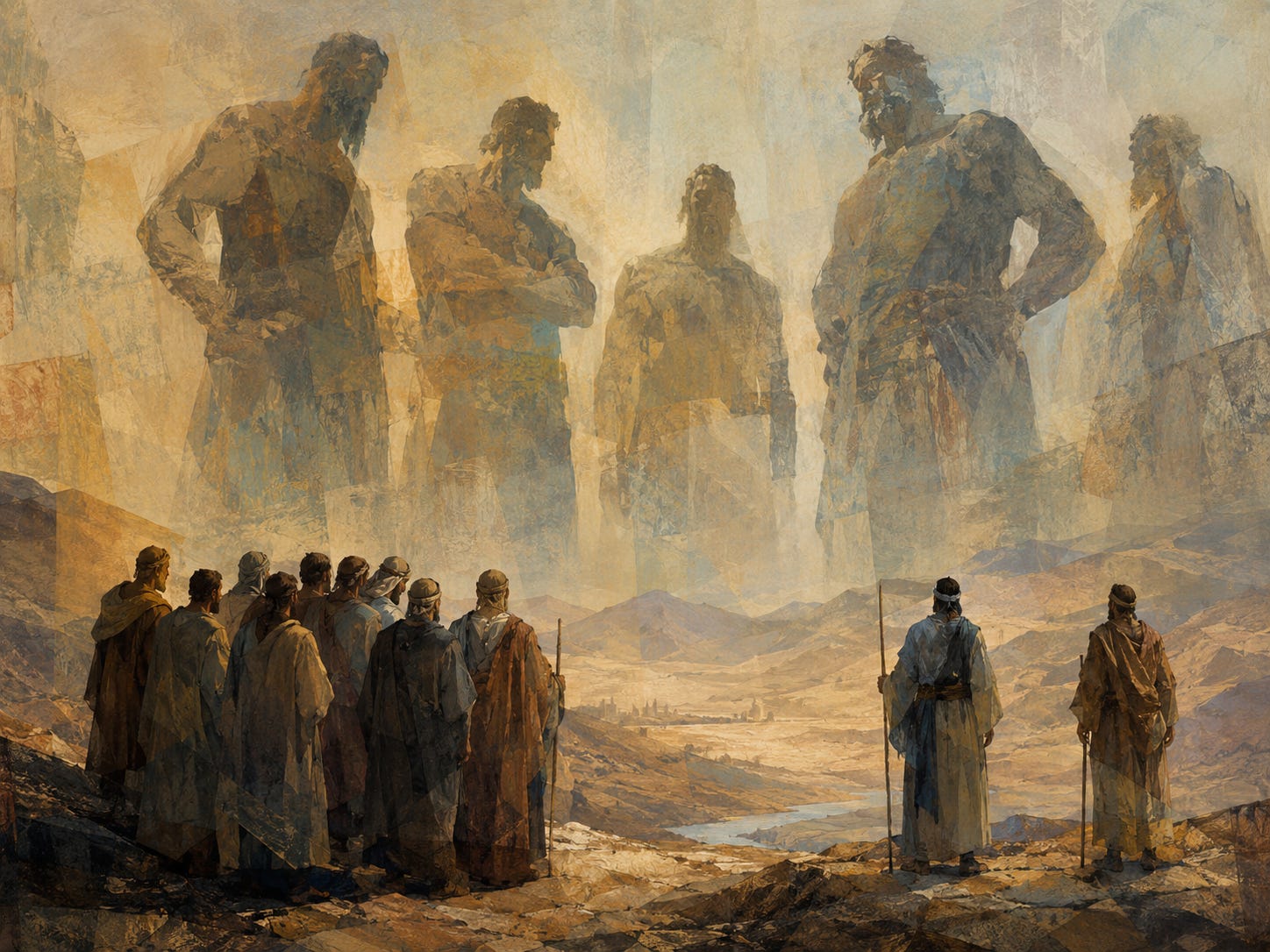
Perhaps the מרגלים saw more than physical giants. They saw greatness itself.
They saw a land where Torah would not remain theoretical. Agriculture would become Torah. Commerce would become Torah. National life would become Torah. This was not the מדבר (wilderness), where the ענני הכבוד surrounded them and the משכן stood at the center of the camp. In ארץ ישראל, every aspect of life would have to become a dwelling place for the שכינה. Their fields, their businesses, their courts, and their homes would all be part of building a permanent resting place for Hashem’s Presence. This was not merely a change of location. It was an enormous undertaking. This was the real thing.
And that can be frightening, not because the ideal is false, but precisely because it is true.
This may also be reflected in the language of עלייה (ascent) that runs through the episode. The מרגלים do not merely say that the land is hard to conquer. They say, לֹא נוּכַל לַעֲלוֹת — “We cannot go up.”
On the simple level, they meant that they could not ascend into the land and defeat its inhabitants. But עלייה can mean more than physical movement. To go up is to rise, to become greater, to move into a higher form of life. The language itself allows us to hear the deeper fear. They were afraid of the climb.
That is why כלב answers them with the very same word: עָלֹה נַעֲלֶה — “We will surely go up.” He is not only saying that the war can be won. He is saying that כלל ישראל can rise into the life being asked of them. The question was not only whether they could conquer ארץ ישראל. It was whether they could become the people who belong in ארץ ישראל.
The מרגלים said, “We cannot rise.” כלב answered, “We can.”
Sometimes we encounter greatness and immediately compare ourselves to it. Rav Moshe knew Shas. The Chafetz Chaim guarded every word. The Vilna Gaon mastered Torah. And then comes the poisonous conclusion: “I will never become that.”
The Yiddishe approach is different. We do not measure ourselves against giants. We measure ourselves against ourselves. The מרגלים looked at greatness and became חגבים (grasshoppers) in their own eyes. They measured themselves against the finished product instead of measuring themselves against the path. That is not humility. That is despair.
That is עמלק.
עמלק does not tell a person to become evil. עמלק tells a person not to try. The voice of עמלק says, “You? Become great? You? Grow into that? Don’t be ridiculous.” The spies stood before the promise of ארץ ישראל and concluded that they could never become the people required to live there. The tragedy is that Hashem never promised them what they already were. He promised them what they could become.
This may explain the remarkable precision of the punishment. The מרגלים spent forty days touring the land, and כלל ישראל receives forty years: יוֹם לַשָּׁנָה יוֹם לַשָּׁנָה — a year for each day.
Why should the punishment of the nation be measured according to the forty-day journey of the spies? The nation did not walk through ארץ ישראל for forty days. They heard the report, accepted it, cried, and rejected יהושע and כלב. Why is their punishment calibrated to the mission itself?
The language of the punishment sharpens the question even more. Hashem says, בְּמִסְפַּר הַיָּמִים אֲשֶׁר תַּרְתֶּם אֶת הָאָרֶץ — “According to the number of days that you toured the land.” But כלל ישראל never toured the land. The מרגלים did. Why, then, does the Torah speak to the nation as if they themselves had gone?
The answer may lie in the nature of the שליחות (agency). The מרגלים were not private individuals. They were national representatives. כלל ישראל asked for this mission, as משה later recounts, נִשְׁלְחָה אֲנָשִׁים לְפָנֵינוּ — they wanted men sent before them. The מרגלים were appointed as the eyes of the nation. Through them, the nation saw. Through them, the nation toured. Through them, the forty days became a national experience.
משה did send them, but he did not send them for himself. He was facilitating the request of כלל ישראל. The mission served the nation. The report was for the nation. The eyes were their eyes.
At first, one might object: אֵין שָׁלִיחַ לִדְבַר עֲבֵירָה — there is no agency for a sin. But that principle does not apply here in the straightforward way. כלל ישראל did not appoint the מרגלים to sin. They did not say, “Go speak לשון הרע.” They sent them לָתוּר אֶת הָאָרֶץ — to explore the land. The mission itself was not an עבירה (sin). Once Hashem allowed it, the act of going and reporting was a legitimate שליחות.
The sin happened in the performance of that שליחות. The mission itself contained two components: first, the surveying of the land, and second, the reporting of what had been seen. The מרגלים did not abandon their mission and do something unrelated. Rather, the corruption entered within these very tasks. Their surveying became distorted, so that they no longer saw the land through the lens of faith and possibility, and then their report gave that distorted vision a public voice.
This means there are two חשבונות. The מרגלים have their own חשבון. They brought out דִּבַּת הָאָרֶץ, and they died in the מגפה (plague). But כלל ישראל has its חשבון as well.
This may also explain why the מרגלים themselves died immediately. Their דיבה did not merely frighten the nation. It created a public atmosphere in which יהושע and כלב, the two voices trying to restore the truth, were nearly killed. וַיֹּאמְרוּ כָּל־הָעֵדָה לִרְגּוֹם אֹתָם בָּאֲבָנִים. The מרגלים had released words that placed the bearers of true vision in mortal danger. מידה כנגד מידה (measure for measure), they themselves were removed by death. The nation, swept into the distorted vision, received forty years of תיקון (repair). But the ones who incited that vision, and whose words nearly turned כלל ישראל against יהושע and כלב, died at once.
כלל ישראל’s חשבון was different. They sent these men as their eyes, accepted the vision of those eyes, and rejected the voice of יהושע and כלב when they tried to restore the truth. Therefore, the punishment of כלל ישראל is measured not merely to the moment of the report, but to the forty days of national seeing that produced it.
This also explains why יהושע and כלב are not included in the עונש of the other מרגלים. If the שליחות itself automatically created the punishment, they should have been included as well. They too were sent. They too toured the land for forty days. Clearly, the עונש was not for the mere acceptance of the mission.
The Torah presents the מרגלים largely as a single unit. We are not told the private thoughts of each one along the way. We are not shown the inner process of each individual spy. They travel as a group, return as a group, and begin to report as a group. The שליחות was entrusted to a unit.
But when that unit turns its mission into דיבה, it is כלב who separates himself from it. וַיַּהַס כָּלֵב אֶת הָעָם — he silences the people and refuses to allow the group’s distorted conclusion to stand. Later, יהושע joins him fully in declaring טוֹבָה הָאָרֶץ מְאֹד מְאֹד. They are not part of the corrupted outcome of the שליחות. They toured the same land, but they would not let the group’s despair become their testimony.
This sharpens the point. The עונש was not for the touring itself. The עונש came because the mission of seeing became distorted, that distortion became a public report, and כלל ישראל accepted it. יהושע and כלב show that a person can be sent into the same land, see the same facts, and still disconnect himself from the false conclusion.
This also explains why the forty days matter so much. The report was not a clean set of facts that became sinful only at the end. If that were true, then anyone who saw the same land should have reached the same conclusion. But יהושע and כלב saw the very same land for the very same forty days and returned with the opposite verdict: טוֹבָה הָאָרֶץ מְאֹד מְאֹד.
The difference was not the information; it was the eye. The מרגלים themselves reveal this when they say, וַנְּהִי בְעֵינֵינוּ כַּחֲגָבִים — “We were like grasshoppers in our own eyes.” The failure was already taking place while they were looking. Their eyes were not merely collecting data. Their eyes were rendering judgment. By the time they spoke, they were only bringing out what their eyes had already concluded.
That is why the punishment is exact. Forty days of distorted seeing became forty years of wandering. The nation sent eyes into ארץ ישראל, and when those eyes returned, the nation chose to see through them.
The number forty itself carries this meaning. A מקוה (ritual bath) requires ארבעים סאה, forty סאה, and through those waters a person is purified and restored. משה was on הר סיני for forty days. A child is formed in forty days. Again and again, forty is not just a span of time; it is a measure of transformation.
Here too, the forty years were not only punishment. They were a national מקוה, a long process of transformation after the distorted sight of the מרגלים. But this transformation was not only for the generation that sinned. The מדבר still had work to do. A new generation had to be formed, taught by משה, fed by מן, surrounded by ענני הכבוד, and prepared to enter the land with different eyes.
Still, this needs one important qualification. When we say the mission remained a valid שליחות, we are not saying that the original request was spiritually clean. In ספר דברים (Deuteronomy), משה recounts that the people requested the mission, and חז״ל note the tension in the phrase וַיִּיטַב בְּעֵינַי — it was good in משה’s eyes, but not necessarily in the eyes of Hashem. The request may already have carried a flaw. But that flaw was in the motive for asking, not in the legal form of the act. The mission itself remained a mission to see and report. That is why the שליחות still binds the nation to what happened during those forty days.
And perhaps this also explains משה’s תפילה (prayer).
By חטא העגל (the sin of the calf), we find the full revelation of the י״ג מידות הרחמים (Thirteen Attributes of Mercy): ה׳ ה׳ א-ל רחום וחנון ארך אפים ורב חסד ואמת. Here, however, משה invokes only part of that language:
ה׳ אֶרֶךְ אַפַּיִם וְרַב חֶסֶד נֹשֵׂא עָוֹן וָפָשַׁע וְנַקֵּה לֹא יְנַקֶּה פֹּקֵד עֲוֺן אָבוֹת עַל בָּנִים עַל שִׁלֵּשִׁים וְעַל רִבֵּעִים.
This could be its own discussion. The differences are significant. The full expression is not repeated here. Several parts are missing. There is only one use of Hashem’s name. רחום וחנון are absent. אמת is absent. But the language of דין (judgment) remains, and that is crucial.
משה includes וְנַקֵּה לֹא יְנַקֶּה — Hashem cleanses, but He does not simply erase accountability. He is not asking that the דין vanish as though nothing happened. He is asking for סליחה (forgiveness) that can live together with accountability. By the מרגלים, the consequence fits the sin with frightening precision. A generation that said, “We cannot go up,” cannot become the generation that goes up. The forty days of distorted seeing must become forty years of national תיקון.
So משה’s תפילה is not a request to restore everything to the way it was before. There is only one שם here, not the fuller expression of return to the pre-חטא relationship. He is asking for סליחה after the חטא, inside the reality of the חטא. He is asking that the punishment not become destruction, that כלל ישראל survive, and that the future remain alive.
That is why this סליחה is so striking. The פסוקים make clear that those who saw the ניסים (miracles) of יציאת מצרים (the Exodus from Egypt) and still rejected the land would not enter. They were not merely delayed for forty years and then restored to the original plan. The דין remained.
There is a depth here that is difficult but important. Some sins are so severe that their consequence is not merely punishment, but a kind of death — a כרת (spiritual cutting off), in a manner of speaking. The generation that saw the ניסים of מצרים and still said, “We cannot go up,” did not receive an ordinary decree. They received a living death. For forty years they walked toward the grave. חז״ל teach in איכה רבה and other sources that each year, on the night of their weeping — the night that would become תשעה באב — they dug their own graves and lay in them. In the morning, the living rose while the dead remained.
That itself is frightening. The very night when כלל ישראל refused to enter the land became the night when, generations later, כלל ישראל would be driven out of that same land. The act that kept us from entering ארץ ישראל became bound to the time of our being removed from ארץ ישראל. This episode was not only a moment in the מדבר. It prepared the pattern of our national future.
And the connection is not incidental. תשעה באב is bound up with the destruction of the בית המקדש and the loss of our life in the land. חז״ל teach that שנאת חנם (baseless hatred) was among the causes of the חורבן. We cannot ignore that destructive speech, distorted vision, and hatred between Yidden are all tied to destruction on a national scale. Words can keep a people from entering the land, and words can help drive a people from the land.
There may be a remez to this in our practice on תשעה באב itself. On the very day born from the tears of the מרגלים, the full expression of טלית and תפילין is delayed until מנחה. The ציצית that normally surround us in the morning, the reminder meant to guard our eyes and hearts, does not appear at שחרית. Perhaps this too belongs to the sorrow of the day. We first have to feel the lack of that תיקון.
But after חצות, the movement toward נחמה (consolation) begins. At מנחה, we say נחם, and we put on טלית and תפילין. Only then do we begin to wrap ourselves again, as the day itself starts moving from חורבן toward repair. The תיקון begins again, and it continues.
A מקוה purifies many forms of טומאה (impurity), but the deepest does not dissolve in water. טומאת מת (impurity from contact with the dead) is not lifted by immersion alone. So too, the forty-year מקוה of the מדבר could cleanse the nation and form a new generation, but it could not undo a death that was already in existence. That is the precise shape of this סליחה: it preserved כלל ישראל and carried the future forward, yet it left the דין of that generation standing. Some things, once chosen, must be lived all the way through.
And Hashem answers, סָלַחְתִּי כִּדְבָרֶךָ — “I have forgiven according to your word.” But the decree remains. This is not a contradiction. It is exactly the point. The סליחה does not erase the דין. It allows the דין to become תיקון. The generation cannot enter the land, but the nation survives. The covenant survives. The future remains alive.
This is also a lesson for us. Our greatest national existence is in ארץ ישראל, living Torah in its fullest form. But the time before that is not wasted. There is עבודה (spiritual work) in the מדבר. There is growth in גלות (exile). There is Torah to learn, mitzvos to keep, children to raise, and a future to prepare. The מדבר is not the destination, but it can be the place where the next step is formed.
This theme continues in the parsha that follows. The Torah speaks about a ציבור (community) that sins בשגגה (unintentionally), particularly in the area of עבודה זרה (idolatry). At first glance, it feels like a new topic. But perhaps it belongs exactly here. The מרגלים were individuals, but their speech damaged the ציבור. They created a national collapse. The Torah now teaches that when the ציבור is pulled into failure, there remains a path back. There is כפרה (atonement). There is repair. כלל ישראל can fall as a ציבור and still return as a ציבור.
And then, after all of this, the Torah concludes with ציצית. Suddenly the language becomes familiar: וְלֹא תָתוּרוּ אַחֲרֵי לְבַבְכֶם וְאַחֲרֵי עֵינֵיכֶם — do not wander after your hearts and after your eyes.
Rashi’s language now comes back with full force. The parsha began with the national מרגלים; it ends with the inner מרגלים. What happened to כלל ישראל in the מדבר can happen inside every person. A person sees something, interprets it through fear or desire, and then allows that vision to lead him away from Hashem.
The failure of the מרגלים therefore becomes the mission of ציצית. The spies wandered after what their eyes told them. The Yid wearing ציצית learns to see differently. He looks at the strings and remembers the mitzvos. He remembers the כסא הכבוד (Throne of Glory). He remembers that Hashem took us out of מצרים to become His servants.
ציצית is not only a reminder. It is a protection. It gives the eyes something holy to see before they wander elsewhere. It surrounds the person with mitzvos, so that his sight is trained, guarded, and brought back to truth.
Perhaps this is why ציצית has four corners. The forty-year national תיקון becomes the individual’s daily עבודה. The wandering of the ציבור becomes the garment of the יחיד (individual).
There is a רמז here as well. A רשות היחיד (private domain) is not merely open space. It needs a defined measure, including a height of י׳. The national punishment was מ׳ years. When the מ׳ of the ציבור is brought into the measure of the יחיד, it becomes ד׳ כנפות. Forty divided by ten becomes four.
This is not a proof of the idea, but it deepens the picture. The ציבור wandered for forty years. The יחיד wears four corners every day. The ד׳ כנפות remain actual corners of a garment, but they also hint to the ד׳ רוחות, the full spread of a person’s world, all drawn back under Hashem’s command.
The lesson of Shelach is not merely to guard our speech. It is to guard our vision. We must be careful with what we say and with what we listen to. We must refuse the voice that says greatness is impossible and reject the עמלק within, which scoffs at growth before it begins.
The מרגלים taught us how dangerous eyes and words can be. ציצית teaches us what eyes and words are for. Hashem did not take us out of מצרים so we could remain in the מדבר. He took us out so we could grow, so we could become עבדי ה׳ (servants of Hashem), so we could be immersed in Torah and mitzvos, and so we could enter our own ארץ הקדושה (holy land).
The spies saw greatness and became afraid. The mitzvah of ציצית teaches us to see greatness and become inspired. May we be זוכה to wear our ציצית with that awareness, to remember Hashem and His mitzvos, and to continue repairing our eyes, our hearts, and our words until we are ready to enter our own ארץ הקדושה.