


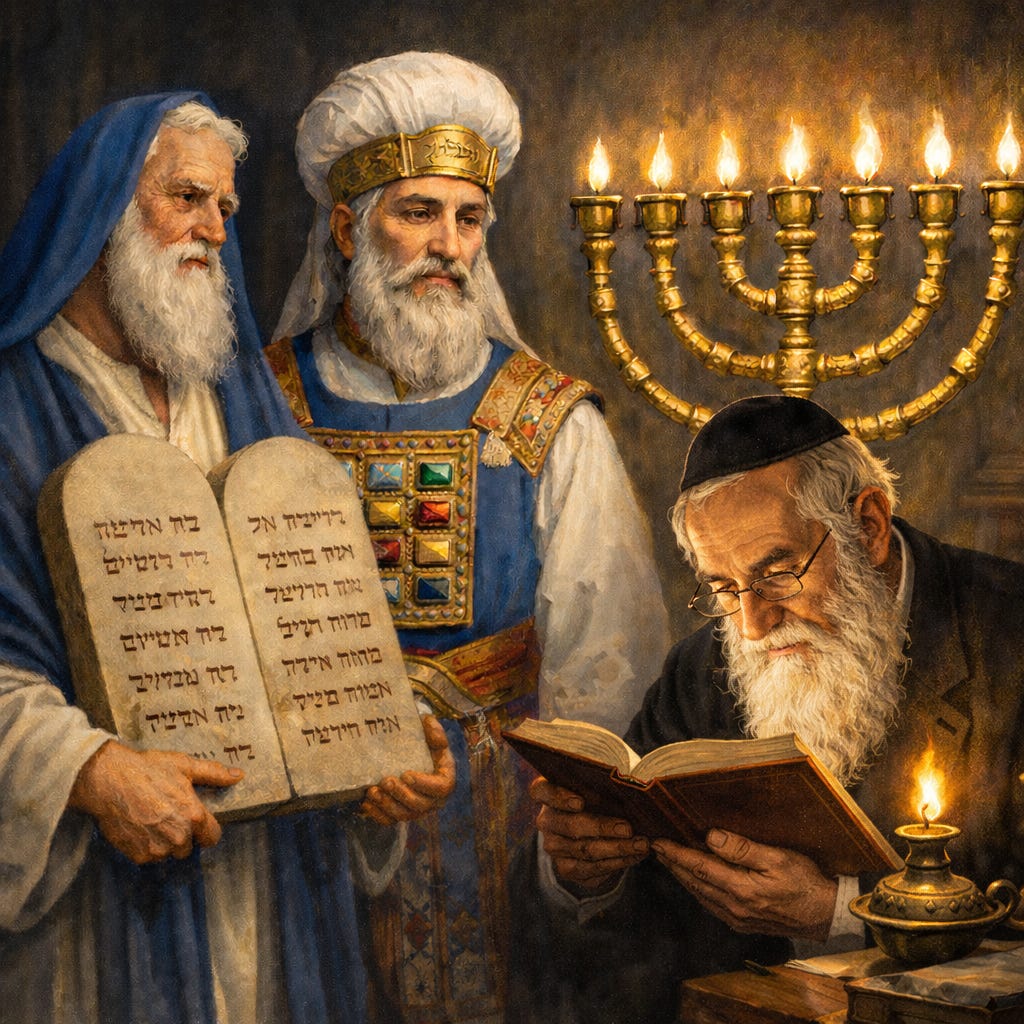
Parashas תצוה opens with something that should stop you cold: משה’s name disappears. Not that משה is absent—he is addressed directly, forcefully, repeatedly—but the תורה refuses to say “משה.” Instead it says: “וְאַתָּה תְּצַוֶּה” (“and you shall command”). This is the only פרשה from משה’s birth until the end of the תורה where his name is not written, and the בעל הטורים famously ties it to משה’s words “מְחֵנִי נָא מִסִּפְרֶךָ” (“erase me, please, from Your book”) after the חטא העגל (“the sin of the Golden Calf”).
But even if we accept the בעל הטורים technical explanation, the placement is what’s screaming at us: משה’s “namelessness” begins before the בגדי כהונה (“priestly garments”), before אהרן’s public splendor, before the choreography of the כהן גדול (“High Priest”). It begins with a different מצוה entirely:
“שֶׁמֶן זַיִת זָךְ… לְהַעֲלֹת נֵר תָּמִיד.” (“pure olive oil… to kindle a continual lamp”)
Oil. Wick. Flame. Consistency.
The תורה could have opened this פרשה with garments “לְכָבוֹד וּלְתִפְאָרֶת” (“for honor and glory”). Instead it opens with light that must never stop.
נֵר תָּמִיד: not the מנורה, the mission
Why call it נֵר תָּמִיד (“continual lamp”) and not the מנורה (“menorah”)? Because “מנורה” is the object; נֵר is the light. The mitzvah is not “own a candelabra.” The mitzvah is: there must be illumination, tended day after day, without interruption. “תָּמִיד” doesn’t mean the wick is never serviced—it means the קשר is never broken. There is always light because someone is always maintaining it.
And that’s the point: the first עבודה in a פרשה where משה’s name is absent is the עבודה that symbolizes continuity without fanfare.
משה is present, but unnamed. The light is present, and constant.
תורה is a נֵר תָּמִיד
It’s impossible not to connect this to תורה. תורה is not a hobby. It’s not a mood. It’s a life that is supposed to be תָּמִיד:
“וְהָגִיתָ בּוֹ יוֹמָם וָלַיְלָה.” (“you shall engage in it day and night”)
That is the תורה-version of נֵר תָּמִיד. The greatest תורה life is not built by fireworks; it’s built by daily oil and wick—regular effort, חזרה, showing up again, even when you’re tired, even when nobody knows.
And maybe that is exactly why משה becomes “וְאַתָּה.” משה רבינו is the embodiment of תורה’s eternity—נֵצַח (“endurance/eternity”)—but the message is: the goal is not to attach your name to the light; the goal is to keep the light burning for כְּלַל יִשְׂרָאֵל (“the Jewish people”). True leaders can be “present” without needing the label.
The בעל הטורים שַׁבָּת layer
Now it gets even better, because the בעל הטורים drops two שַׁבָּת (“Shabbos”) hints right into this opening:
“תְּצַוֶּה” hints to נָשִׁים (“women”)—women and נֵרוֹת שַׁבָּת (“Shabbos candles”). The Jewish home has its own “מנורה.” Not in gold, not in the היכל, but in the kitchen and dining room: the flame that makes שַׁבָּת שַׁבָּת.
“נֵר תָּמִיד” equals “בְּשַׁבָּת” (“on Shabbos”) in גימטריא. The message: this light is “תָּמִיד”—even שַׁבָּת doesn’t interrupt it. שַׁבָּת doesn’t cancel קדושה; שַׁבָּת crowns קדושה.
So we have a triangle:
מִקְדָּשׁ light ↔ home light ↔ תורה light.
The נֵר תָּמִיד isn’t only about illumination in a building. It’s about a Jewish reality where light continues.
נָשִׁים, hidden strength, and the background of the home
Women are the “background” of the Jewish home, and the background is what makes the picture possible. The אשה is the עֲקֶרֶת הַבַּיִת (“foundation/mainstay of the home”), and she is also the model of צְנִיעוּת (“modesty”)—not absent, not weak, not quiet because she lacks a voice—quiet because her כוח is פנימי, steady, foundational.
שָׂרָה was “in her tent.” Yet the entire future of כְּלַל יִשְׂרָאֵל ran through that tent.
That’s the same idea as משה without a name, and the same idea as נֵר תָּמִיד: the most important forces are not always loud.
And practically: a husband’s תורה is often only possible because a wife is holding down reality. Schedules, stability, priorities, the emotional climate of the home, the sacrifices nobody posts about—that is what enables “וְהָגִיתָ בּוֹ יוֹמָם וָלַיְלָה.” That’s הוֹד (“splendor/harmony”) supporting נֵצַח. The torch of תורה is “תָּמִיד” because someone makes sure the oil exists.
בִּגְדֵי כְּהֻנָּה and the אשה
Then the פרשה moves into בִּגְדֵי כְּהֻנָּה—“לְכָבוֹד וּלְתִפְאָרֶת.” This is not superficial fashion. It’s a תורה statement: קדושה must be revealed in the world through form, dignity, beauty, and order. That is הוֹד.
And that is also the אשה.
The אשה doesn’t only “support learning.” She clothes the home in כָּבוֹד (“dignity/honor”) and תִּפְאָרֶת (“beauty/glory”). She creates the atmosphere where שַׁבָּת feels like שַׁבָּת, where תורה feels precious, where the home itself becomes a מָקוֹם הַשְׁרָאַת שְׁכִינָה (“a place of Divine Presence”). The כהן גדול’s garments are כָּבוֹד וּתִפְאָרֶת in the מִקְדָּשׁ; the אשה makes כָּבוֹד וּתִפְאָרֶת in the home.
Now bring it home: אֶסְתֵּר
In מְגִלַּת אֶסְתֵּר (“Megillas Esther”), ה׳’s Name is famously missing. Yet nobody reads the מגילה and thinks ה׳ isn’t there. The whole story is ה׳. It’s just hidden—operating through what looks like politics, timing, human ego, random events, “coincidence.”
So תצוה and אֶסְתֵּר are speaking the same language:
משה without “משה,” and ה׳ without the Name.
Sometimes the deepest presence is specifically when it is not labeled. Sometimes the point is to learn how to recognize the Author when the signature isn’t on the page. That’s exactly what פּוּרִים trains us to do, and it’s exactly what תצוה whispers when it opens with “וְאַתָּה” and “נֵר תָּמִיד.”
The light burns. The Name is hidden. The reality is undeniable.
And here is where אֶסְתֵּר hands something directly to us. The מְגִלָּה doesn’t just tell us that ה׳ was hidden — it trains us to develop the eye that sees through the hiddenness. Every “coincidence” in the story is a test: can you read this without the signature and still recognize the Author? That’s a skill. And it transfers. Because the same question applies to your own life: can you do the thing without needing your name on it? Can you keep the נֵר burning and walk away without checking who noticed? This is not natural. It goes against something deep in us that wants the credit, wants the acknowledgment, wants at minimum to know that the effort registered somewhere. And maybe that’s exactly why ה׳ hides His Name in אֶסְתֵּר — not just to teach us about השגחה (”Divine Providence”), but to model for us what it looks like to act purely for the outcome, with no signature required. My wife understands this instinctively. Her Shabbos candles don’t come with a byline. The home she builds doesn’t have her name over the door. And yet — that is exactly where the שְׁכִינָה lives.
מוּסָר: it’s not about taking the credit
And the מוסר is obvious—and it’s uncomfortable:
It’s not about taking the credit.
The פרשה begins with “nameless משה” on the מצוה of נֵר תָּמִיד to teach you what לְשֵׁם שָׁמַיִם (“for the sake of Heaven”) looks like. It’s not about your name on a wall. It’s not about branding your מצוות. It’s about keeping the flame alive.
What is the best way to give צְדָקָה (“tzedakah/charity”)? The answer we all know: anonymously. Because the goal isn’t applause. The goal is that the act is real, and that ה׳ sees it. Tell your wife, tell your kids—let them learn from your ways. But you don’t need to plaster your name all over the shul to feel proud of your accomplishments. The more צְנִיעוּת you can be with your מצוות, the better.
And I’ll be honest: I struggle with this.
My wife always encourages me to make a סִיּוּם (“completion celebration”). She wants to celebrate my accomplishment in תורה learning. And my ליטוויש (“Litvish”) ישיבה wiring pushes back hard: How well do I really know it? Did I חזר enough? Is it honest to put a “seal” on it? Maybe after a few more חזרות I can say I really learned it. Maybe I’m not holding where I think I’m holding.
But maybe I need to reconsider, I should probably listen to my wife. Because it’s not always about me.
Even if I’m trying to do מצוות לִשְׁמָה (“purely for its own sake”), sometimes others will be inspired if they hear about them. A סִיּוּם doesn’t have to be “look at me.” It can be “look at תורה.” It can be giving כָּבוֹד to the דְּבַר ה׳ (“the word of Hashem”). It can give your family a memory that תורה is worth joy. It can turn private effort into public encouragement—without turning it into ego.
So there must be a balance:
run from כָּבוֹד,
be צְנִיעוּת,
do your מצוות,
but don’t confuse humility with hiding תורה’s beauty.
משה’s name is missing, and yet he is the engine of the תורה. Hashem’s Name is missing in אֶסְתֵּר, and yet His hand is everywhere. That’s the model: let the credit disappear, but let the אוֹר (“light”) remain.
Keep the נֵר burning תָּמִיד.