


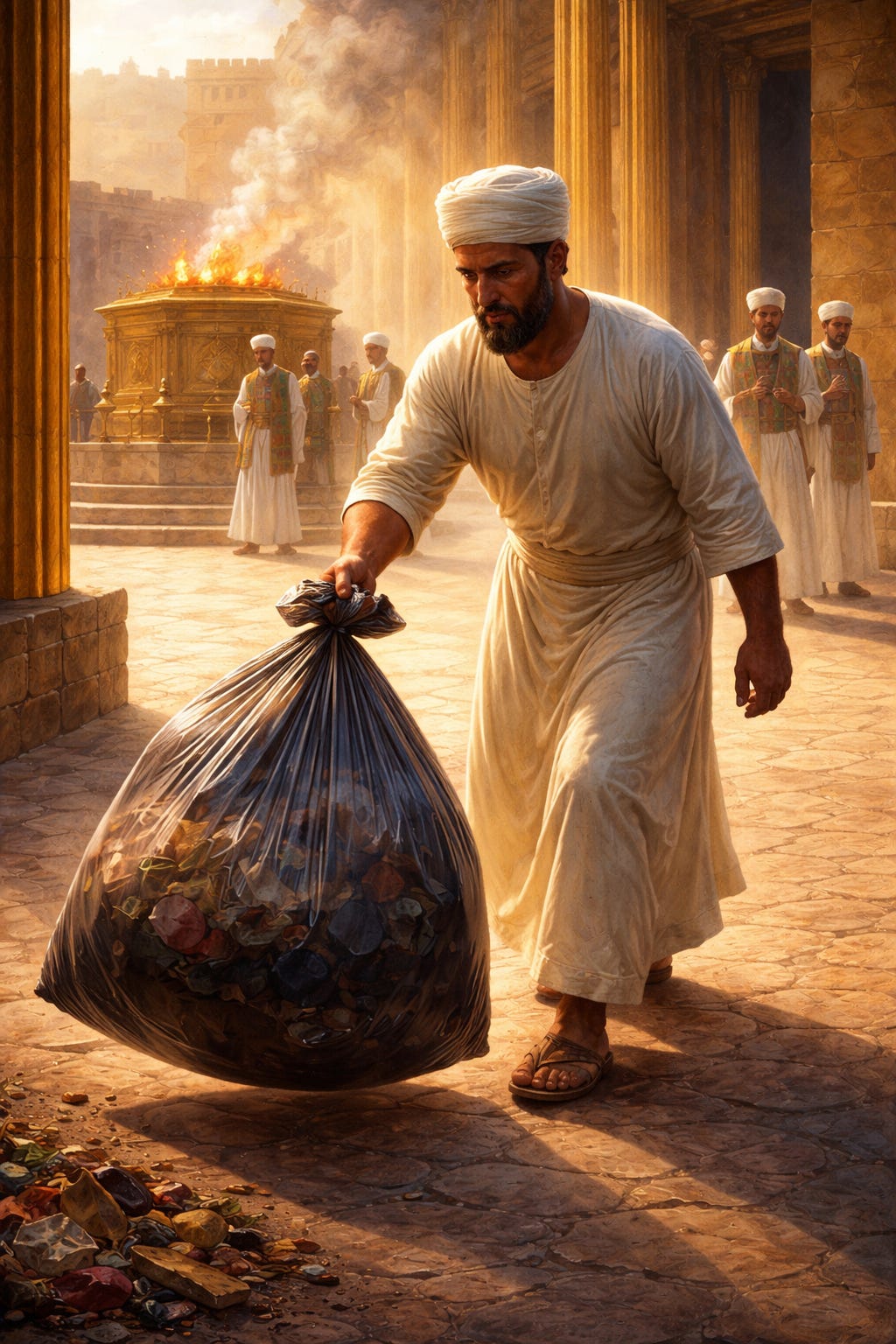
There’s something really interesting in the sugya of תרומת הדשן (lifting a portion of the ashes) and הוצאת הדשן (removing the ashes).
The פסוק (verse) in ויקרא ו:ד says:
”ופשט את בגדיו ולבש בגדים אחרים והוציא את הדשן אל מחוץ למחנה אל מקום טהור“— He shall remove his garments, put on other garments, and take the ashes outside the camp to a pure place.
On the surface, it sounds simple enough. The כהן (priest) does the עבודה (service), changes his garments, then takes out the ashes.
And now comes the famous מחלוקת (dispute).
רש״י says: אין זו חובה (obligation) אלא דרך ארץ (proper conduct).
Meaning, this is not a formal חיוב in the usual sense. It’s דרך ארץ. It’s not fitting to do the lower, dirtier task in the same garments used for the more elevated עבודה.
Then רמב״ן pushes back sharply. How can you say that? The פסוק sounds explicit. ופשט...... ולבש sounds like a real חיוב.
I’ve been trying to understand exactly what they’re arguing about, and this seems like a plausible way to resolve the מחלוקת.
The גמרא in יומא כג ע״ב makes a fascinating דרשה (interpretive reading) from the words אחרים והוציא.רבי אליעזר learns that “אחרים” includes כהנים who are “other,” with respect to the regular עבודה, meaning even כהנים בעלי מומין (priests with physical blemishes) can do הוצאת הדשן.
That is a big חידוש (novel insight).
A בעל מום cannot do the regular עבודות המזבח (altar services). He cannot do זריקה (casting of the blood). He is excluded from the classic עבודה. And yet here the גמרא opens a door.
So what does that tell you?
It tells you that הוצאת הדשן is certainly an עבודה. It is not the same kind of עבודה as the central עבודות of the מזבח; a זר (non-priest) cannot do it. It is a real עבודה, but it belongs to a lower tier.
And once that’s true, רש״י starts to sound very different.
רש״י is not saying the פסוק doesn’t matter. He’s not saying this is optional. He’s saying that the taking off and putting on is not an intrinsic דין (law / legal category) in גוף העבודה (the very body of the service).
Maybe the simplest way to say it a bit more lomdish is this: Is ופשט את בגדיו ולבש בגדים אחרים a דין in the חפצא של העבודה (the object-definition of the service), part of what this עבודה is, or is it a דין in the גברא (the person performing it), meaning how the כהן is meant to carry himself while doing it?
רש״י sounds like he learns it as a דין בגברא, a question of דרך עשייה and דרך ארץ, while רמב״ן sounds like he learns it as a דין בגוף העבודה itself.
That seems to me like a very possible way to hear the מחלוקת.
The תורה is speaking in the normal case, of a regular כהן who had been serving in בגדי כהונה (priestly garments), and telling him: When you move from the higher עבודה to this lower one, don’t wear the same garments. That is דרך ארץ. That is כבוד (honor). That is the proper form of the act.
But that is not the same as saying that the changing itself defines the עבודה.
And רמב״ן can agree to all the background and still disagree.
He can accept that a בעל מום can do הוצאת הדשן. He can accept that this is a lower-tier עבודה. But once the תורה says ופשט... ולבש that already gives it the language of חיוב. For the regular כהן, in the normal case, the תורה is commanding an actual act of changing. The בעל מום can still be included in the עבודה, but that does not uproot the standard form the פסוק describes.
So the מחלוקת is not whether הוצאת הדשן is an עבודה. They can both agree that it is.
The מחלוקת is what kind of דין ופשט... ולבש is.
Is it defining the structure of the עבודה? Or is it defining the proper way the עבודה should be done?
And then there is something here that feels much bigger than the למדנות (conceptual analysis).
This whole sugya sits right next to תרומת הדשן, one of the most sought-after עבודות in the entire מקדש (Temple), the one they had to make a פייס (lottery) for because the כהנים wanted it so badly.
And right there, in that same פרשה, the גמרא finds room for a כהן בעל מום, too.
That’s what moves me here.
People sometimes talk as if Yiddishkeit is only hierarchy, only judgment, only exclusion.
But this הלכה (law) says something else.
Yes, not everyone can do זריקה.
Yes, not everyone gets the same role.
Yes, there are real boundaries. The תורה does not erase them.
But within that very world of דין, it still leaves a תפקיד (role or mission).
A כהן בעל מום cannot perform all the elevated forms of עבודה.
But he is not pushed out of עבודה.
He still belongs.
And that feels true far beyond the מקדש.
Not everyone gets the role they want.
Not everyone gets the role they imagined.
Not everyone gets the עבודה they would have chosen.
But that does not mean they were forgotten.
It means ׳ה gave them a different תפקיד.
A different עבודה.
A different doorway in.
Everyone has a תפקיד. In some קהילה (community), in some עבודה, in some corner of life, in some mission that maybe no one else even sees.
Yours may not be what you wanted.
It may not be what you pictured.
But if Hashem put you in this world, then He gave you a תפקיד here that belongs to you.
Not everyone serves from the same place.
But everyone has a place from which to serve.
May we be זוכה (merit) to find our תפקיד in this world and grow to fill that role and be מלא הארץ כבודו!