

A person can easily think the main focus of תלמוד תורה is his own private growth: deeper עיון, clearer סברא, stronger בקיאות, more התמדה. And of course—excellence in deep Torah is precious. There is an element of עמל התורה, of constant thinking and inner struggle to understand דבר ה׳ honestly and well, that feels like a distinct component of תלמוד תורה: not only “knowing,” but becoming a true בן תורה through effort, pressure, and refinement.
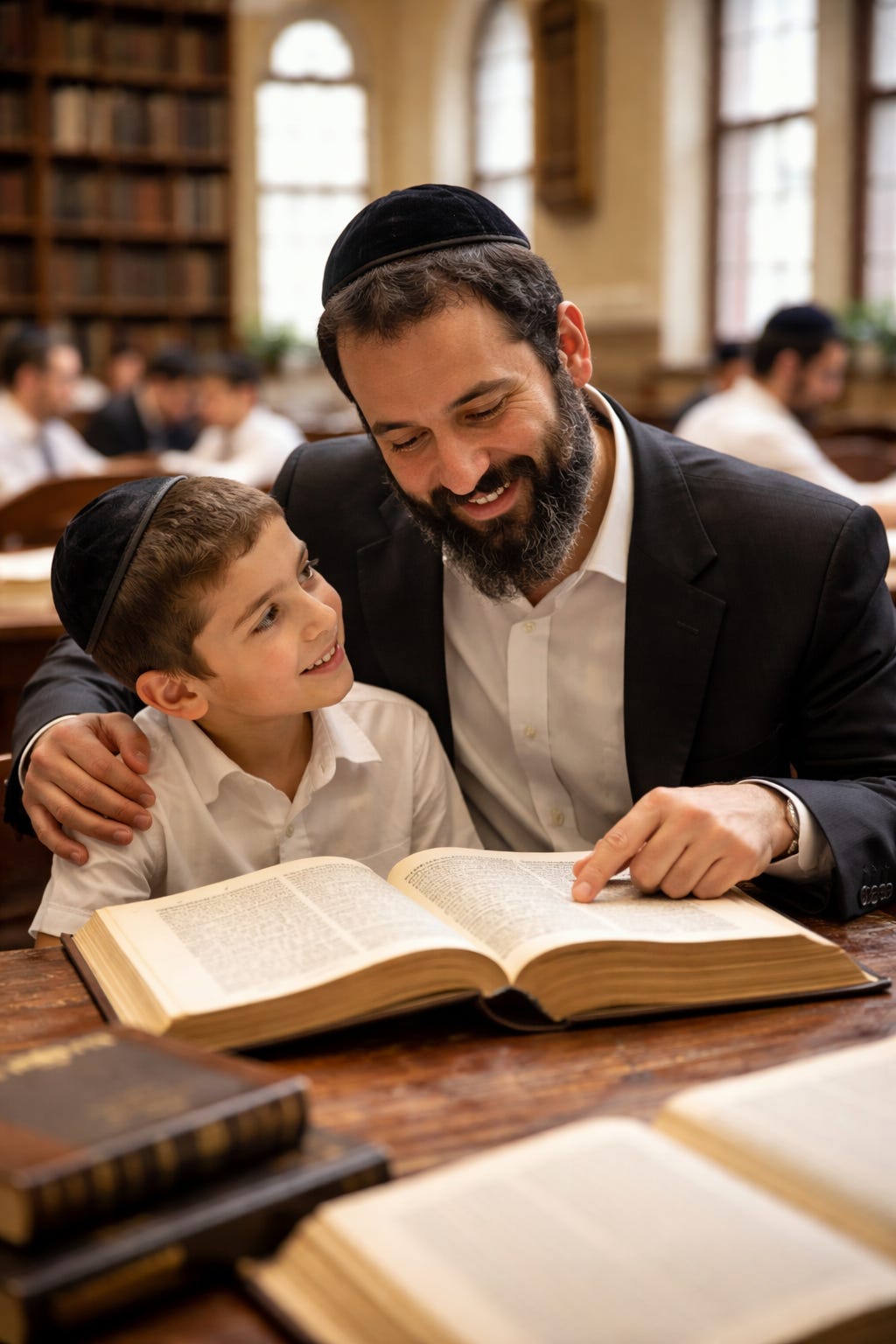
But it’s striking that when the רמב״ם opens הלכות תלמוד תורה, he doesn’t begin with “a person must learn.” He begins with the father’s obligation to his son—מצות האב ללמד את בנו תורה. Before Torah is “mine,” it is “ours.” Torah is built as מסורה—received and transmitted—like the opening of אבות: ״משה קיבל תורה מסיני ומסרה…״. That order isn’t incidental. It defines a Torah life: Torah that isn’t transmitted is Torah placed at risk.
And there is another layer here: it’s not only that teaching preserves the chain. Teaching also refines the teacher. חז״ל say, תענית ז׳ א׳: ״הרבה למדתי מרבותי, ומחבירי יותר מרבותי, ומתלמידי יותר מכולם״—“I learned much from my רבנים, from my חברים even more, and from my תלמידים more than from everyone.” The moment you have to explain a סוגיא to a child, a תלמיד, or even a friend, you can’t hide behind a vague feeling of understanding. You have to make it clear, clean, and real.
That is exactly the idea of ״ושננתם״—to sharpen. חז״ל explain: ״שיהיו דברי תורה מחודדים בפיך״. Sometimes the quickest path to having Torah מחודד בפיך is trying to sharpen it for someone else. A child’s simple question forces you to define what you mean. A תלמיד’s confusion exposes what you assumed. When you give it over, you don’t merely preserve Torah—you purify it.
I’ve seen this personally in my own life. רבי חנינא says: ״ומתלמידי יותר מכולם״—and I can honestly attest that when I learn with my own children, it forces me to make every idea clearer, every step more honest, and the understanding deeper—until what felt like “I get it” becomes real תורה that is truly מחודד בפי.
At the same time, there is another critical component to תלמוד תורה that we sometimes forget. Torah learning is not only about depth, inspiration, or even transmission—it is also about ושמרתם, about guarding our lives as Jews: that the מצוות are understood properly and carried out correctly. It isn’t enough to “learn.” Torah has to become the guide for action. As the רמב״ם emphasizes, ״תורה מביא לידי מעשה״—real learning produces real קיום המצוות. It shapes how we keep הלכה, how careful we are with details, how we speak, how we act, and how we make daily decisions.
So we’re reminded that תלמוד תורה has (at least) two parallel tracks that together make a complete Torah life:
עמל ועומק ועסק — the constant thought, the struggle, the push for real clarity and אמת. Not only learning to function, but learning to become great.
מסורה ונתינה — raising children and teaching תלמידים, ensuring Torah moves forward, and becoming sharper and bigger through the responsibility of giving—while also ensuring that Torah becomes שמירה, guiding us to do the מצוות correctly, because תורה מביא לידי מעשה.
And that’s the note to end on. When you sit down for אבות ובנים with your younger ones, or when you have the opportunity to really rip apart a סוגיא with your child, you’re not merely doing them a favor—and you’re not only being מקיים your obligation. You are doing a service to yourself. You are building your own בהירות, strengthening your own עמל התורה, and refining your own מידות through the daily discipline of נתינה. In teaching, you carry the מסורה forward—but you also become more worthy of it. May we all grow to learn כל התורה כולה and teach it to our children with אהבה and great understanding! May our learning inspire ourselves, our children and all of בני ישראל to bring משיח צדקינו!