

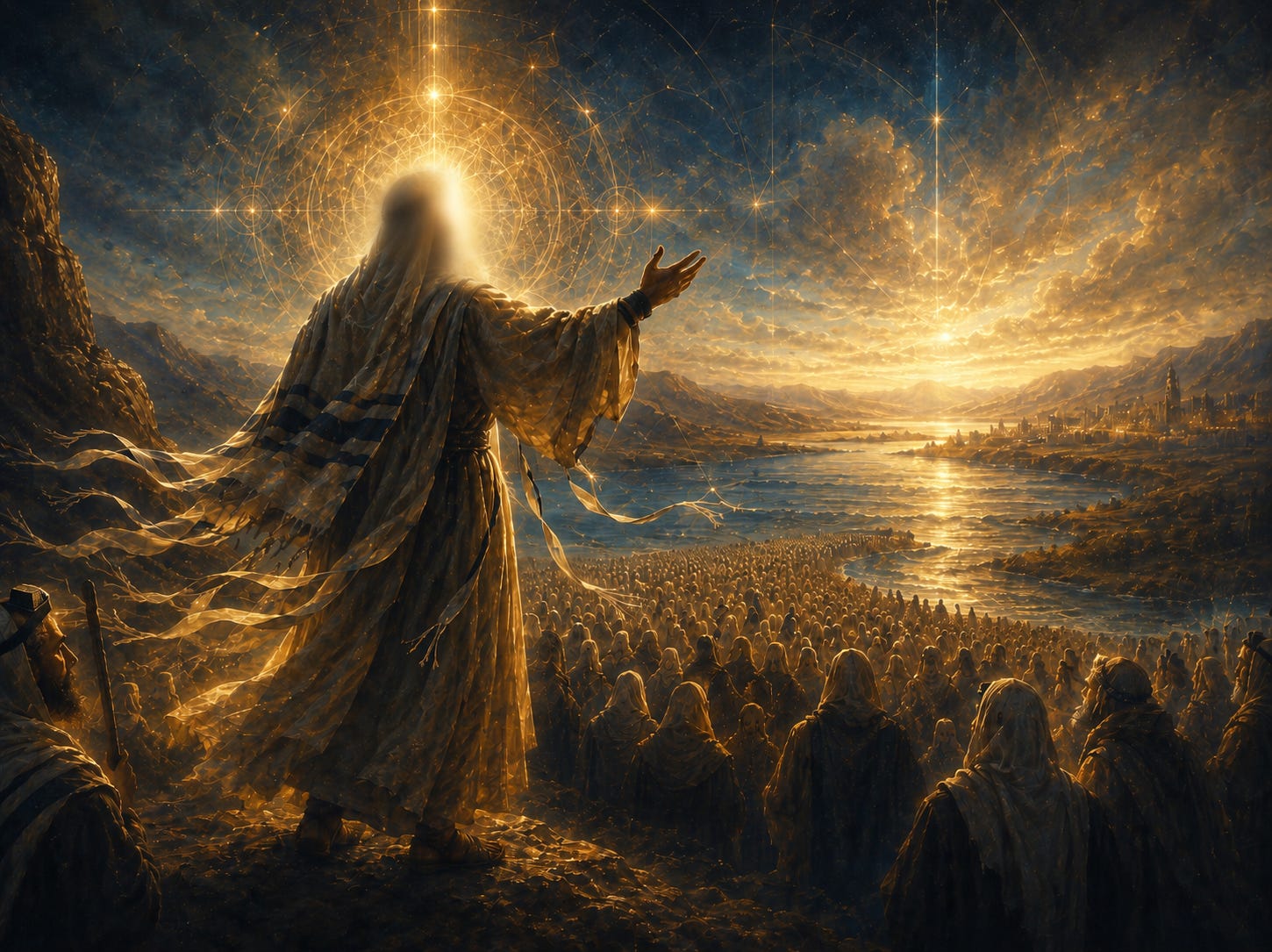
The opening of ספר דברים is surprising. משה רבינו is entering the final ל״ו days of his life. He stands before כלל ישראל as their רבי, their leader, and the one through whom they received the תורה. If these are his final words, we might have expected him to begin at the beginning, with יציאת מצרים, קריעת ים סוף, or the fire and thunder of מתן תורה, when an entire nation heard the voice of Hashem.
Instead, he begins with rebuke:
אֵלֶּה הַדְּבָרִים אֲשֶׁר דִּבֶּר מֹשֶׁה אֶל כָּל יִשְׂרָאֵל בְּעֵבֶר הַיַּרְדֵּן בַּמִּדְבָּר בָּעֲרָבָה מוֹל סוּף בֵּין פָּארָן וּבֵין תֹּפֶל וְלָבָן וַחֲצֵרֹת וְדִי זָהָב
“These are the words that Moshe spoke to all of Yisrael, across the Yarden, in the wilderness, in the plain, opposite the sea, between Paran, Tofel and Lavan, Chatzeros and Di Zahav.”
רש״י explains that these were not merely place names. They were allusions to places where כלל ישראל had angered Hashem. Yet משה mentioned them only ברמז (by allusion), because of the כבוד of כלל ישראל.
Moshe does not want to embarrass them, but he cannot leave without admonishing them. He speaks gently but truthfully. He does not retell every sin in detail. He says just enough for memory and conscience to awaken.
משה is not writing a history of כלל ישראל. He is asking what within them remains unfinished. The miracles revealed what Hashem had done for them. The failures revealed what they had not yet allowed the תורה to do within them.
That was the urgent question before entering ארץ ישראל. In the מדבר, they lived surrounded by open ניסים. They ate מן, drank from the באר, and were enclosed by the ענני הכבוד. Moshe was present to teach, intercede, rebuke, and clarify. But that world was ending.
They were about to plant, harvest, build homes, establish courts, appoint leaders, conduct business, and wage wars. Weaknesses that had appeared as isolated failures in the מדבר could become embedded within a nation. Distorted vision could become national policy. Ingratitude could shape a culture. מחלוקת could destroy leadership. Desire could redefine the boundaries of קדושה.
Moshe therefore begins not with their greatest moments, but with the parts of them that still stood outside the full rule of תורה.
Eight Failures and the Whole Human Being
The רוקח identifies eight matters alluded to in the opening words of ספר דברים. He places them near the words:
אֵלֶּה הַמִּצְוֹת
He connects them to the ח׳ חוטי ציצית (eight strands of ציצית). He then adds that there are likewise eight expressions surrounding קריאת שמע:
בשבתך בביתך, ובלכתך בדרך, ובשכבך, ובקומך, על ידך, בין עיניך, בביתך, ובשעריך
It is tempting to search for a precise one-to-one תיקון, pairing each of the eight failures with one of the eight expressions. I tried to map them. Some connections appear suggestive. The מרגלים failed through their eyes, and the words בין עיניך immediately come to mind. קרח challenged the obligation of מזוזה, and the words ובשעריך may echo that argument.
But I could not find a complete mapping that emerged naturally from all eight. It is certainly possible that the רוקח intended a precise correspondence that I have not understood. Still, I did not want to force pairings merely because the numbers align or present my own speculation as though it were evident in his words.
The רוקח himself does not appear to identify each individual pairing. Perhaps the primary point is not that each phrase repairs one particular episode. Both groups of eight may instead represent a totality.
The eight negative episodes reveal the full range of human failure. כלל ישראל failed through fear, desire, distorted vision, wealth, speech, ambition, dissatisfaction, and rebellion. Different parts of the human being escaped the ברית at different moments.
The eight expressions of שמע encompass the entire person: at home and on the road, at night and in the morning, in action and in thought, in private life and in the public gates. The תיקון is not necessarily eight isolated remedies for eight isolated failures. The deeper תיקון may be that no part of life remain outside מלכות שמים.
The רוקח establishes the connection between these groups of eight and the worlds of מילה, ציצית, and שמע. From here, I would like to suggest an additional מחשבה. I do not mean that this is the stated intent of the רוקח. It is my own extension, built upon the pattern of the פסוקים: eight is not only the number of ברית. It is also the point at which a completed כלי becomes consecrated to Hashem.
The משכן was prepared through the seven ימי המילואים. Then came the eighth day:
וַיְהִי בַּיּוֹם הַשְּׁמִינִי
“And it was on the eighth day.”
That was the day when the preparation reached its purpose and the שכינה was revealed within the משכן. Seven completed and prepared the כלי. The eighth consecrated it as a dwelling for Hashem.
Perhaps ברית מילה follows the same pattern. During the first seven days, the child emerges into the completed order of natural life. On the eighth day, that physical כלי is brought into ברית. The body is not denied or escaped from. It is consecrated.
The מצוה of ברית מילה therefore declares that even the most physical and instinctive dimension of man can become a place for קדושה. The first seven days complete the כלי. The eighth gives that כלי its covenantal purpose.
Read this way, the opening of ספר דברים is concerned with more than the correction of individual עבירות. The eight failures reveal parts of the human being that had not yet become a משכן. Fear, desire, vision, speech, wealth, and ambition remained capable of moving outside the full rule of תורה.
The ח׳ חוטי ציצית and the eight expressions of שמע answer by consecrating the whole person. They bring every posture, faculty, time, and place within מלכות שמים.
The תיקון is not merely that a person avoid the eight failures. The deeper תיקון is that the person himself become a בית for the שכינה.
The מצוה of ציצית surrounds the body with eight strands and directs the person toward the totality of מצוות:
וּרְאִיתֶם אֹתוֹ וּזְכַרְתֶּם אֶת כָּל מִצְוֹת ה׳ וַעֲשִׂיתֶם אֹתָם
“You shall see it, remember all the commandments of Hashem, and perform them.”
The movement is from ראייה to זכירה to עשיה, from seeing to remembering to doing. The failures of the מדבר were not failures of information. כלל ישראל knew Hashem and had seen His miracles. The problem was that what they knew did not remain present to them at the moment of challenge.
The מצוה of ציצית restores that presence. The words of קריאת שמע place the word of Hashem into every posture, time, faculty, and place.
Two of those expressions are especially suggestive:
בין עיניך
על ידך
Here too, I want to offer a מחשבה rather than claim the פשוטו של מקרא. I want to read these expressions not only as the locations of תפילין, but as a description of how a person is built in עבודת ה׳. What stands between the eyes sets direction. What is bound to the hand turns that direction into deed.
The phrase בין עיניך is therefore not only the realm of thought in the abstract. What stands before a person’s eyes shapes what he notices, what he fears, what he values, and where he believes his life should go. It establishes his direction and his שאיפות.
This gives added force to the failure of the מרגלים:
וַנְּהִי בְעֵינֵינוּ כַּחֲגָבִים
“We were in our own eyes like grasshoppers.”
Before they were defeated in battle, they were defeated in their own vision. Once they saw themselves as grasshoppers, their direction turned away from ארץ ישראל and back toward מצרים.
In this מחשבה, the תפילין של ראש place תורה at the point from which a person determines what is great, what is frightening, what is desirable, and where his life is headed.
The phrase בין עיניך establishes the שאיפה. The phrase על ידך binds action to that aspiration.
The hand represents what a person does with his strength, abilities, and possessions. It is not enough to face the proper destination. The body must follow the direction established by the eyes.
The structural point is not that thought and action are two unrelated parts of עבודת ה׳. The hand must be bound to the direction set by the eyes. Vision without action remains aspiration. Action without direction becomes power without a governing רצון.
The response to a fragmented person is therefore not a fragmented תיקון. It is the consecration of the whole human being into a משכן for Hashem.
From Eight to Forty-Eight
Entering the ברית is only the beginning.
The גמרא in סוטה teaches that each מצוה entered through forty-eight בריתות: sixteen at סיני, sixteen at the אהל מועד, and sixteen at ערבות מואב. The רוקח adds that the שם ה׳ appears מ״ח times in פרשת אלה הדברים. The בעל הטורים adds that the תורה warns מ״ח times against עבודה זרה, while תורה itself is acquired through מ״ח קנינים.
The number מ״ח also forms the word חיל. The גר״א explains that the essence of אשת חיל is תורה לשמה.
This creates a complete contrast.
The sin of עבודה זרה is not merely one עבירה among many. It is a total false allegiance. It takes the powers of the human being, including his fear, desire, imagination, intellect, and need for meaning, and directs them toward something other than Hashem.
The מ״ח קניני תורה move in the opposite direction. They refine the entire person until he becomes capable of learning תורה לשמה, for the sake of תורה itself and the רצון ה׳.
These קנינים are not merely study techniques. They include humility, awe, careful listening, love of people, acceptance of suffering, avoidance of honor, and sharing the burden of another. They reshape the person.
עבודה זרה bends worship toward the self; תורה לשמה bends the self toward the truth of Torah.
This may be the difference between the structure of ׳ח and the structure of מ״ח:
The structure of ׳ח brings the whole person inside the ברית.
The structure of מ״ח transforms the whole person into a קנין of תורה.
The מצוה of ברית מילה marks the body. The מצוה of ציצית surrounds the body. The words of שמע encompass life. The מ״ח קנינים refine the soul.
The eight declares that nothing within the person remains outside. The forty-eight ensure that everything inside becomes directed toward תורה לשמה.
Why Three Times?
The גמרא says that the sixteen בריתות were established in three places: סיני, the אהל מועד, and ערבות מואב.
These were not three meaningless repetitions. At סיני the תורה came from above and כלל ישראל received the ׳דבר ה. At the אהל מועד the תורה entered the camp and structured daily life around the שכינה. At ערבות מואב the תורה was placed into the responsibility of כלל ישראל as they prepared to enter ארץ ישראל without משה.
The same threefold pattern appears throughout the structure of תורה. The רוקח says that משה wrote the תורה three times, corresponding to two complete systems of three:
תורה, נביאים, כתובים
משנה, ברייתא, תלמוד
The system of תורה שבכתב unfolds through תורה, נביאים, and כתובים. The תורה contains the foundational revelation. The נביאים carry the דבר ה׳ into the movement of Jewish history. The כתובים express that truth through תפילה, חכמה, suffering, song, and the inner life of כלל ישראל.
The same threefold movement appears within תורה שבעל פה. The משנה preserves the received laws and categories in concentrated form. The ברייתא broadens the received tradition through teachings preserved outside the formal structure of the משנה. The תלמוד questions, compares, distinguishes, and explains them, revealing the principles contained within their words.
The גר״א likewise explains that, in a certain sense, the primary ספרים of מצוות are three: שמות, ויקרא, and במדבר. The ספר of בראשית serves as the foundation from which everything begins. The ספר of דברים is משנה תורה, the חזרה and final integration of the preceding תורה.
Three therefore represents the complete transmission of תורה. It is revealed, enters history and life, and is preserved, explained, and carried forward. תורה cannot remain only something heard. It must become something lived, reviewed, explained, and transmitted by human beings after the original teacher is gone.
The three sets of בריתות establish the תורה in three forms of existence. At סיני it was כלל ישראל who heard the תורה. At the אהל מועד they lived around the תורה. At ערבות מואב they accepted the responsibility to carry the תורה into the future.
אלה and the ל״ו Days
The רוקח notes that the word אלה has the value of ל״ו. From ראש חודש שבט until ז׳ אדר were the final ל״ו days of the life of משה. During those days, משה delivered ספר דברים. The רוקח also connects אלה to the ל״ו מסכתות that have גמרא.
This gives new meaning to the פסוק:
הוֹאִיל מֹשֶׁה בֵּאֵר אֶת הַתּוֹרָה הַזֹּאת
“Moshe began to explain this Torah.”
The ספר of דברים is not merely repetition. It is ביאור, explanation and unfolding. The תורה had already been given. It did not need to descend again from שמים in the same form. כלל ישראל now needed to learn how the Divine תורה could be reviewed, clarified, organized, questioned, and expressed through a human mouth without ceasing to be תורת ה׳.
That is the root of משנה, ברייתא, and תלמוד. The ל״ו מסכתות continue the באר of משה.
The word הואיל contains the same letters as אליהו. Moshe begins the ביאור of תורה. The name אליהו is hidden within that beginning, pointing toward the future clarification of תורה at the end of history.
The first ביאור already contains the final ביאור. The voice of משה does not disappear on ז׳ אדר. It continues through the בית מדרש and reaches toward the final revelation.
The Five ספרים and the Fifth בית
The גר״א gives a profound structure to the five חומשים:
בראשית — חכמה
שמות — בינה
ויקרא — דעת
במדבר — זעיר אנפין
דברים — מלכות
The תורה begins in חכמה, in the concentrated point from which everything will unfold. The ספר of בראשית contains the roots of creation and of כלל ישראל, and the purpose of history. The detailed structure of מצוות has not yet emerged, but everything already exists there in its first concealed form.
The ספר of שמות corresponds to בינה. What existed as a hidden point now unfolds. כלל ישראל becomes a nation. They leave מצרים, receive the תורה, and build the משכן.
The ספר of ויקרא corresponds to דעת. The concept of דעת is not merely intellectual knowledge. It is attachment and connection. Through the קרבנות, קדושה, טומאה וטהרה, and the עבודה of the משכן, the relationship between Hashem and כלל ישראל becomes intimate and lived.
The ספר of במדבר corresponds to זעיר אנפין, the broad structure through which the middos are expressed. כלל ישראל travels through the מדבר, organized around the משכן, encountering the full range of human tests, failures, responses, and growth.
Then comes ספר דברים as מלכות. The quality of מלכות receives everything from above it and brings it into final expression. It has no separate light detached from the higher levels. Its greatness is that it gathers them and reveals their unity below.
This is also the structure of the five פרצופים. The final level is not merely one more component added after the others. The quality of מלכות receives, contains, and gives embodied expression to what precedes it.
There is a deeper meaning in the movement from four to five.
Four is the number of structure. A בית is established through its sides and boundaries. Four אמות define a person’s רשות. The four letters of שם הוי״ה and the four פרשיות of תפילין express a complete ordered revelation.
But four components do not yet necessarily exist as one inhabitable reality. The fifth is not merely another wall or another piece of content. It is the medium that receives the four, contains them, and gives them one form.
Four is the structure of the בנין. Five is that structure given a בית.
This explains the parallel of the גר״א to תפילין. The first four ספרים correspond to the four letters of שם הוי״ה and to the four פרשיות of תפילין. Sefer Devarim corresponds to מלכות, עולם העשיה, and the בית of the תפילין של יד.
The ספר of דברים is not a fifth independent פרשה standing alongside the previous four. It is the בית that holds them. The first four ספרים are the פרשיות. Sefer Devarim is the structure that gathers them into one unified form.
A collection of פרשיות is not yet תפילין. They require a בית. The בית encloses them, holds them together, and makes them one complete object.
But the בית of the תפילין של יד is not merely formed and contained. It is bound upon the arm:
וּקְשַׁרְתָּם לְאוֹת עַל יָדֶךָ
The arm represents the power of human action. The unified רצון ה׳ contained within the פרשיות is physically bound to the faculty through which a person acts in the world.
The movement of תורה is therefore not complete merely when its ideas have been understood. It is complete when the רצון ה׳ becomes bound to the actions of the person.
The ספר of דברים gathers the תורה into its בית. The תפילין של יד bind that בית onto the human being. What began as Divine revelation becomes the governing form of human עשיה.
The image of the בית is also already present within the eight expressions of שמע:
בשבתך בביתך
על מזוזות ביתך ובשעריך
The בית is therefore not a metaphor imported only at the end of the דרשה. It is one of the central arenas of תיקון from the beginning.
The phrase בשבתך בביתך concerns what fills the inner life of the home. תורה must inhabit ordinary settled existence.
The phrase על מזוזות ביתך ובשעריך concerns the structure and boundaries of the home. It is not enough for תורה to exist somewhere inside. The entrances, limits, and the relationship between inside and outside must themselves be governed by תורה.
The eight failures revealed faculties scattered in different directions. The eight תיקונים gather them into a life with a בית, a defined inner world, proper boundaries, and one governing center.
Then the גר״א gives that same movement textual and spiritual form. The first four ספרים are distinct revelations. ספר דברים gathers them into the בית of מלכות.
That is the function of משנה תורה. The ספר of דברים does not merely repeat the earlier ספרים. It gathers them. The חזרה is not redundancy. It is construction.
משה takes everything revealed before, including creation, redemption, תורה, קדושה, the משכן, the journey through the מדבר, the failures of כלל ישראל, and the promise of ארץ ישראל. He gathers it all into one final דיבור directed toward the generation that must now carry it forward.
The first four ספרים provide the content of תורה. The ספר of דברים builds its בית.
The Ten סדרים
The גר״א also explains that ספר דברים contains ten סדרים corresponding to the ten ספירות. This is not a contradiction to ספר דברים being מלכות. It is the nature of מלכות.
The quality of מלכות is the final level, but it receives from every level above it. When everything reaches מלכות, the full structure becomes visible within the final כלי.
The ספר of דברים is both the last ספר and the integrated revelation of all ten ספירות. It does not stand beneath the earlier ספרים as a lesser repetition. It gathers their entire spiritual structure and brings it into one final form through the mouth of משה.
The final level contains the beginning. The בית contains all the פרשיות. The חזרה reveals the unity of everything that had previously appeared separately.
From כתר to מלכות
The בעל הטורים finds the Name אהיה in the opening letters of the five חומשים. The Name אהיה is associated with כתר, the concealed Divine source and רצון.
The ספר of דברים is מלכות, the final expression through speech, structure, and lived reality. The תורה therefore moves from כתר to מלכות, from hidden רצון to articulated דבר, from Divine source to human speech, and from revelation above to life below.
The זוהר gives this movement its sharpest form. Of the first four ספרים it says that every voice heard at סיני issued from one innermost voice—קול פנימאה דכלא, the inner voice of all. Of the fifth it says something different:
הַאי דְּאִקְרֵי מִשְׁנֵה תוֹרָה, מֹשֶׁה מִפִּי עַצְמוֹ אֲמָרָן
“This which is called משנה תורה, משה said from his own mouth.”
In the first four ספרים the דבר ה׳ descends directly, the שכינה speaking from within. In ספר דברים that same דבר is heard by משה and then spoken by him to כלל ישראל. Nothing of its truth is lost—not one letter is his own invention—yet its mode has changed. What was the inner voice at סיני becomes, in Moshe’s mouth, a voice that can be received, repeated, and carried by a human being. This is precisely the passage from כתר to מלכות: the same Divine source, now expressed through the vessel that can hold it and hand it onward.
But the movement is not away from Hashem. The בעל הטורים concludes with the words:
וְאֶת אַחֲרֹנִים אֲנִי הוּא
“With the last ones, I am He.”
Hashem is present at the beginning and at the end. תורה begins in Hashem, unfolds through the five ספרים, through משה, through the בריתות, and through משנה, ברייתא, and תלמוד. At the end, it reveals that it never left its source.
The אחרית completes the ראשית. The quality of מלכות returns to כתר. The בית reveals what was hidden within the פרשיות all along.
The Final Act of משה
There is also something deeply personal in this final ספר.
In one sense, ספר דברים may appear lower than the first four ספרים. The earlier תורה is heard as the direct דבר ה׳, while משנה תורה comes through the mouth and voice of משה. Yet that very difference makes it משה’s final and most personal act as the leader of his people.
He stands at the end of his life and looks upon a nation that he first encountered as slaves in מצרים. He watched them emerge through the sea, stand beneath הר סיני, build the משכן, fail, rise again, and slowly become a nation capable of entering ארץ ישראל. He sees before them a future he will not personally enter: homes and fields, judges and kings, battles and victories, exile and return, and the many generations of pain through which כלל ישראל will struggle to carry the תורה.
There must have been joy in that vision. The promise was becoming real. מלכות שמים would no longer be revealed only within the protected world of the מדבר. It would be built into the life of a nation in its land.
But there was also pain.
Even משה רבינו had to face his own mortality. No one wants to say goodbye to those he has loved, taught, defended, and carried. No parent reaches the moment of separation without wondering whether enough has been given.
A parent may spend years preparing a child for the first day of school. He teaches, warns, encourages, and protects. Then the day arrives when the child walks through a door the parent cannot enter with him. At that moment, all the preparation becomes a question: Did I teach enough? Did I give him what he will need when I am no longer standing beside him?
That is the emotional world of ספר דברים.
משה cannot cross the ירדן with כלל ישראל. He cannot stand beside every field, court, marketplace, battlefield, and home. He therefore gathers the entire תורה once more and places it into a form that can accompany them where he cannot.
His sun is setting, and the moon of יהושע is beginning to rise. ספר דברים is the moment when משה acknowledges that transition. His rebuke is not distance. It is love sharpened by urgency. He knows the strengths of כלל ישראל, but he also knows the weaknesses that may endanger them when he is no longer there to intercede, correct, and gather the fragments.
משנה תורה is therefore not diminished because it comes through the mouth of משה. It is the דבר ה׳ as received, carried, and given through the full heart of משה. It is the final act of a רבי who knows that his תלמידים must now continue without him.
משה could not enter ארץ ישראל with them. But the תורה he placed into their mouths, bound to their hands, and built into their homes would enter with them.
ספר דברים was the way משה crossed the ירדן.
This may be why משה begins with rebuke. Before he can build the בית that will hold the תורה, he must identify the fragments within כלל ישראל that still resist being gathered.
He cannot humiliate them, so he speaks ברמז. But he cannot ignore the failures either. A leader in his final days must not merely tell his people what they have achieved. He must tell them what may still destroy them after he is gone.
The eight episodes reveal the fractured person. The eight strands and eight expressions of שמע consecrate that person as a בית for the שכינה, gathering vision, action, home, and boundary beneath one governing רצון.
The מ״ח קנינים refine him toward תורה לשמה. The threefold transmission ensures that תורה can survive through תורה, נביאים, and כתובים, and through משנה, ברייתא, and תלמוד. The ל״ו days begin the ongoing באר of משה.
The ספר of דברים then performs upon the תורה what the eight תיקונים perform upon the human being. It gathers what was fragmented. It gives the earlier revelation a בית. Like the תפילין של יד bound upon the arm, it binds the רצון ה׳ to the power of human action and carries it into עולם העשיה.
The first four ספרים give the פרשיות of תורה. The ספר of דברים builds their בית.
That was the final gift of משה. He did not merely leave כלל ישראל with words they had already heard. He gathered those words into a structure they could inhabit and bind upon their lives.
He gave the תורה a בית within כלל ישראל.
He gave כלל ישראל a בית within the תורה.
And he showed that the purpose of that בית is not merely to contain the רצון ה׳. Its purpose is to carry that רצון from the highest source of כתר into the concrete actions of עולם העשיה.
May we merit not merely to hear the תורה, but to allow it to set our direction, shape our שאיפות, bind our actions, sanctify our homes, and gather every part of our lives into one complete ברית with Hashem.