

The ideas that follow are built on yesodos I learned over the years from my Rebbe, Rav Nochum Lansky שליט״א, whose Torah runs through them more deeply than I could mark — after enough years one can no longer always trace where a Rebbe’s Torah ends and one’s own begins. I bring it בשם אומרו, with gratitude, and with the hope that I have carried it faithfully.
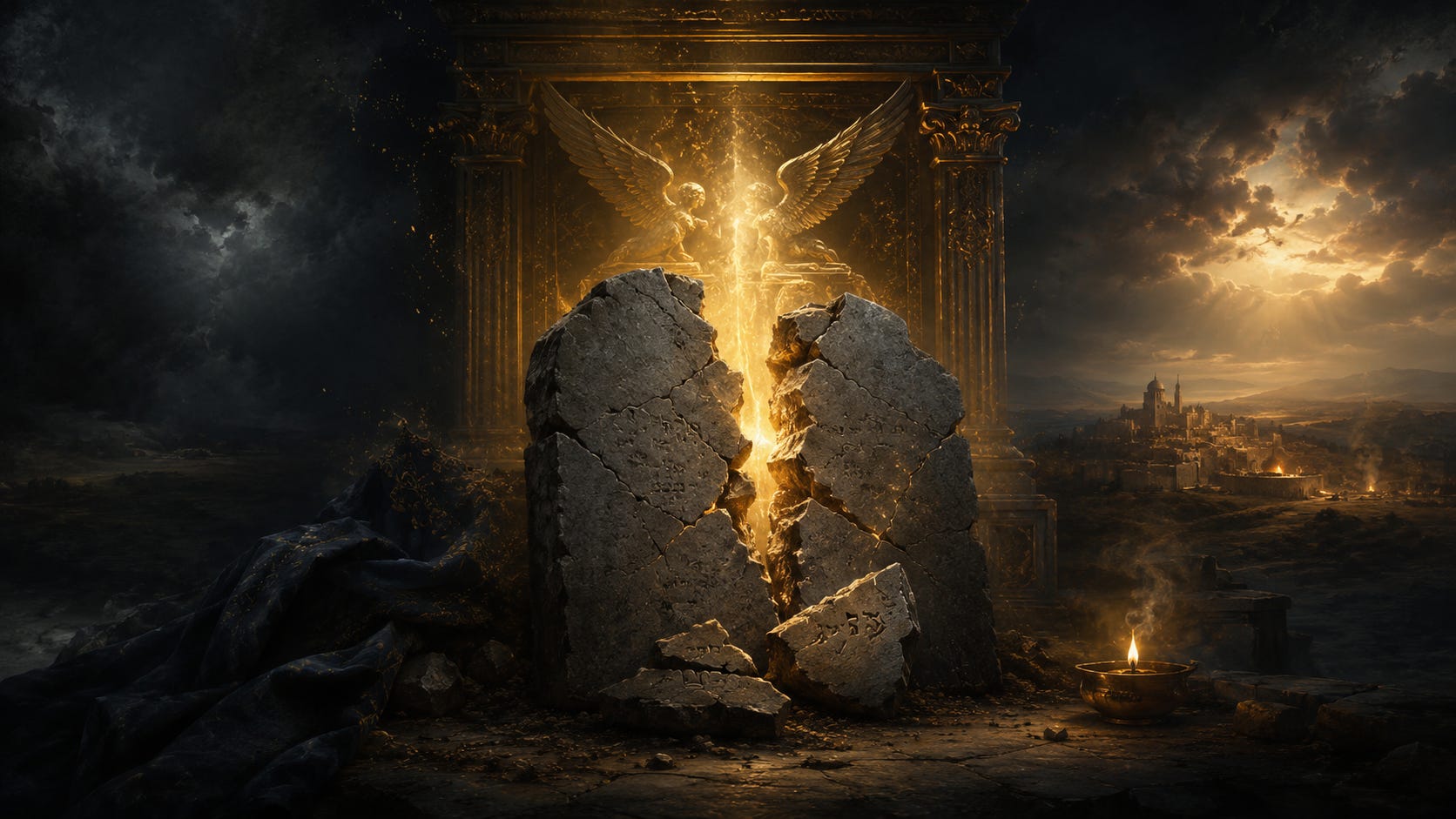
Inside the ארון (the aron), beneath its cover, the כפרת, in the קודש הקדשים (the Holy of Holies), there were not only the לוחות שניות (the second tablets). Our חכמים tell us that the broken pieces of the first set were placed there as well — לוחות ושברי לוחות מונחים בארון. The whole and the shattered lay side by side, in the one place where the שכינה rested most openly, the place from which Hashem spoke to משה, as it says, ודברתי אתך מעל הכפרת (שמות כה:כב). Think about what that means. We did not bury the broken לוחות. We did not carry them out of the camp and lay them to rest somewhere far from the center. We placed the fracture at the very heart of קדושה, and we let Hashem’s voice rise from above it. That is not how we usually treat what is broken. A broken thing we hide, or discard, or quietly replace. But the Torah does the opposite. It takes the evidence of our greatest failure — the stones that shattered because we had shattered first — and it enshrines them in gold, in the קודש הקדשים, under the wings of the כרובים (the cherubim). Why? Because we are not meant to hide the past. We are meant to learn from it. And more than that: we are meant to build the future on it. The שברי לוחות are not a wound we are ashamed of. They are a foundation. Somehow, the break belongs in the holiest place — not in spite of the קדושה, but as part of it. This is the יסוד that will carry us through these days. The break is not something to get past on the way back to wholeness; it has its own place in the holiest place. Learning to hold it properly is the עבודה of בין המצרים.
✦
To understand what the broken לוחות are, we have to understand what the לוחות were. The Torah was given in two forms, and not as text and footnote. There is תורה שבכתב (the Written), and there is תורה שבעל פה (the Oral). Both were given at סיני; our חכמים teach that even what a תלמיד ותיק (a seasoned student) would one day be עתיד לחדש (destined to derive new chiddushim) was already given to משה then. They are not ranked; they are two halves of one giving, and neither is whole without the other. תורה שבכתב without תורה שבעל פה is a sealed book, letters that never reach the world; תורה שבעל פה without תורה שבכתב has nothing to draw out. לא טוב היות האדם לבדו (בראשית ב:יח) — much as a man without his wife is incomplete, תורה שבכתב, alone, is “not good” in exactly that sense: not for lack of worth, but for lack of its completion. This is why חז״ל speak of them as זכר and נקבה. The one gives and the other receives: תורה שבכתב gives; תורה שבעל פה receives and bears it into living form. And the one that receives is not the lesser — she is supreme in the order of what things are for, because the whole purpose of the giving is the bearing. נקבה תסובב גבר (ירמיהו לא:כא) (a woman shall encompass a man). So when we ask what the broken לוחות are, we are asking about a break in something far larger than two stones. We are asking about a fracture in the Torah itself — not in the bond between its two halves, but in the receiving half, the one that bears the giving into living form.
✦
My Rebbe opened the matter through a פסוק we know well:
כי מציון תצא תורה ודבר ה׳ מירושלים (ישעיהו ב:ג)
Read it again slowly. It is not one statement said twice. It is two. תורה goes out from ציון; דבר ה׳ goes out from ירושלים. And דבר ה׳ — חז״ל teach דבר ה׳ זו הלכה — is תורה שבעל פה, the הלכה decided and brought into the world. And ארץ ישראל itself is the גילוי (the making-manifest) of תורה שבעל פה, and so דבר ה׳ issues from ירושלים. Why from ירושלים? Not by association but according to the הלכה. The סנהדרין sat in the לשכת הגזית (the chamber where the Sanhedrin met), and from that seat הוראה (binding halachic ruling) went out to all of כלל ישראל. So תורה שבעל פה has an address. It pours from the place where human beings sit and decide. And the point goes deeper still: בנין בית המקדש is the שלימות (completion) of תורה שבעל פה. The בית המקדש is not distinct from תורה שבעל פה; it is תורה שבעל פה brought to its fullness in the world. If that is so, then the חורבן (the destruction of the Temple) of בית המקדש is not a tragedy independent of the loss of Torah. It is the breaking of the שלימות of תורה שבעל פה — not the Torah itself, which we still learn and still rule by, but its fullness: the הכרעה (the binding halachic decision) that was able to go forth from one seat to all of כלל ישראל, now diminished to what בשר ודם (mere mortals) can reach.
My Rebbe brought this from the גר״א: the נשמות of כלל ישראל are from the בחינה (aspect) of the ארץ, the earth of ארץ ישראל — and therefore they belong to תורה שבעל פה. אדם הראשון was created מעפר שתחת המזבח, from the dust beneath the altar. He is made from the ground of the place; and the Torah he is bound to is the Torah of that ground — תורה שבעל פה, the Torah brought down and lived in this world. From this I think we can hear something further. The exile of תורה שבעל פה can be pictured as a place. You cannot exile the content of תורה שבכתב. But you can exile a court from its chamber. You can leave a city sitting alone. תורה שבעל פה is the Torah that has a place — and so its גלות (exile) looks like a place bereft.
✦
Now we can return to the broken לוחות — and to the day they broke. The משנה in תענית tells us that five things befell our fathers on י״ז בתמוז. The first is נשתברו הלוחות. As I have written elsewhere, the משנה does not say the עגל was made that day. It mentions the breaking — the moment the hidden פגם (flaw) became visible in shattered stone. י״ז בתמוז is the day of the broken form: the made object from above, מעשה אלקים and מכתב אלקים, brought down to a people that had broken first. It is the wound of תורה שבכתב. The same shape marks תשעה באב. The מרגלים toured the land for forty days; they had been seeing it that entire time. Yet the גמרא in תענית teaches that the night fixed as בכיה לדורות, the weeping sealed for all the generations, is not any one of those forty days of sight — it is the night they returned and spoke, when they brought back their report and the people wept. The calendar itself testifies which act made the חורבן: had the sin been the seeing, the day would have fallen within the days of touring. But it falls on the telling. The sin began in the eye — וירא, ותקרבון, the seeing that runs ahead of the man, the eye that leads the leg, as my Rebbe drew from the גר״א. Sight is not innocent; there is much we are forbidden to look upon, and the eye corrupts inwardly before a word is spoken. But the eye’s ruin stays within the man; it was the mouth that carried the corruption out and made it a nation’s: ויוציאו דבת הארץ — they brought out an evil report of the land, and the דבה became the weeping of the generations. The eye began it and the eye damaged; the mouth is what sealed it into a חורבן for all time.
And that sequence is itself the shape of the two days. Where י״ז בתמוז is the broken form — the given thing the eye beholds, the לוחות looked upon and shattered — תשעה באב is the broken vessel of speech, the wound of תורה שבעל פה, the Torah that lives only when it is said. The sin’s own anatomy, seen and then spoken, is the anatomy of the two wounds: the fracture of the form, and the fracture of the mouth. And each wound leaves its own kind of loss, and חז״ל name them. Of the broken form our חכמים teach אלמלא נשתברו לוחות ראשונות לא נשתכחה תורה מישראל — had the first לוחות not been broken, Torah would never have been forgotten from ישראל. The breaking of the form is a wound of forgetting: content lost from the given Torah, letters gone from a people that once held them whole. That is a different loss from the one the mouth suffers. When the mouth falters — at the rock, as we will see — nothing is forgotten; the content is all there, and more than there. What is lost is the הכרעה: the מחלוקת that cannot be closed, the answer that will not come. Forgetting is the scar of the broken form; מחלוקת is the scar of the broken mouth. These are the first events the משנה records on each day, and the first event sets the tone of the day. So the two dates are marked from their beginnings by these two breaks: the broken form on י״ז בתמוז, the broken speech on תשעה באב. The בתי מקדש that later fell stand on these roots. And the order is not accidental: the form was given first, at סיני; only then came the demand to carry it into the land and live it there.
And the structure of the two days speaks. The משנה gives five events on י״ז בתמוז and five on תשעה באב; and when we reach תשעה באב itself, the אבילות enters the body through five עינויים (the five afflictions of the fast). Five and five — like the עשרת הדברות, five on one לוח and five on the other. And the לוחות are split, as is well known, between בין אדם למקום and בין אדם לחבירו. So too the two חורבנות. As בית ראשון fell through the three severe sins — idolatry (עבודה זרה), immorality (גילוי עריות), and bloodshed (שפיכות דמים) — the great sins of בין אדם למקום, with עבודה זרה standing at the center of the rupture in the bond with Hashem. בית שני fell through שנאת חנם (baseless hatred), the collapse of בין אדם לחבירו. The two חורבנות echo the two לוחות: rupture above and rupture between people — not a clean split, since the sins of בית ראשון themselves reach into both, yet the significance of the focal point remains profound. The two fast days together are ten wounds in the world of the לוחות.
There is even a whisper in the number itself. י״ז — ten and seven — is the גימטריא of טוב. The day of the broken form carries the number “good.” Good even in the moment, for Hashem said to משה of the breaking, יישר כחך ששיברת, that the breaking was right — but a good whose full goodness is revealed only later. And there is a kind of good that can only be this way. חכמים read the והנה טוב מאד (בראשית א:לא) said over the בריאה as including the יצר הרע: טוב is the יצר טוב, and מאד is the יצר הרע — the fullest good, the מאד, is the one that looks like its opposite, the good whose whole purpose lies in the struggle hidden inside it. The frown-day is a טוב of exactly that kind: a טוב turned, for now, upside down.
✦
Listen, then, to how איכה opens its lament: איכה ישבה בדד (איכה א:א) — how she sits alone. We can hear in that word the exile of תורה שבעל פה — not its transmission, which goes on, and not פסק itself, which goes on too: there is still a Rav, still a בית דין, still הוראה at the level left to us. Nor could it be otherwise, for the Torah is ours — לקח טוב נתתי לכם. It was given to us, handed into our keeping as a מתנה, and so לא בשמים היא (דברים ל:יב): a Torah given away is no longer in heaven — it has become the possession of כלל ישראל, ours to hold and to decide. What the חורבן took was never the gift itself, which cannot be returned, but its full strength — the binding הכרעה of the סנהדרין הגדולה that could end a מחלוקת (unresolved dispute) for all of כלל ישראל and leave no question open. The given Torah remains wholly ours; it is its שלימות that sits בדד. The סנהדרין sat — יושבין בלשכת הגזית — and from that sitting, הלכה went forth to all of כלל ישראל. The verb of that power at its fullness is תצא, going out, pouring forth. The verb of the חורבן is ישבה בדד — the seat still there, but diminished, no longer sending its ruling out with its original strength. The whole arc is held between two words: ישבה בדד and תצא. And it is not only the city that can sit alone. A Torah can sit alone. A question that reaches the limit of the human deciders and cannot be brought to resolution — a הלכה with no ruling to join it, no חכם able to bring it home — is a Torah sitting בדד. We will meet it by its name: תיקו (a question Chazal left unresolved). The solitary city and the solitary question are one desolation at two scales — תורה שבעל פה cut off from what would complete it.
And from my Rebbe I learned what is truly impoverished in that solitude. גלתה יהודה מעני (איכה א:ג) — יהודה went into exile from affliction. חז״ל teach אין עני אלא בדעת: there is no poverty like the poverty of דעת. Every גלות carries within it a גלות הדעת, an exile of knowing; מצרים, which contains all the exiles, was an exile of דעת. And it is said of יהודה, because יהודה is the place where דעת is meant to rest — the place of מלכות, of ירושלים. And here is what is in גלות. The בחינה of דעת is not the flash of חכמה from above, nor the categories of בינה. It is the knowing that binds — חכמה brought down and joined to the world, knowing made real in מלכות. That is תורה שבעל פה exactly: the seed of תורה שבכתב drawn down through the human כח that binds it into living הלכה. So the גלות of תורה שבעל פה is the גלות הדעת — the knowing that should pour from ירושלים into all the world with full clarity, now coming down only dimmed, through doubt and מחלוקת, without its original בירור (clear resolution).
✦
The Descent
How did the knowing fall out of the land? It fell in stages, and the stages are a single descent down one ladder. My Rebbe traced the beginning of the decline to the appointment of judges. So long as כלל ישראל learned only מפי משה, they were wholly bound to him, and תורה שבעל פה was with them בלא שום ספיקות — without doubts. Once they asked for judges, the bond to משה weakened. From there the descent ran on — until its end at מי מריבה. At the rock, משה was told ודברתם אל הסלע (במדבר כ:ח) — speak to it, and it will give its water. To draw forth water (and אין מים אלא תורה) by word alone, with nothing but trust behind it: that is the כח of פה at its height, the very power of תורה שבעל פה. The Torah that is brought into the world by words, not force, by בטחון (trust in Hashem) that speech is enough. And משה struck. He reached for the מטה — the deed, the act that forces the water out. And the failure was just this: the מעשה displaced the word — and this is the reading the פסוק itself presses on us: יען לא האמנתם בי (במדבר כ:יב) — a failure of אמונה, and מריתם את פי (במדבר כ:כד) — a rebellion against the mouth. The water still came, but coerced by act, not drawn by word. The כח of פה had fallen. The ספק had begun earlier, when the people asked for judges and the bond to משה weakened; but here it broke open. From the moment the act displaced the word, my Rebbe taught, their מדרגה in the Torah fell — מחלוקת and קושיות (unresolved questions) and no הלכה fully clear. The descent that the judges began, the struck rock drove down — and it ends here, with the mouth of משה itself faltering.
And my Rebbe drew out what hung on that moment, and it is not small: had משה entered ארץ ישראל and built בית המקדש, it would never have been destroyed. But he struck the rock, and so they were not on the מדרגה for משה to enter and bring them to that. The destructibility of the house — the breakability of תורה שבעל פה’s שלימות — traces back to the mouth that struck instead of speaking. And we can see why he could not enter. The very fall that cost them the מדרגה for משה to enter was the מרגלים — and the night of the מרגלים is the night of תשעה באב. The two are not merely related; they are one loss with two faces. The same failure that left them unable to receive משה is the failure that made them a people whose house could fall. He could not bring them to the מדרגה on which the בית stands forever, because in that same instant they had made themselves into the people of תשעה באב.
That failure has a shape, and my Rebbe found it already in יעקב אבינו. At the סולם, Hashem invited יעקב to ascend — to climb by his own מדרגה ועבודה. And יעקב feared: by my own measure, an ascent carries within it the risk of descent; the מלאכים on the ladder go up and down. So he hesitated to climb. And here the uncertainty is everything: this was not doubt in Hashem — ודאי לא היה לו שום פקפוק. And יעקב trusted Hashem entirely. What he could not yet trust was that his own promised climb would transcend its natural ceiling. And Hashem answered: אם תעלה לא תרד — if you ascend, you will not fall. When My word is bound to your effort, your effort is no longer subject to the ordinary fall. The מרגלים are the same shape, grown into a national sin. They stood before the promised climb and judged it by its natural ceiling — the אמורי too strong, the land beyond reach — and let that judgment override the word that had promised them the ascent. חזק הוא ממנו — and חז״ל read it not only as too strong for us, but as if stronger than Him. Where יעקב feared the climb and still trusted the word that he would not fall, the מרגלים feared it and let the fear become the verdict. יעקב feared the climb; the מרגלים refused it.
And here is the strange thing. The generation of the מרגלים is called the דור דעה — the generation of knowing. They stood at סיני; they had משה at their head, who was מבחינת הדעת; they were fed מן (the manna) and led by ענני כבוד. The generation named for דעת could not bring דעת into the land. How? Because they were destined for it — but they had not yet been prepared for it. Their דעת was דעת as גילוי: knowing received from above, the תורה שבכתב mode of knowing, given whole. But to enter the land — לדעת בארץ דרכך (תהלים סז:ג), to bring דעת down into מלכות, into the lowest world — demands the other mode: knowing which is brought down by a person’s own faithful labor — his יגיעה (toil in Torah). And what you have not been prepared to hold, you cannot hold. They reached for the land before the הכנה (preparation) was complete. And what was the הכנה? חז״ל teach לא ניתנה תורה אלא לאוכלי המן — the Torah was given to be expounded upon only to the eaters of מן. The מן is the bread of בטחון: it cannot be stored, it arrives each morning by the word of Hashem, it trains a person daily to trust that what comes through a channel he cannot control is enough, and it is His. Forty years of מן is forty years of the daily הכנה that does exactly this work — turning a knowing received from above into a knowing a person carries by his own trust. The מרגלים faltered in the second year, before the הכנה had done its work; the generation that entered was the one the מן had finished forming. To eat מן is to learn how to receive your daily portion of דעת on trust — and only such a people could carry the Torah of דעת into the ground.
So the descent is one ladder. At the top, the trust that the word suffices — משה at the rock. Below it, the trust that His promise reaches us through His chosen — the מרגלים and their leaders. At the bottom, where we now stand, the trust that His Torah is carried truly through the human chain across the generations — with no בת קול, no court in session, the source sitting alone. One trust, descending the rungs, growing harder and more hidden at each step, until at the lowest rung אין לו להקב״ה אלא ד׳ אמות של הלכה — there is nothing left of His presence in this world but the four cubits of הלכה, carried by בשר ודם. And institutionally the descent reached its floor: גלתה סנהדרין, the court exiled from the לשכת הגזית, דיני נפשות ceased, and there is no הלכה ברורה. The fall of תורה שבעל פה is, quite literally, the court that can no longer sit.
✦
The Faith That Holds the Broken Vessel
Now we can see what the תיקון (repair) must be — and what it cannot be. The rung that we are exploring is not only abstract אמונה in Hashem. משה had that, and יעקב had that as well. The broken rung here is the lower and harder trust that Hashem’s אמת reaches us through the broken human vessel — and that trust has a name: אמונת חכמים (trust in the transmission of the Sages). This is a harder faith than אמונה in Hashem, and a lower one — lower in the sense that it must reach all the way down into the wreckage. It is the trust that we still have אמת through the מחלוקת that has no clear resolution; that we still have השגחה (Divine providence) through the הסתר (concealment) that looks like absence; that we still have תורת אמת through the struck rock and the sealed book. The מרגלים reached the limit of what they could see and filled the gap with despair. אמונת חכמים reaches the identical limit and fills it with trust. And because the two Torahs are complementary — because תורה שבכתב is sealed and reaches us only through the human channel of תורה שבעל פה — this trust is not optional reverence. It is the sole condition of having Torah at all. There is no intact תורה שבכתב waiting behind the broken vessel that we could retreat to; תורה שבכתב speaks only through תורה שבעל פה. With no court in session, every הלכה we hold rests on a chain of אמונת חכמים reaching back to when the court did sit. To refuse trust in the human carriers is not to fall back on something safer. It is to be left with a sealed book and no Torah. אמונת חכמים accepts that the seed must be brought down — through labor, through מחלוקת, through the struck rock — and trusts the outcome.
See it most clearly in the תיקו. A תיקו is a question חז״ל had no way to resolve — held open, by tradition, until אליהו comes: תשבי יתרץ קושיות ובעיות. And hear what the word is telling us: a תיקו is a question whose תשובה — whose answer — has not yet returned. It is the lone question of ישבה בדד at the scale of a single הלכה: the very letters say it, for ישבה and תשובה share the שורש of return, ש־ב, and the sitting-alone and the answer-not-yet-returned are one thing’s two faces. A question sits בדד precisely because its answer has not come home. A תיקו is not the failure of תורה שבעל פה. It is תורה שבעל פה’s אמונת חכמים showing its seam: the חכם reaches the limit of his own כח, and does not force a ruling and does not despair — he holds the question open and trusts that the answer exists and will come. The מרגלים met their limit and filled it with despair; the חכם meets his and fills it with faith. The same shape — a limit reached — and the opposite response. Despair, or אמונת חכמים. And held in faith, the lone question changes. The Torah that sat בדד in desolation — abandoned, alone — becomes a Torah of which it can be said וַיִּשְׁכֹּן֩ יִשְׂרָאֵ֨ל בֶּ֤טַח בָּדָד֙ (דברים לג:כח): dwelling in security, and yet still בדד — set apart, awaiting, no longer forsaken. אמונת חכמים does not end the solitude of the תיקו; it turns it from the בדד of one who is forsaken into the בדד of one who waits, set apart and secure. The lone question is no longer forsaken. It is awaited. And this rung is the first step of the climb back up. We cannot repair the rung of משה; it is sealed above us. We repair the rung we stand on — trust the חכמים, trust the מסורה, trust that the broken vessel carries אמת.
And now we can say why the repair is these two middos and no others — for the break was itself two failures joined, and each middah is the exact inverse of one of them, at the very seam where it tore. The מרגלים reached the limit of what they could know and, past that limit, chose despair. So the break has a knowing-half and a despairing-half, and the repair must answer each precisely. Against the knowing-half stands אמונת חכמים: the one middah that lives past the limit of a person’s own knowing, which is exactly where the tear runs — the מרגלים met that limit with despair, the חכם meets the identical limit with trust. And against the despairing-half stands שמחה. For despair and joy are not distant states; they are the two answers a person can give to the same condition — the not-yet-resolved, the question without its answer. The מרגלים met the unresolved with בכיה, the weeping sealed for the generations; the חכם meets the unresolved תיקו with joy. The night of weeping is healed by the gladness taken up in the very question that has no answer. Any other middah would be repairing a break that did not happen. These two repair the break that did. The ascent that holds, עלייה without ירידה (descent), is the cascade reversed, and it begins here, at the bottom, in אמונת חכמים — the same trust we will find again, made visible, in learning Torah בשמחה.
✦
There is a הלכה that seems strange until everything above is in place. On תשעה באב, we are forbidden to learn Torah. Not because Torah is somber — the opposite. פקודי ה׳ ישרים משמחי לב (תהלים יט:ט): the Torah gladdens the heart. We are forbidden the Torah that gladdens, and permitted only the mournful subjects — איכה and קינות, the bitter places in ירמיהו, the laws of אבילות. The day does not remove Torah, and it does not ask us to learn without joy — the joy of learning is the very nature of Torah. What it removes is the joy that the gladdening Torah itself would give: by holding us to the mournful subjects, it withholds for the day the Torah whose subject is gladness. And some hold that the restriction reaches even into the manner of learning — that one should keep to the plain surface of the words and set aside the deep, satisfying עיון that yields its own gladness, the geshmak of a סברא turned over until it opens. For that depth is itself a שמחה, and it is exactly this that the day asks us to lay down. Set that beside שמחת תורה, a day defined not by analytic learning but by joyful dance with the ספר תורה. The two days are one thing seen from opposite poles: the joy of Torah at its fullest, and the withholding of the joy of Torah.
And notice which joy we already hold. On שמחת תורה we dance with תורה שבכתב, completing its yearly cycle. The שמחה we possess is the שמחה of תורה שבכתב — the given Torah, received and rejoiced in, the smile already right side up. The joy still missing is the joy of תורה שבעל פה: the gladness of ברירות (clarity), of the question resolved, of the knowing brought home — and that joy is withheld, because the well it springs from sits alone. תשעה באב is the day that שמחת תורה of תורה שבעל פה is still missing. It is שמחת תורה turned upside down. The calendar itself says as much. From the beginning of י״ז בתמוז to the beginning of תשעה באב is a twenty-one-day span — and תשעה באב itself, the day that culminates it, is the twenty-second day. And from ראש השנה to שמיני עצרת — שמחת תורה in ארץ ישראל — is the same twenty-one-day span. Both are climbs, and both culminate on a final day — and the two final days are the two Torahs at their poles. One ends in שמחת תורה, dancing with the ספר תורה; the other ends in תשעה באב, sitting on the floor over תורה שבעל פה in its dimming — its בירור withheld. The same span, the same shape — inverted. And that connection is the whole of the עבודה of these days: if what is missing on תשעה באב is the joy of תורה שבעל פה, then the work of these days is to rebuild it — to learn Torah בשמחה, to bring the knowing back down into the world.
And the day that crowns the first arc is the day of והיית אך שמח (דברים טז:טו). Now אך is usually a לשון מיעוט, a word that lessens — and one might read it as a joy held back. But here, as is well known, the lessening itself is the fullness. On the other רגלים the nations have their share, their offerings counted in; but שמיני עצרת is אך — the nations are set aside, and the day is כלל ישראל alone with Hashem, a private joy the King keeps for those closest to Him. The מיעוט is a ריבוי: the very narrowing is what makes the joy the greatest there is. And the word itself is read this way — אך with the כולל is כ״ב, the twenty-two letters of the אלף־בית: the joy of שמחת תורה is the joy of the whole Torah through its every letter, complete, nothing left out. Not a smile with a qualifier behind it — the fullest joy there is. And that fullest joy is the joy of תורה שבכתב — the scroll completed and danced with, the כ״ב letters carried in the arms. The joy that still waits is the joy of תורה שבעל פה, and it does not wait because שמחת תורה is lacking. It waits because its own day is the inverse one — תשעה באב, where that joy is the thing withheld.
✦
The Body, the Bone, and the Place
What, then, are we mourning these days? We mourn אבנים ועצים — stones and wood. As in death, where the רוח departs and we mourn the body, the שכינה has withdrawn, and the body of the house remains to be mourned. My Rebbe gave the picture, in the name of the גר״א, and it is hard and true: the חורבן is a burial still in progress — and a burial, in his concept, is not an end but a body being made ready to rise. As a body decomposes in stages, so the destruction has its stages. While there were still עצמות, bones, there were still ישיבות גדולות. Then no more such bones, no more such ישיבות. The גר״א writes that already in his day we had reached the תרווד רקב (the spoonful of dust a corpse finally becomes) — and that we have nothing left but the קיווי, the hoping for Hashem’s ישועה (salvation). The decay continues until only the עצם הלוז remains — the indestructible bone from which the body will be rebuilt at תחיית המתים (the resurrection of the dead).
But a grave is not a place of despair. קבורה (burial) is טהרה (purification): the burial purifies. The body is not rotting toward nothing; it is being made ready, with one bone held in reserve. And the surviving bone has a name. It is the ד׳ אמות של הלכה — the four cubits of הלכה that are all that is left of His presence in the world once the house is dust. And this bone is תורה שבעל פה. What died was the שלימות: the סנהדרין exiled from its seat, the הכרעה that once went out to all of כלל ישראל, the full בירור gone. But תורה שבעל פה itself did not die, and it is not sleeping. It is the ד׳ אמות של הלכה we still hold when the house is dust — the one bone that does not decompose, pressed down to its irreducible core, alive in the doubt and the מחלוקת but no longer in its fullness. Diminished, not dead; the bone from which the whole body of Torah will rise. And in this the two faces of תורה שבעל פה draw together. It is the most diminished — the contested, court-less Torah, pressed to its last four cubits. And it is the most enduring — the bone that cannot rot. The Torah pressed closest to the earth, down to its irreducible core, may be the very Torah from which the whole body is rebuilt. What holds the bone alive through the dark is אמונת חכמים — the faith that the broken thing is still אמת, still Torah, still alive.
And the place of the grave is itself a teaching. The center of the house is the ארון with the לוחות, and the place of the מקדש is, as חז״ל teach, where Hashem is מקומו של עולם — the Place of the world. This is why we comfort a mourner with המקום ינחם אתכם: we name Hashem as the Place, because for the one who has lost, the only נחמה (consolation) is that there is a Place that holds all that seems gone. The נפש החיים explains מקומו של עולם: every moment, our קיום depends on His willing us to be — as a thing set on a table is held there by what holds it. We stand only because He is the Place of the world. My Rebbe brought from the גר״א that יעקב speaks the word מקום more than the other אבות — six times in פרשת ויצא — and from there we learn that Hashem is מקומו של עולם, giving קיום to all. One may hear in that six a further whisper. The six are the שש קצוות, the six directions — and the six directions are the very structure of place: to be מקום in full is to hold all six. יעקב, the central pillar, is the axis that holds the directions — the single point in which the whole stands, as the עצם הלוז is the single bone in which the whole body is held. And the six open onto a seventh. The six קצוות are the six days of מעשה בראשית (the work of Creation) — and the seventh is שבת, which is מלכות, the receiving day, מעין עולם הבא (a foretaste of the World to Come), the day of משיח. The six build the structure; the seventh is when it is received and revealed. That is the whole movement of these days in another key: the knowing is built through the six and brought home in the seventh, into מלכות, into the land. The bone held through the six long “days” of the burial rises on the seventh — a layer that runs beneath the plain teaching of the גר״א, not in place of it.
✦
So what will the end be? My Rebbe explained that the פנימיות התורה (the inner dimension of Torah) of משה was buried with him — לא ידע איש את קבורתו (דברים לד:ו), no one knows the place of his burial, because no one can reach the Torah he held. It lies hidden, sealed away, untouchable until משיח, when the revealing of פנימיות התורה will be the very thing that מחזיר כל רע לטוב, that turns all evil back to good. And the one who opens it is hidden in a single word. הואיל משה באר את התורה הזאת (דברים א:ה) — משה began to explain the Torah. My Rebbe explained that הואיל is the letters of אליהו, who will come לעתיד לבא to be the mouth that explains what is sealed in תורת משה. The ביאור begins with משה; the letters of his beginning already hold אליהו, who will finish it.
And that hint rests on something said openly. The אריז״ל, in שער הגלגולים, teaches that in the days of משיח, it is משה himself who will return בגלגול (in a later incarnation) to teach Torah to ישראל. But the כבד פה that was his at the rock is still his — he remains ערל שפתים, heavy of speech — and so אליהו will be his מתורגמן (interpreter), the mouth that carries his Torah out to the people. As אהרן was his mouth at the beginning, אליהו is his mouth at the end. The one who gave the sealed תורה שבכתב at סיני returns to draw out what was sealed within it — and the speech he could not complete then is completed now, through the mouth sent to him. The whole arc of תורה שבעל פה runs between his two comings: from the carving of the לוחות שניות by human hands — the transition to the brought-down Torah — to the answering of the last תיקו.
Now the strands draw together into one event with many names. The תיקו is the place where the buried Torah breaks the surface as an unanswerable question — a Torah sitting alone. אליהו is the mouth that returns to exhume it, to answer it, to end its solitude. And ending the solitude of the lone question is the same act as ending the solitude of the lone city. The ד׳ אמות של הלכה, the עצם הלוז, rises as the full body of Torah. בדד ישבה becomes ;תצא the same word that named our desolation becomes וַיִּשְׁכֹּן֩ יִשְׂרָאֵ֨ל בֶּ֤טַח בָּדָד֙ — a people that dwells secure, and is set apart, alone no longer forsaken but at rest; from whose singular dwelling ה׳ דבר now pours out to all the world. מאורסה (betrothed) becomes נישואין (full marriage), the fulfillment of גבר תסובב נקבה — the brought-down Torah, betrothed through the long exile, is revealed at last as the very purpose for which the seed was given. The court sits again. The lone questions are partnered. The knowing comes home into the land.
But we are not only waiting. There is a lone question that waits, and an answer that has not yet come. A תיקו waits for its תשובה — its answer — which returns only when אליהו comes to resolve it. We saw it named in the lament: ישבה בדד — she sits alone, her answer not yet returned. Our part is not to force the answer, for it is not ours to give; it is to hold the question in trust and to rebuild through joyful learning, until the source pours again and the answer comes home. The same ש־ב that named the sitting-alone will name its ending — when the lone question is answered at last, and ישבה בדד becomes תצא. The day withholds the joy of Torah — so that we will rebuild it. The climb back up the ladder, the first rung of the return, is to learn Torah בשמחה: to rejoice in the broken, contested, unanswered Torah, on the trust that it carries Hashem’s אמת. Why rejoice in a Torah full of unresolved questions — unless you trusted the vessel that holds them? The שמחה is אמונת חכמים made visible. The מרגלים wept from despair at what they could not overcome; we rejoice in what we cannot yet answer — and that joy, drawn down daily on trust, is the מן of these generations, the daily portion of דעת that prepares us, at last, to hold the land. To learn Torah בשמחה is to bring דעת back down into מלכות — and that is the תיקון that rebuilds the house.
✦
Return, now, to the broken לוחות in the ארון. They are not alone there. After the rebellion of קרח — the first great assault on the legitimacy of the appointed carriers, the very root of the failure of אמונת חכמים — the מחתות, the fire-pans of the men who rose against משה and אהרן, were not destroyed. They were hammered into a plating for the מזבח, as it says והיו לאות לבני ישראל (במדבר יז:ג) (a sign for the generations). The broken form is stored in the inner chamber; the broken authority is displayed on the altar. Both fractures — the wound of תורה שבכתב and the wound of תורה שבעל פה — are kept at the center of קדושה, where the עבודה is done, where the שכינה speaks from above them.
This is who we are. We are a people that does not hide its broken pieces. We do not deny our history. We do not forget מצרים, or the עגל, or קרח, or the חורבן. We take our worst moments and we beat them into the surface of our holiest places, and we let Hashem’s voice rise from above them, and we walk past them and remember. Our צרות did not deform us. They formed us. The keeping of the broken pieces is not a relic of mourning; it is the sign of a people that knows its breaks are not waste — the breaks are what the nation is made of. And so the whole גלות is the הכנה. We are destined for the גאולה (redemption) — that was never in question; the marriage is promised, the bone will rise. What we lack is only the preparation, and the long exile, like the forty years in the מדבר, is that preparation — the מן of an entire people, forming us to hold what we are destined for. We are the people of the עצם הלוז: ground to dust again and again, but never to nothing, because the bone that holds the whole form is always held in reserve.
For these twenty-one days we work without the smile. And the culmination of the three weeks, תשעה באב, is the twenty-second day — the same כ״ב that on שמיני עצרת is the danced joy of the whole Torah through its every letter. Here it is the same full alphabet, but turned: the whole of תורה שבעל פה present in its wound, the כ״ב held in the broken form rather than in the danced one. The Torah of gladness is withheld; the בירור is dimmed; the דעת is in גלות. But hidden in that work is the greatest שמחה of all. The שמחת תורה we already hold is an אך-joy — והיית אך שמח. In its own place, the אך is not lacking at all: it is the full joy of תורה שבכתב, the כ״ב letters gathered into danced wholeness. It becomes an אך only when placed beside the still-withheld joy of תורה שבעל פה brought home — the scroll we have, the smile already right side up. The joy still withheld is the joy of תורה שבעל פה: the knowing brought home, the source pouring again from ירושלים, the questions answered, the בירור that was given whole at סיני restored at last. And when it is revealed it will be no second שמחת תורה — it will be greater, the full joy the אך was always destined for. Every frown of these days is an unfinished joy, because the bone will rise, the source will flow, and the broken לוחות of our history will at last be made whole. May we be זוכה to learn how to rejoice in the broken Torah, to bring our דעת home into the land, and to see the joy hidden inside these days revealed in a fullness greater than any שמחת תורה we have known — the joy the אך was holding back — when the fasts become לששון ולשמחה, the בית המקדש stands, and Hashem’s glory fills the world, speedily in our days.