


My rebbe would often take an entire אגדה and work to give it cohesion and composition — to show how its various details, which on the surface look unconnected, are in truth one integrated whole. That is the מהלך I am following here. The goal is not to develop each detail to its fullest depth — there are layers, particularly the kabbalistic depth in the three-times pattern, that this piece does not pursue, and each piece could carry its own shtickel. The goal is more modest: to give a framework for how this סוגיא makes sense as a single composition.
The גמרא (Gemara) in חולין ז. (Chullin 7a) begins with a remarkable principle: Hashem does not bring a תקלה (stumbling block) through צדיקים (righteous people). And the proof is not only from צדיקים themselves, but even from their animals.
The לשון (wording) of the גמרא is:
השתא בהמתן של צדיקים אין הקדוש ברוך הוא מביא תקלה על ידן, צדיקים עצמן לא כל שכן
If Hashem does not bring a stumbling block through the animals of צדיקים, then certainly not through צדיקים themselves. — חולין ז.
The גמרא then explains what this means by telling the מעשה (story) of רבי פנחס בן יאיר:
רבי פנחס בן יאיר הוה קאזיל לפדיון שבויין. פגע ביה בגינאי נהרא. אמר ליה: גינאי, חלוק לי מימך ואעבור בך.
רבי פנחס בן יאיר was traveling to do פדיון שבויים, and he reached the גינאי river. He said to it: “גינאי, split your waters for me, and I will pass through you.”
אמר ליה: אתה הולך לעשות רצון קונך, ואני הולך לעשות רצון קוני. אתה ספק עושה ספק אי אתה עושה, אני ודאי עושה.
The river answered him: “You are going to do the will of your קונה, and I am going to do the will of my קונה. You may or may not succeed in doing His will; I am certainly doing His will.”
אמר ליה: אם אי אתה חולק, גוזרני עליך שלא יעברו בך מים לעולם. חלק ליה.
רבי פנחס בן יאיר said to it: “If you do not split, I decree upon you that water will never pass through you again.” The river split for him.
הוה ההוא גברא דהוה דרי חיטי לפיסחא. אמר ליה: חלוק ליה נמי להאי, דבמצוה עסיק. חלק ליה.
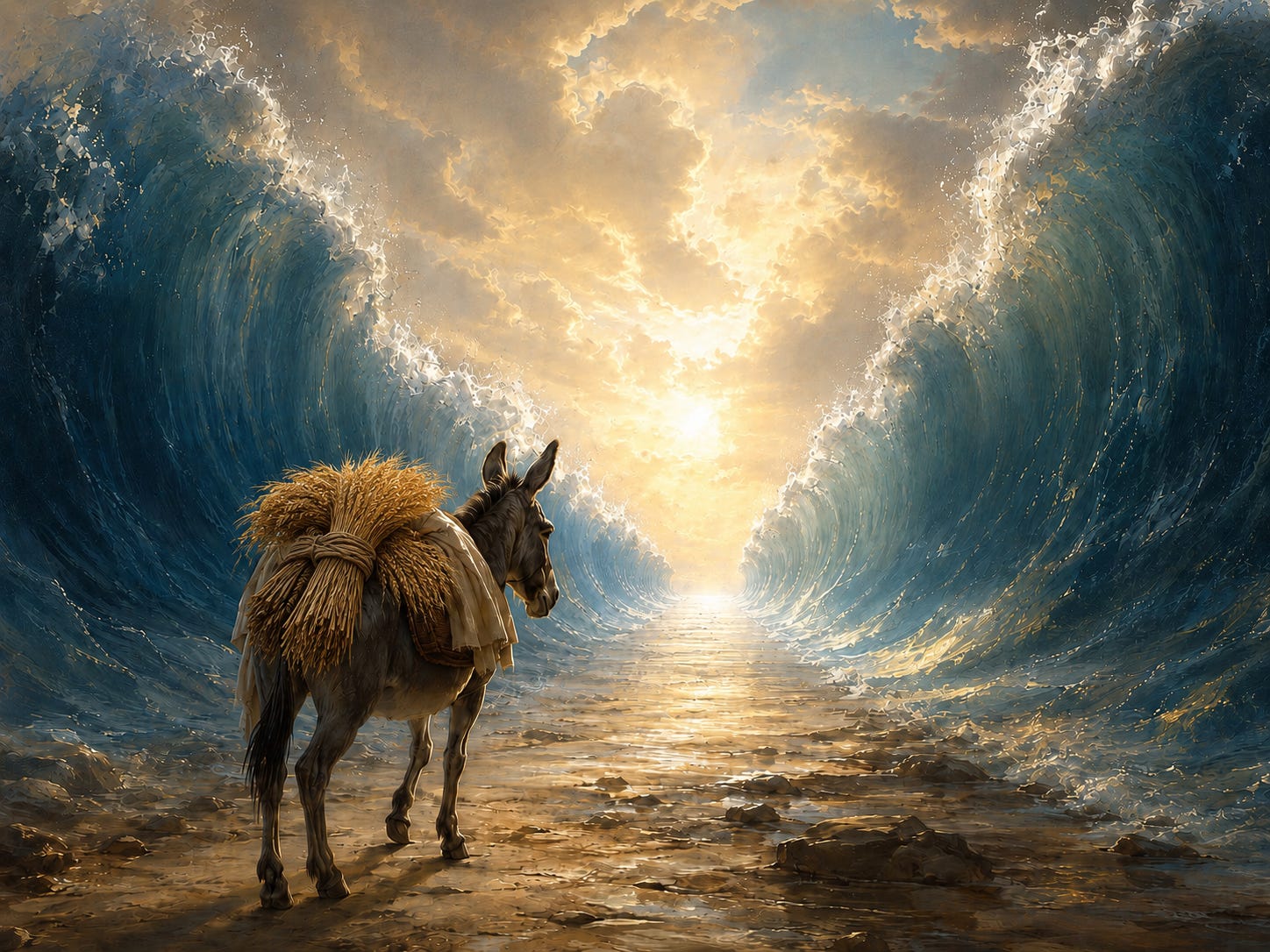
There was a man there carrying wheat that was being prepared for מצה. At that point, רבי פנחס בן יאיר said to the river: “Split for him also, because he is עסוק במצוה.” The river split for him.
הוה ההוא טייעא דלווה בהדייהו. אמר ליה: חלוק ליה נמי להאי, דלא לימא: כך עושים לבני לויה? חלק ליה.
There was also an Arab accompanying them. רבי פנחס בן יאיר said to the river: “Split for him also, so he should not say, ‘Is this how one treats someone who accompanies him?’” The river split for him.
אמר רב יוסף: כמה נפיש גברא ממשה ושתין רבוון, דאילו התם חד זימנא, והכא תלתא זימנין. ודלמא הכא נמי חדא זימנא? אלא כמשה ושתין רבוון.
רב יוסף said: “How great is this man — greater than משה and the six hundred thousand — for there, the waters split once, and here, three times.” The גמרא asks: “But perhaps here also it was only once?” Rather, he was like משה and the six hundred thousand.
איקלע לההוא אושפיזא. רמו ליה שערי לחמריה, לא אכל. חבטינהו, לא אכל. נקרינהו, לא אכל.
רבי פנחס בן יאיר then came to an inn. They placed barley before his חמור, but it would not eat. They sifted it, but it would not eat. They cleaned it, but it would not eat.
אמר להו: דילמא לא מעשרן? עשרינהו ואכל.
He said to them: “Perhaps it was not tithed?” They tithed it, and the חמור ate.
אמר: ענייה זו הולכת לעשות רצון קונה, ואתם מאכילין אותה טבלים!
He said: “This poor animal is going to do the will of its קונה, and you are feeding it טבל!” — חולין ז.
The גמרא then continues:
שמע רבי, נפק לאפיה. אמר ליה: רצונך סעוד אצלי? אמר לו: הן. צהבו פניו של רבי.
רבי heard that רבי פנחס בן יאיר had arrived, and he went out to greet him. רבי said to him: “Would you like to eat by me?” רבי פנחס בן יאיר said yes. רבי’s face lit up.
אמר לו: כמדומה אתה שמודר הנאה מישראל אני? ישראל קדושים הן. יש רוצה ואין לו, ויש שיש לו ואינו רוצה.
רבי פנחס בן יאיר said to him: “Do you think I am forbidden by vow from benefiting from ישראל? ישראל are קדושים. Some want to give but do not have, and some have but do not truly want to give.”
כי אתא, איתרמי על בההוא פיתחא דהוו קיימין ביה כודנייתא חיוורתא. אמר: מלאך המות בביתו של זה ואני אסעוד אצלו?
When רבי פנחס בן יאיר came, he happened upon an entrance where white mules were standing. He said: “The מלאך המות is in this person’s house, and I should eat by him?”
שמע רבי, נפק לאפיה. אמר ליה: מזבנינא להו. אמר ליה: ולפני עור לא תתן מכשול.
רבי heard and came out to him. רבי said that he would sell them. In response, רבי פנחס בן יאיר said: “ולפני עור לא תתן מכשול.”
מפקרנא להו. מפשת היזקא.
רבי said that he would make them הפקר. In response, רבי פנחס בן יאיר said: “That will increase the danger.”
עקרנא להו. איכא צער בעלי חיים.
רבי said that he would maim them. In response, רבי פנחס בן יאיר said: “There is צער בעלי חיים.”
קטילנא להו. איכא בל תשחית.
רבי said that he would kill them. In response, רבי פנחס בן יאיר said: “There is בל תשחית.”
הוה קא מבתש ביה טובא. גבה טורא בינייהו.
רבי pressed him greatly. A mountain rose between them.
That is the גמרא. And once we see the whole מעשה inside, the pieces are clearly not random.
The סוגיא starts with the rule that Hashem does not bring a תקלה through צדיקים. But the example the גמרא brings is not simply a story about a צדיק who did not eat something improper. It brings רבי פנחס בן יאיר on the way to פדיון שבויים, the river splitting, the comparison to משה רבינו and קריעת ים סוף, the man carrying wheat that was being prepared for מצה, the companion on the road, the חמור refusing to eat טבל, followed by רבי inviting him to eat, the dangerous mules, and finally the mountain rising between them.
All of these details are part of one סוגיא.
The first thing to understand is the river itself.
The river is named גינאי. The word echoes גנאי — something low, something unbecoming. That name itself seems to teach us something about the encounter.
Look at how it speaks. It makes a halachic argument:
אתה ספק עושה ספק אי אתה עושה, אני ודאי עושה
You are a ספק; I am a ודאי.
The river is invoking the principle אין הספק מוציא מידי הודאי — a doubt does not displace a certainty. And the river is correct on its own terms. It has a charge. It is doing the רצון of its קונה. From its standpoint, the קונה wants water to flow.
This language is not accidental in חולין. The principle of אין הספק מוציא מידי הודאי is itself a סוגיא in this מסכת. The river is speaking the language of חולין: regular reality, fixed status, the ודאי of the physical order. “I am certainly doing what I was created to do. You are only ספק.” But רבי פנחס בן יאיר teaches that the uncertainty is only in the outcome. The חיוב of מצוה is ודאי.
And that helps us understand why this מעשה appears here in חולין. The מעשה is not taking place in the בית המקדש, not around קדשים, but around a river, a חמור, barley, a סעודה, and a dangerous animal at the doorway. It is teaching that even חולין is שייך to קדושה. Even the ordinary physical world has to be ordered by רצון ה׳.
This may also be part of the larger meaning of the מסכת itself: חולין is not outside the world of קדושה. The מסכת teaches how ordinary eating enters the world of דין and קדושה, beginning already with the סימנים of קנה and וושט. That larger discussion is beyond this piece, but the point is already present here: even the river, the חמור, the barley, and the סעודה are not “just” חולין. They too must be ordered by רצון ה׳.
But look at what the river is doing. It is using Torah reasoning — a כלל in הלכה — to refuse a צדיק on his way to a מצוה. Torah turned into an instrument of obstruction. That is the גנאי: Torah reasoning being used not to serve רצון ה׳, but to stand in its way.
And רבי פנחס בן יאיר’s response is not random either.
גוזרני עליך שלא יעברו בך מים לעולם
I decree upon you that water will never again pass through you.
The word גוזרני is exact. He does not say, “I will daven that you dry up.” He does not speak in the language of magic, or even in the language of a מופת. He speaks in the language of a חכם. The language of גזירה. The river makes a Torah-style argument — ספק and ודאי — and רבי פנחס בן יאיר answers with the authority of תורה itself.
He is not overpowering nature from outside the system. He is clarifying nature’s place within the system. If the river uses a דין to block a מצוה, then a חכם can make a גזירה that restores the river to the true רצון ה׳.
And what is the גזירה?
That water will never again pass through it.
What is water?
אין מים אלא תורה.
He is telling the river: if your water becomes an obstruction to מצוה, then your water has lost its purpose. Water that refuses to serve רצון ה׳ is no longer the מים it was created to be.
A river without water is no longer a river. A river whose מים are used to block מצוה is no longer connected to its own תפקיד.
The river hears the גזירה and yields. It splits. It interrupts its own flow — gives up its essence for a moment — so that it can continue to be a river afterward. Better to pause your flow for a מצוה than to lose your water forever.
That is also why it matters that the obstacle here was water. The metaphor is built in. Torah-as-obstruction is met by Torah-properly-ordered. And when the river yields, both flows resume: literal water, and the מים of תורה — both passing through the river afterward in the way רצון ה׳ requires.
Only after understanding the river can we return to רב יוסף’s comparison to משה רבינו.
How are we to understand רב יוסף’s statement? We are not comparing רבי פנחס בן יאיר as a person to משה רבינו. משה רבינו is איש האלקים, the עניו מכל אדם, the one through whom תורה was given to כלל ישראל. There is no comparison in that sense.
Rather, רב יוסף is speaking about the end result of the נס. By משה, the waters split once. Here, it seems that the river split three times. That is the challenge: how can the result of what happened through רבי פנחס בן יאיר appear, in this one respect, to be greater than what happened through משה and the six hundred thousand?
But the גמרא itself answers: maybe here also it only split once.
That is not only a technical answer. It opens the way to understand the whole comparison. It would be a much bigger חידוש to say that רבי פנחס בן יאיר brought about three separate openings of the river. The כח to override nature came from the מצוה. For this מצוה, there was one opening.
The river split once, and then the נס continued.
That is exactly like קריעת ים סוף. The sea did not split separately for every Yid. There was one קריעה, and כלל ישראל passed through that opening. So too here, there was one קריעה for רבי פנחס בן יאיר, and the others passed through within that same opening.
There is another point here as well. רבי פנחס בן יאיר does not “perform” the נס in the way we might imagine. He makes a claim. He tells the river that if it does not split, he will make a גזירה that water will never again pass through it. The threat of that גזירה is what causes the river to split. Later, by the mountain, the same balance appears from the other side: רבי פנחס בן יאיר does not call the mountain at all. It rises beyond his control. So the question is not simply, “What miracle did he do?” The question is: what happened in the world as a result of his צדקות, his זריזות to קדושה, and his being עסוק במצוה?
Creating a נס is one thing. Extending a נס that already exists is something else. And the net result here is that the river opened once through רבי פנחס בן יאיר, and others passed through that same opening.
But even with that comparison, קריעת ים סוף and the river of רבי פנחס בן יאיר are not the same kind of נס. By קריעת ים סוף, the ים was not merely an obstruction that needed to be removed. The splitting itself was the נס. It had to be seen. It had to be experienced. It became the foundation of our אמונה.
משה רבינו was the vehicle for יציאת מצרים and קריעת ים סוף. That נס was already ordained from מעשה בראשית as we are taught in אבות. It was nature becoming the stage for גילוי שכינה.
By רבי פנחס בן יאיר, the point is different. He was going to do a מצוה. The river was in the way. And when a person is truly עסוק במצוה, nature has no right to block him.
Later, once the whole סוגיא unfolds, this comparison to משה becomes even sharper. The מעשה itself begins to echo the movement of יציאת מצרים in stages. It begins with פדיון שבויים, continues with water opening, then moves to wheat being prepared for מצה, and then to שעורים. Those שעורים are not only מאכל בהמה; they also bring to mind the עומר, the barley offering that begins the movement of ספירה toward מתן תורה. And finally, the מעשה reaches a mountain. I would not make that the whole pshat of the סוגיא, but the pattern is hard to ignore. It helps explain why רב יוסף’s comparison is so pointed. The מעשה is moving along the lines of משה’s story, but in the world of חולין and in the life of a צדיק.
Once the river is understood this way, the fact that רבי פנחס בן יאיר was traveling specifically for פדיון שבויים becomes even sharper.
The event could have unfolded while he was involved in another מצוה. But this is the מצוה he was doing, and חז״ל preserved that detail for us to learn from it.
I think this is the key. פדיון שבויים is the מצוה of freeing someone from being trapped under another רשות. A captive cannot move freely. He belongs to himself, but someone else is holding him. He is stuck under an outside power.
The first example of this in the תורה is אברהם אבינו rescuing לוט. But לוט was not just any captive. לוט had chosen סדום. He attached himself to a place of תאוה, corruption, and selfishness. Then he became physically captured. His outer captivity revealed something deeper: he had already been drawn into the world of סדום.
So אברהם goes to rescue him. That is the first פדיון שבויים. It is not only freeing a person from chains. It is pulling a person out of the wrong world.
That is why it matters that this was the מצוה רבי פנחס בן יאיר was doing. He was going to free someone from captivity. On the way, the river tries to hold him back. But he is going to remove an obstruction. The river cannot itself become an obstruction.
And there is an even deeper captivity: תאוה.
A person can be captured by other people. But a person can also be captured by his own desires. He can be trapped inside אכילה, appetite, honor, money, and the pull of the physical world.
This also helps us understand why the Pesach references matter.
There are two Pesach themes inside this מעשה.
The first theme is קריעת ים סוף, the great public נס of אמונה, already prepared from מעשה בראשית. The sea split because the splitting itself had to reveal Hashem.
The second theme is קדושת האכילה. Pesach is not only about the sea. It is also about eating with total care — מצה, חמץ, קרבן פסח, guarding what enters the mouth. And מצה in particular is one of the clearest forms of אכילה בקדושה: bread reduced to its essence, eaten under the strictest restrictions of time and ingredient, eaten as עבודה.
This is why it matters that the second person who crossed the river was carrying wheat that was being prepared for מצה. That detail was not merely an unrelated מצוה that happened to require him to cross. He is doing the very avodah that the rest of the סוגיא is about — אכילה בקדושה. The wheat he carries will become מצה: the bread of תיקון, the food that undoes the food of the נחש. When רבי פנחס בן יאיר says חלוק ליה נמי להאי דבמצוה עסיק, the מצוה in question is not arbitrary. It is the same avodah רבי פנחס בן יאיר himself is engaged in at every level of his life.
Once the סוגיא is read this way, it is hard not to hear the story of יציאת מצרים running underneath it. The סוגיא begins with רבי פנחס בן יאיר going for פדיון שבויים, and on one level the great פדיון שבויים is כלל ישראל leaving the רשות of מצרים. Then comes water that opens. Then the סוגיא brings wheat being prepared for מצה, the food of מצה and אכילה בקדושה. After that come שעורים. On one level, they are מאכל בהמה, with the בהמה level entering תיקון. But they also point toward the עומר, the barley offering that opens the path of ספירה from פסח toward מתן תורה. And finally, there is a mountain.
This is not the main proof of the piece, but the pattern is hard to ignore. We see captivity, then water, then מצה, then the עומר-like שעורים of the בהמה level, and then a mountain. It is the movement from גאולה to תורה appearing here inside חולין. The water echoes קריעת ים סוף, and the mountain echoes מתן תורה — not only closeness, but גבול. At Har Sinai, כלל ישראל comes close by accepting boundaries. Here too, the mountain rises when closeness would compromise קדושה.
This is also why the later לשון becomes so sharp. רבי פנחס בן יאיר calls the חמור ענייה זו. There is a well-known explanation from the גר״א that מצה is called לחמא עניא because the true poor person is one who lacks דעת. That is exactly this case. The חמור is literally a בהמה, without דעת and without בחירה. It cannot choose איסור and היתר the way a person can. And yet this ענייה זו will not eat before תיקון. The juxtaposition is enormous: the wheat is moving toward מצה, לחמא עניא, and the חמור is called ענייה זו. The food of עניות and the animal of עניות stand next to each other, and both are being brought into קדושה.
That brings us to בלעם.
The comparison to בלעם is not incidental. The גמרא tells us about the חמור of רבי פנחס בן יאיר, and it is hard not to hear the echo of בלעם’s חמור. But they are opposites.
Both stories happen on the דרך.
בלעם is traveling for עבירה. He is moving with תאוה, hatred, honor, and money. On that דרך, his חמור is stopped by the מלאך. There is an obstruction from שמים because the path itself is corrupt. The חמור sees what בלעם does not see, because בלעם’s דעת has been blinded by תאוה.
רבי פנחס בן יאיר is also on the דרך. But he is traveling for פדיון שבויים. He is moving with מצוה. So the obstruction is removed. The river opens.
By בלעם, the path to עבירה is blocked.
By רבי פנחס בן יאיר, the path to מצוה is opened.
That cannot be coincidence. The דרך reveals the direction of the person. A person is always on the way somewhere. The question is what is moving him: תאוה or מצוה. When the movement is toward עבירה, שמים blocks the path. When the movement is toward מצוה, nature itself has to make way.
And the fact that the donkey stands at the center of both stories is not coincidence.
The word חמור (donkey) echoes חומר (material substance). It represents the material side of existence — appetite, movement, instinct, the raw substance of life.
By בלעם, the חומר is corrupted by תאוה. He thinks he is riding the חמור, but really the חמור is exposing him. חז״ל tell us that he even used his חמור for איסור. His animal side was not purified by his דעת. Just the opposite. His דעת was dragged down into בהמיות.
By רבי פנחס בן יאיר, the exact opposite happens. He does not lower himself into the בהמה. He raises even the בהמה attached to him. His חמור would not eat something questionable. The חומר itself becomes sensitive to קדושה.
There is also an important difference between the two חמורים. By בלעם, the point is not that his חמור was naturally special. The point is that בלעם was blinded. He was so captured by תאוה and כבוד that the בהמה had to see what the נביא could not. The חמור’s sight is בלעם’s disgrace.
By רבי פנחס בן יאיר, the חמור does not see מלאכים and does not speak. It simply will not eat. But that is not regular animal behavior either.
An animal has no בחירה. It does not choose איסור or היתר the way a person does. It acts by instinct. If this חמור refuses ספק טבל, it means Hashem placed into the animal an instinctive recoil from תקלה, as if unclarified food were physically dangerous.
That is the עומק of the קל וחומר.
At first, the line sounds like a simple נס: if Hashem protects the animal of a צדיק, then certainly He protects the צדיק himself. But the מעשה shows something deeper. No מלאך stops the חמור. No voice announces the איסור. The חמור itself refuses. It does not eat ספק טבל.
The animal is not making a choice. It is acting from an instinct that has been refined through its attachment to רבי פנחס בן יאיר. Hashem’s שמירה is expressed through the animal’s own nature. The outermost circle of the צדיק — his בהמה, his חומר — has become a place where תקלה cannot enter.
And now the קל וחומר is exact:
If even the בהמה of a צדיק, which has no בחירה and normally follows appetite, is given an instinctive caution from תקלה, then צדיקים עצמן לא כל שכן. Certainly the צדיק himself, with דעת, יראה, בחירה, and דקדוק המצוות, lives within that שמירה.
By בלעם, the אדם falls beneath the בהמה.
With רבי פנחס בן יאיר, the בהמה is elevated by the אדם.
That is part of the גאולה of the person himself. A person is not meant to remain trapped in בהמיות. He is meant to grow from the level of בהמה toward the full stature of אדם, until even the חומר in his life becomes attached to רצון ה׳.
That is the true nature of חומר. חומר is not evil. It is meant to become a כלי for רצון ה׳. By בלעם, חומר becomes the vehicle of תאוה. By רבי פנחס בן יאיר, חומר becomes the witness to קדושה.
And the food itself matters.
The חמור would not eat שעורים (barley). Barley is מאכל בהמה (animal food). And it was a question of טבל (untithed produce). There is room to discuss whether טבל applies in the same way to מאכל בהמה. So this was not obvious איסור in the simplest way.
The דיוק is even sharper. רבי פנחס בן יאיר says:
דילמא לא מעשרן
Perhaps it was not tithed.
The חמור was not merely refusing definite טבל. It was refusing ספק טבל. It would not eat food that had not been clarified as מתוקן. Its appetite was guarded even around ספק.
And this mirrors the river in reverse.
The river used ספק to block מצוה: “You are ספק, I am ודאי.”
The חמור uses ספק to protect מצוה: if there is a ספק in the food, it does not eat.
By the river, ספק becomes obstruction.
By the חמור, ספק becomes restraint.
And then, once they tithed the barley, the חמור ate.
That detail matters. The חמור was not above eating. It was not rejecting גשמיות. It was still a חמור, and שעורים are its food. But it would not eat before תיקון.
This is the true תיקון of חומר: not to destroy the physical and not to deny appetite, but to bring appetite into the order of קדושה. This is also the growth from בהמה (animal) toward אדם (man): the physical does not disappear, but it learns its תפקיד and becomes part of רצון ה׳. By בלעם, the בהמה exposes the fall of the אדם beneath his own חומר. By רבי פנחס בן יאיר, the בהמה shows what חומר can look like when it is elevated — it eats, but only when the eating is מתוקן.
This is not just a cute story about a “frum donkey.” It shows what רבי פנחס בן יאיר was.
His קדושה reached even the animal layer.
And then the גמרא continues. רבי heard that רבי פנחס בן יאיר had arrived, went out to greet him, and invited him to eat. רבי פנחס בן יאיר said yes, and רבי’s face lit up.
This is not a side story, and the סעודה is not just a meal. A סעודה with רבי is תורה, קדושה, הכנסת אורחים, and אכילה all together.
רבי knew that רבי פנחס בן יאיר was careful not to eat by others, but he invited him anyway. That itself is a lesson in הכנסת אורחים. Even when you think the guest may not accept, you still open the door. Your חיוב is not measured only by the likelihood that the invitation will be accepted.
And רבי פנחס בן יאיר says yes.
That yes is real. He does not brush רבי off. He does not say, “I don’t eat by people.” He accepts, and רבי’s face lights up.
Then רבי פנחס בן יאיר explains:
כמדומה אתה שמודר הנאה מישראל אני? ישראל קדושים הן.
Do you think I am forbidden by vow from benefiting from ישראל? ישראל are קדושים.
This is a strange response unless we understand what he is correcting. He is saying: do not misunderstand my care with אכילה. I am not rejecting ישראל. I am not separate from כלל ישראל. The issue is not that I cannot receive from a Yid. The issue is that אכילה requires clean giving and clean receiving.
The problem he describes is on the side of the giver. Sometimes a person wants to give but does not have. Sometimes a person has, but his לב does not really want to give. By רבי, neither problem exists. רבי has, and רבי wants. צהבו פניו של רבי. His whole פנים shows that the giving is genuine.
But there is another side to הכנסת אורחים.
It is not only about the נותן. It also requires a מקבל. The host has to give, but the guest has to be able to receive.
And at the level of רבי פנחס בן יאיר, he was not fully a כלי קיבול to receive from others. Not because he looked down on anyone — ישראל קדושים הן — but because taking from another person’s table, another person’s house, another person’s גשמיות, could bring him down. For most people, receiving a סעודה is simple. For רבי פנחס בן יאיר, even the act of receiving food from another person had to be guarded.
That is why he does not give a practical answer. He does not say, “I have provisions.” He does not say, “I already ate.” He frames it as הנאה from ישראל. The question is whether he can become a recipient of הנאה.
By רבי, he tries. He says yes because רבי’s giving is whole.
And more than that: he actually goes to רבי’s house. That is very important. He is not being evasive. He is not disrespecting רבי. He gives כבוד. He takes the invitation seriously. Even if, on some level, he knows that he may not be able to eat, he still walks toward the סעודה. He goes as far as he can go.
Then he reaches the doorway and sees the white mules.
מלאך המות בביתו של זה ואני אסעוד אצלו?
The מלאך המות is in this person’s house, and I should eat by him?
At first this sounds strong. They were only mules. But רבי פנחס בן יאיר was not exaggerating. He was naming the פנימיות of the thing. To him, these mules were a real סכנה. Not a maybe. Not a nervousness. Not a lack of בטחון. A real danger.
If danger stands at the entrance to the סעודה, then entering is not בטחון. It is ignoring the way Hashem wants His world to be treated.
Now the original yes reaches its limit.
רבי’s נתינה is genuine. רבי פנחס בן יאיר’s כבוד is genuine. But רבי פנחס בן יאיר cannot become the מקבל. He cannot receive this סעודה through a doorway marked by מלאך המות.
And רבי understood the problem immediately. That is why he starts proposing solutions. He is not just “pushing.” He is trying to solve the halachic problem and make the סעודה possible.
But every solution opens another halachic issue.
First, רבי says: I will sell them.
רבי פנחס בן יאיר answers:
ולפני עור לא תתן מכשול
If there is a מכשול in your house, you cannot solve it by passing it into someone else’s life. That is not a תיקון. You have not fixed the danger; you have only moved it.
Then רבי says: I will make them הפקר.
רבי פנחס בן יאיר answers: that will increase the danger.
You cannot remove your name from a problem and pretend it is gone. If it can still damage, abandoning it is not תיקון. Ignoring a problem is not the same as solving it.
Then רבי says: I will maim them.
רבי פנחס בן יאיר answers: there is צער בעלי חיים.
You cannot always solve a problem by dismantling it. גשמיות belongs to Hashem. Even dangerous גשמיות must be handled with דין, with אחריות, and with care.
Then רבי says: I will kill them.
רבי פנחס בן יאיר answers: there is בל תשחית.
You cannot protect קדושה by wasting Hashem’s world. You cannot make אכילה בקדושה by creating another violation. רבי פנחס בן יאיר’s קדושה was not only in what he refused to eat. It was in the way he saw every part of the physical world as belonging to Hashem.
This whole discussion is הלכה. It is קדושה meeting גשמיות with total precision.
And then comes the mountain.
רבי pressed him greatly. A mountain rose between them.
This is not just another miracle. And it is not just another obstruction. It is the balance to the river.
By the river, an existing obstacle is removed. רבי פנחס בן יאיר speaks, makes a גזירה, and the river opens because it is blocking a necessary מצוה.
But by רבי’s house, the opposite happens. There was no mountain there before. A new obstacle is created. רבי פנחס בן יאיר does not call it forth. He does not command it. He does not make a גזירה. The world itself rises up to protect his קדושה.
This completes the earlier מעשה. The סוגיא is not teaching that every obstacle disappears before a צדיק. It is teaching that nature aligns with רצון ה׳.
Sometimes that means the river opens. Sometimes that means the mountain appears.
The mountain is not incidental. The obstruction could have come in many forms — a wall, a ditch, a closed gate. But what happened here was a mountain.
A mountain usually suggests height, גאוה (pride), something raised above everything else. Here, it is the opposite. The mountain rises for the sake of שפלות (lowliness). It is not the height of self-assertion. Rather, it is a kind of height that protects ביטול. The צדיקות of רבי פנחס בן יאיר is not built on force or גאוה. It is built on submission to רצון ה׳.
By the river, he commands nature only because the מצוה requires it. At רבי’s house, he does not command anything. The mountain rises on its own, and he accepts it.
The mountain is high, but the lesson is שפלות.
This has to be said carefully. We do not make our own mountains. A person cannot create an obstruction, avoid responsibility, and call it רצון ה׳. In this מעשה, רבי פנחס בן יאיר did not bring the mountain. He did not ask for it. He did not look for a miracle.
He worked through the הלכה. And only when every path forward created another מכשול did the mountain come on its own.
That is the difference between ביטול (self-nullification) and escape. ביטול means doing everything the תורה asks of you, and then accepting the boundary Hashem places. Escape means making the boundary yourself because you do not want to deal with the problem.
So the order of רבי’s suggestions is itself a סוגיא.
You cannot pass your problem to someone else.
You cannot abandon it and pretend it is gone.
You cannot simply destroy it.
And after that, when every solution creates another problem, sometimes the mountain comes.
This is the other side of the river. By the river, nature opened because it was obstructing a necessary מצוה. Here, nature created an obstruction because closeness itself would compromise קדושה.
The river teaches that an obstacle to רצון ה׳ must yield.
The mountain teaches that sometimes the obstacle itself is part of רצון ה׳.
This brings us to the תיקון of the עץ הדעת.
The first חטא came through אכילה. The נחש took eating and turned it into the place where man is pulled away from Hashem’s command and into תאוה. In that first מעשה, אדם הראשון had a מצוה. He had a charge. But the נחש drew him away through eating before its time, eating before תיקון, eating through desire.
רבי פנחס בן יאיר is the reverse.
He is עסוק במצוה, and nothing pulls him away. Not the river. Not the road. Not delay. Not the physical world. And when nature must open, it opens. When nature must create distance, it creates distance.
And then the גמרא shows us his אכילה. He will not eat casually by others. His חמור will not eat questionable טבל of שעורים. He will not enter a סעודה where the doorway is marked by מלאך המות. The very place where אדם fell becomes the place where רבי פנחס בן יאיר’s קדושה is revealed.
So רבי פנחס בן יאיר touches both sides.
The river splits for him, but not like קריעת ים סוף. By קריעת ים סוף, the נס itself had to be seen. It was the foundation of אמונה. By רבי פנחס בן יאיר, nature moves aside because a person is truly going with a מצוה.
And then the גמרא teaches us why he is such a person. Because he guarded קדושה at the deepest point: אכילה. He took Hashem’s mitzvos with such seriousness that even his חמור would not eat something questionable.
That is why the סוגיא starts with the rule that Hashem does not bring a תקלה through צדיקים.
When a person takes Hashem’s mitzvos seriously, Hashem protects him. When a person guards קדושה with everything he has, Hashem guards him. And when a person is so completely given over to a מצוה, the river literally splits open for him.
But the סוגיא is teaching something else too.
רצון ה׳ is inevitable. The river can argue. It can say, “I am a ודאי and you are a ספק.” It can even speak in the language of Torah. But if its flow becomes an obstruction to מצוה, then its flow has lost its purpose. If it will not carry water in the service of רצון ה׳, then it cannot keep its water at all.
And that is why רבי פנחס בן יאיר says גוזרני. This is not magic. It is not spectacle. It is the כח of תורה in the hands of a חכם, declaring that creation must align itself with רצון ה׳.
That is the mussar of גינאי. Anything that stands in the way of רצון ה׳ will eventually have to yield. The only question is whether it yields by becoming part of the מצוה, or whether it loses the very thing it was trying to protect.
But the mountain adds the balance. Not every obstacle is meant to be broken. Not every path is meant to open. Sometimes the most honest avodah is to accept the boundary Hashem has placed.
That too is part of גאולה. Freedom does not mean that every רצון of a person reshapes the world. It means that a person discovers his תפקיד inside Hashem’s רצון. When a person is aligned with רצון ה׳, the world obeys that רצון — sometimes by opening, and sometimes by closing.
רבי פנחס בן יאיר was going to redeem captives. But the מעשה shows us a deeper redemption too: freedom from תאוה, freedom from careless אכילה, freedom from the זוהמת הנחש, and freedom from the illusion that anything in creation has a purpose outside רצון ה׳.
It is the גאולה of the whole person: from בהמה to אדם, from appetite to דעת, from scattered רצונות to one רצון ה׳. And it is also the גאולה of the world around him, where each creature and each person has a תפקיד, and all of it belongs to the one קונה.
The captive is freed.
The river opens.
The animal does not eat.
The mountain rises.
And the water, the מים, continues to flow.
And the world itself testifies to what it means when a person lives completely with רצון ה׳.